Wang Xuefu, Rao Jin, Zhang Li, Liu Xuwen, Zhang Yufeng
School of Health Science and Engineering, University of Shanghai for Science and Technology, Shanghai, China.
Department of Cardiothoracic Surgery, Shanghai Changzheng Hospital, Naval Medical University, Shanghai, China.
Heliyon. 2024 Mar 9;10(6):e27049. doi: 10.1016/j.heliyon.2024.e27049. eCollection 2024 Mar 30.
Circadian rhythms play a key role in the failing heart, but the exact molecular mechanisms linking changes in the expression of circadian rhythm-related genes to heart failure (HF) remain unclear.
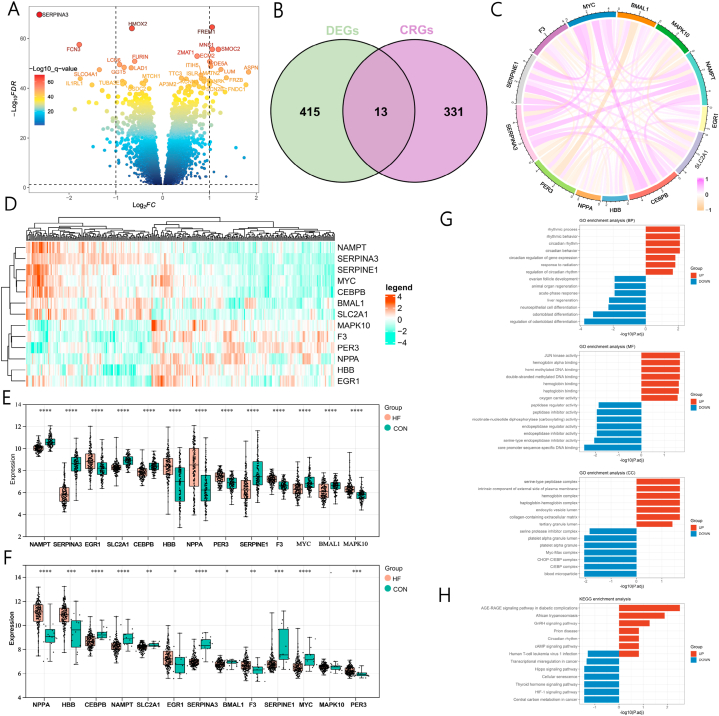
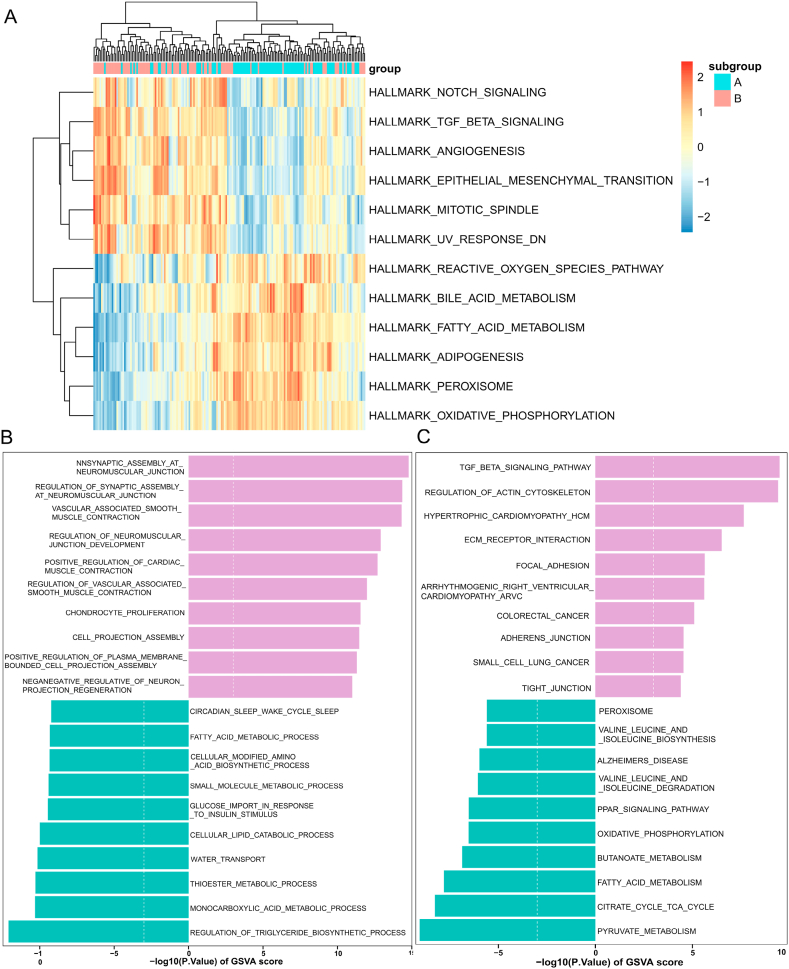
By intersecting differentially expressed genes (DEGs) between normal and HF samples in the Gene Expression Omnibus (GEO) database with circadian rhythm-related genes (CRGs), differentially expressed circadian rhythm-related genes (DE-CRGs) were obtained. Machine learning algorithms were used to screen for feature genes, and diagnostic models were constructed based on these feature genes. Subsequently, consensus clustering algorithms and non-negative matrix factorization (NMF) algorithms were used for clustering analysis of HF samples. On this basis, immune infiltration analysis was used to score the immune infiltration status between HF and normal samples as well as among different subclusters. Gene Set Variation Analysis (GSVA) evaluated the biological functional differences among subclusters.
13 CRGs showed differential expression between HF patients and normal samples. Nine feature genes were obtained through cross-referencing results from four distinct machine learning algorithms. Multivariate LASSO regression and external dataset validation were performed to select five key genes with diagnostic value, including NAMPT, SERPINA3, MAPK10, NPPA, and SLC2A1. Moreover, consensus clustering analysis could divide HF patients into two distinct clusters, which exhibited different biological functions and immune characteristics. Additionally, two subgroups were distinguished using the NMF algorithm based on circadian rhythm associated differentially expressed genes. Studies on immune infiltration showed marked variances in levels of immune infiltration between these subgroups. Subgroup A had higher immune scores and more widespread immune infiltration. Finally, the Weighted Gene Co-expression Network Analysis (WGCNA) method was utilized to discern the modules that had the closest association with the two observed subgroups, and hub genes were pinpointed via protein-protein interaction (PPI) networks. GRIN2A, DLG1, ERBB4, LRRC7, and NRG1 were circadian rhythm-related hub genes closely associated with HF.
This study provides valuable references for further elucidating the pathogenesis of HF and offers beneficial insights for targeting circadian rhythm mechanisms to regulate immune responses and energy metabolism in HF treatment. Five genes identified by us as diagnostic features could be potential targets for therapy for HF.
昼夜节律在衰竭心脏中起关键作用,但将昼夜节律相关基因表达变化与心力衰竭(HF)联系起来的确切分子机制仍不清楚。
通过将基因表达综合数据库(GEO)中正常样本与HF样本之间的差异表达基因(DEG)与昼夜节律相关基因(CRG)进行交叉分析,获得差异表达的昼夜节律相关基因(DE-CRG)。使用机器学习算法筛选特征基因,并基于这些特征基因构建诊断模型。随后,使用共识聚类算法和非负矩阵分解(NMF)算法对HF样本进行聚类分析。在此基础上,进行免疫浸润分析以评估HF样本与正常样本之间以及不同亚群之间的免疫浸润状态。基因集变异分析(GSVA)评估亚群之间的生物学功能差异。
13个CRG在HF患者和正常样本之间表现出差异表达。通过交叉引用四种不同机器学习算法的结果获得了九个特征基因。进行多变量LASSO回归和外部数据集验证,以选择五个具有诊断价值的关键基因,包括烟酰胺磷酸核糖转移酶(NAMPT)、丝氨酸蛋白酶抑制剂A3(SERPINA3)、丝裂原活化蛋白激酶10(MAPK10)、心钠素(NPPA)和溶质载体家族2成员1(SLC2A1)。此外,共识聚类分析可将HF患者分为两个不同的簇,它们表现出不同的生物学功能和免疫特征。此外,基于昼夜节律相关差异表达基因,使用NMF算法区分出两个亚组。免疫浸润研究表明这些亚组之间的免疫浸润水平存在显著差异。A亚组具有更高的免疫评分和更广泛的免疫浸润。最后,利用加权基因共表达网络分析(WGCNA)方法识别与两个观察到的亚组关联最密切的模块,并通过蛋白质-蛋白质相互作用(PPI)网络确定枢纽基因。谷氨酸受体离子型N2A亚基(GRIN2A)、盘状结构域蛋白1(DLG1)、表皮生长因子受体4(ERBB4)、富含亮氨酸重复序列蛋白7(LRRC7)和神经调节蛋白1(NRG1)是与HF密切相关的昼夜节律相关枢纽基因。
本研究为进一步阐明HF的发病机制提供了有价值的参考,并为在HF治疗中靶向昼夜节律机制调节免疫反应和能量代谢提供了有益的见解。我们鉴定为诊断特征的五个基因可能是HF治疗的潜在靶点。