Klainbart Sigal, Sykes Chelsea A, Poppenga Robert H
California Animal Health and Food Safety Laboratory System, University of California, Davis, Davis, CA, United States.
Department of Small Animal Emergency and Critical Care, The Veterinary Teaching Hospital, Koret School of Veterinary Medicine, The Robert H. Smith Faculty of Agricultural, Food & Environment, The Hebrew University of Jerusalem, Rehovot, Israel.
Front Vet Sci. 2024 Mar 7;11:1372614. doi: 10.3389/fvets.2024.1372614. eCollection 2024.
While known animal exposures to human "drugs of abuse" (DA) were previously considered relatively uncommon in veterinary medicine, the trends are changing. Marijuana and amphetamines are among the 20 toxicants most frequently consulted about with the Pet Poison Helpline. When such exposures occur, they are typically considered emergencies.
This retrospective study describes confirmed cases of DA exposure in pets from the California Animal Health and Food Safety Laboratory System (CAHFS), 2013-2023.
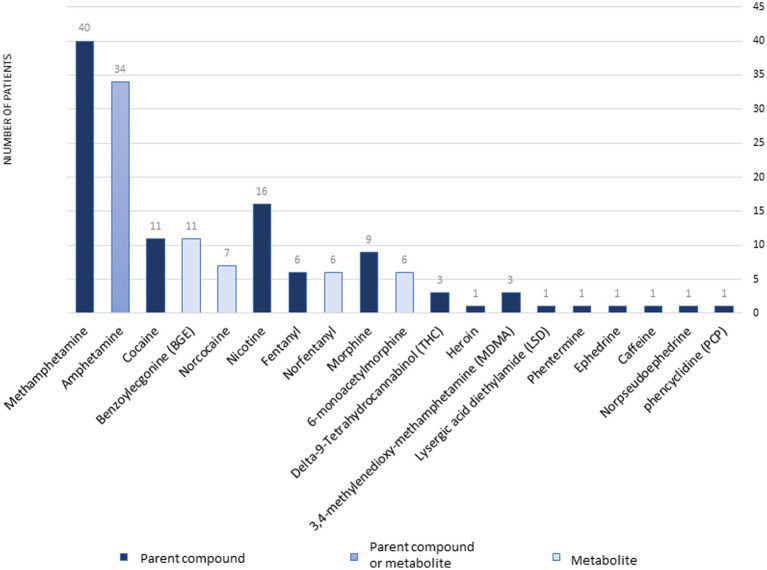
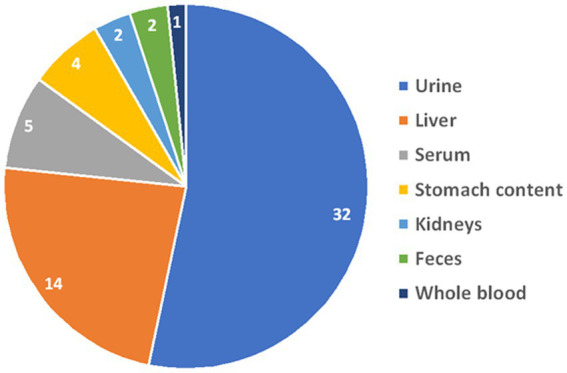
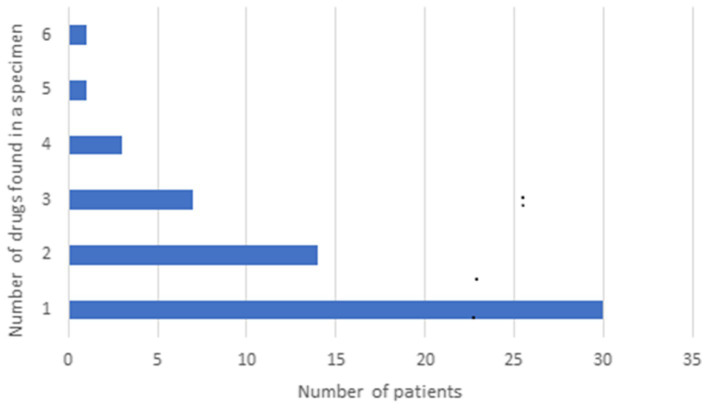
Fifty-seven samples tested positive for DA through liquid chromatography with tandem mass spectrometry analysis (qualitative method). In 75% (43/57) of the DA screen tests, the detected drugs included amphetamine-type stimulants and metabolites (methamphetamine, amphetamine, or both). In 47% (27/57) of cases, a combination of more than one drug group was found. Most cases were diagnosed from a urine specimen. In at least 32% (18/57) of cases, the samples were submitted due to suspicions of animal cruelty, and at least 41% (23/57) of the patients were deceased when the samples were submitted.
More studies on the prevalence of illicit drugs in small animals, using confirmatory testing, are warranted to fully understand the significance of this emerging toxicological hazard in veterinary medicine.
虽然以前在兽医学中,已知动物接触人类“滥用药物”(DA)的情况相对不常见,但这种趋势正在发生变化。大麻和安非他命是宠物中毒热线最常咨询的20种毒物中的两种。当发生此类接触时,通常被视为紧急情况。
这项回顾性研究描述了2013年至2023年加利福尼亚动物健康与食品安全实验室系统(CAHFS)确诊的宠物DA接触病例。
通过液相色谱-串联质谱分析(定性方法),57个样本的DA检测呈阳性。在75%(43/57)的DA筛查测试中,检测到的药物包括苯丙胺类兴奋剂及其代谢物(甲基苯丙胺、苯丙胺或两者皆有)。在47%(27/57)的病例中,发现了不止一种药物组的组合。大多数病例是通过尿液样本诊断的。在至少32%(18/57)的病例中,样本因怀疑动物虐待而提交,并且在提交样本时,至少41%(23/57)的患者已经死亡。
有必要进行更多关于小动物中非法药物流行情况的研究,并采用确证性检测,以充分了解这种新出现的毒理学危害在兽医学中的重要性。