Miçooğulları Mehmet, Yüksel İnci, Angın Salih
Department of Physiotherapy and Rehabilitation, Faculty of Health Sciences, Cyprus International University, Lefkoşa, Turkiye.
Department of Physiotherapy and Rehabilitation, Faculty of Health Sciences, Eastern Mediterranean University, Famagusta, Turkiye.
Korean J Pain. 2024 Apr 1;37(2):164-177. doi: 10.3344/kjp.23301.
Neck and jaw pain is common and is associated with jaw functional limitations, postural stability, muscular endurance, and proprioception. This study aimed to investigate the effect of jaw and neck pain on craniocervico- mandibular functions and postural stability in patients with temporomandibular joint disorders (TMJDs).
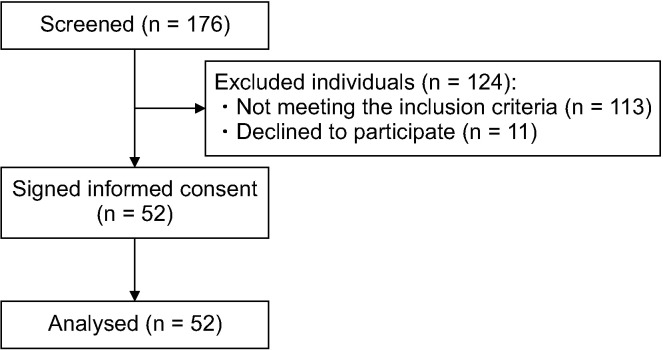
Fifty-two patients with TMJDs were included and assessed using Fonseca's Questionnaire and the Helkimo Clinical Dysfunction Index. An isometric strength test was performed for the TMJ depressor and cervical muscles. The TMJ position sense (TMJPS) test and cervical joint position error test (CJPET) were employed for proprioception. Total sway degree was obtained for the assessment of postural stability. Deep neck flexor endurance (DNFE) was assessed using the craniocervical flexion test. The mandibular function impairment questionnaire (MFIQ) was employed to assess mandibular function, and the craniovertebral angle (CVA) was measured for forward head posture.
Jaw and neck pain negatively affected CVA (R = 0.130), TMJPS (R = 0.286), DNFE (R = 0.355), TMJ depressor (R = 0.145), cervical flexor (R = 0.144), and extensor (R = 0.148) muscle strength. Jaw and neck pain also positively affected CJPET for flexion (R = 0.116) and extension (R = 0.146), as well as total sway degree (R = 0.128) and MFIQ (R = 0.230).
Patients with painful TMJDs, could have impaired muscle strength and proprioception of the TMJ and cervical region. The jaw and neck pain could also affect postural stability, and the endurance of deep neck flexors as well as mandibular functions in TMJDs.
颈部和下颌疼痛很常见,且与下颌功能受限、姿势稳定性、肌肉耐力和本体感觉有关。本研究旨在调查颞下颌关节紊乱症(TMJDs)患者的颌颈部疼痛对颅颈下颌功能和姿势稳定性的影响。
纳入52例TMJDs患者,使用丰塞卡问卷和赫尔基莫临床功能障碍指数进行评估。对颞下颌关节降肌和颈部肌肉进行等长力量测试。采用颞下颌关节位置觉(TMJPS)测试和颈椎关节位置误差测试(CJPET)评估本体感觉。通过获取总摆动度来评估姿势稳定性。使用颅颈屈曲试验评估颈深屈肌耐力(DNFE)。采用下颌功能障碍问卷(MFIQ)评估下颌功能,并测量颅椎角(CVA)以评估头部前伸姿势。
颌颈部疼痛对CVA(R = 0.130)、TMJPS(R = 0.286)、DNFE(R = 0.355)、颞下颌关节降肌(R = 0.145)、颈屈肌(R = 0.144)和颈伸肌(R = 0.148)的肌力产生负面影响。颌颈部疼痛对屈曲(R = 0.116)和伸展(R = 0.146)时的CJPET、总摆动度(R = 0.128)和MFIQ(R = 0.230)也产生正面影响。
患有疼痛性TMJDs的患者可能存在颞下颌关节和颈部区域的肌肉力量及本体感觉受损。颌颈部疼痛还可能影响姿势稳定性、颈深屈肌耐力以及TMJDs患者的下颌功能。