Zhu Xianglu, Das Rahel Suchintita, Bhavya Mysore Lokesh, Garcia-Vaquero Marco, Tiwari Brijesh K
State Key Laboratory of Bioreactor Engineering, School of Biotechnology, East China University of Science and Technology, Shanghai 200237, China; Department of Food Chemistry and Technology, Teagasc Food Research Centre, Ashtown D15 DY05, Dublin, Ireland.
Department of Food Chemistry and Technology, Teagasc Food Research Centre, Ashtown D15 DY05, Dublin, Ireland; School of Agriculture and Food Science, University College Dublin, Belfield D04 V1W8, Dublin, Ireland.
Ultrason Sonochem. 2024 May;105:106850. doi: 10.1016/j.ultsonch.2024.106850. Epub 2024 Mar 16.
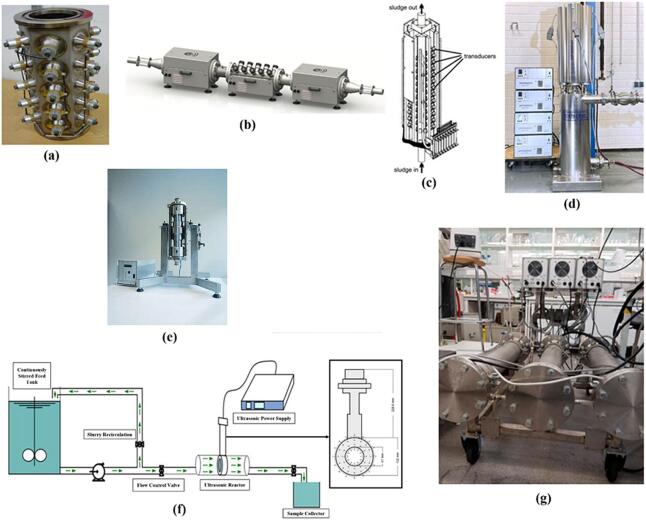
Acoustic cavitation, an intriguing phenomenon resulting from the interaction of sound waves with a liquid medium, has emerged as a promising avenue in agri-food processing, offering opportunities to enhance established processes improving primary production of ingredients and further food processing. This comprehensive review provides an in-depth analysis of the mechanisms, design considerations, challenges and scale-up strategies associated with acoustic cavitation for agri-food applications. The paper starts by elucidating the fundamental principles of acoustic cavitation and its measurement, delving then into the diverse effects of different parameters associated with, the acoustic wave, mechanical design and operation of the ultrasonic system, along with those related to the food matrix. The technological advancements achieved in the design and set-up of ultrasonic reactors addressing limitations during scale up are also discussed. The design, engineering and mathematical modelling of ultrasonic equipment tailored for agri-food applications are explored, along with strategies to maximize cavitation intensity and efficiency in the application of brining, freezing, drying, emulsification, filtration and extraction. Advanced US equipment, such as multi-transducers (tubular resonator, FLOW:WAVE®) and larger processing surface areas through innovative designing (Barbell horn, Cascatrodes), are one of the most promising strategies to ensure consistency of US operations at industrial scale. This review paper aims to provide valuable insights into harnessing acoustic cavitation's potential for up-scaling applications in food processing via critical examination of current research and advancements, while identifying future directions and opportunities for further research and innovation.
声空化是声波与液体介质相互作用产生的一种有趣现象,已成为农业食品加工中一条有前景的途径,为改进既定工艺、提高原料初级生产以及进一步的食品加工提供了机会。这篇综述全面深入地分析了与农业食品应用中的声空化相关的机制、设计考量、挑战及放大策略。本文首先阐明了声空化的基本原理及其测量方法,接着深入探讨了与声波、超声系统的机械设计和操作以及与食品基质相关的不同参数的各种影响。还讨论了在超声反应器的设计和设置方面取得的技术进步,这些进步解决了放大过程中的局限性。探索了针对农业食品应用定制的超声设备的设计、工程和数学建模,以及在腌制、冷冻、干燥、乳化、过滤和萃取应用中最大化空化强度和效率的策略。先进的超声设备,如多换能器(管状谐振器、FLOW:WAVE®)以及通过创新设计获得更大加工表面积的设备(杠铃形变幅杆、级联电极),是确保超声操作在工业规模上一致性的最有前景的策略之一。这篇综述旨在通过对当前研究和进展的批判性审视,为利用声空化在食品加工中扩大应用潜力提供有价值的见解,同时确定未来进一步研究和创新的方向与机会。