Bharadava Krupanshi, Upadhyay Tarun Kumar, Kaushal Radhey Shyam, Ahmad Irfan, Alraey Yasser, Siddiqui Samra, Saeed Mohd
Biophysics & Structural Biology, Research & Development Cell, Parul University, Vadodara, Gujarat 391760, India.
Department of Life Sciences, Parul Institute of Applied Sciences & Research and Development Cell, Parul University, Vadodara, Gujarat 391760, India.
ACS Omega. 2024 Mar 8;9(11):12500-12514. doi: 10.1021/acsomega.3c09400. eCollection 2024 Mar 19.
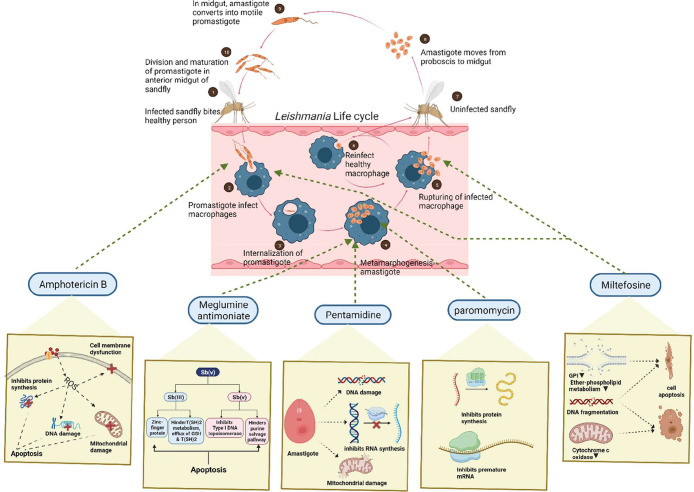
Leishmaniasis, which is caused by a parasitic protozoan of the genus , is still a major threat to global health, impacting millions of individuals worldwide in endemic areas. Chemotherapy has been the principal method for managing leishmaniasis; nevertheless, the evolution of drug resistance offers a significant obstacle to therapeutic success. Drug-resistant behavior in these parasites is a complex phenomenon including both innate and acquired mechanisms. Resistance is frequently related to changes in drug transportation, drug target alterations, and enhanced efflux of the drug from the pathogen. This review has revealed specific genetic mutations in parasites that are associated with resistance to commonly used antileishmanial drugs such as pentavalent antimonials, miltefosine, amphotericin B, and paromomycin, resulting in changes in gene expression along with the functioning of various proteins involved in drug uptake, metabolism, and efflux. Understanding the genetic changes linked to drug resistance in parasites is essential for creating approaches for tackling and avoiding the spread of drug-resistant variants. Based on which specific treatments focus on mutations and pathways could potentially improve treatment efficacy and help long-term leishmaniasis control. More study is needed to uncover the complete range of genetic changes generating medication resistance and to develop new therapies based on available information.
利什曼病由利什曼原虫属的寄生原生动物引起,仍然是全球健康的重大威胁,在流行地区影响着全球数百万人。化疗一直是治疗利什曼病的主要方法;然而,耐药性的演变给治疗成功带来了重大障碍。这些寄生虫的耐药行为是一种复杂现象,包括先天和后天机制。耐药性通常与药物转运变化、药物靶点改变以及药物从病原体中的外排增加有关。本综述揭示了利什曼原虫中与对常用抗利什曼病药物(如五价锑剂、米替福新、两性霉素B和巴龙霉素)耐药相关的特定基因突变,导致基因表达变化以及参与药物摄取、代谢和外排的各种蛋白质的功能改变。了解利什曼原虫中与耐药性相关的基因变化对于制定应对和避免耐药变体传播的方法至关重要。基于此,针对突变和途径的特定治疗可能会提高治疗效果并有助于长期控制利什曼病。需要更多研究来揭示产生药物耐药性的完整基因变化范围,并根据现有信息开发新的疗法。