Emerg Infect Dis. 2024 Apr;30(4):721-731. doi: 10.3201/eid3004.231457.
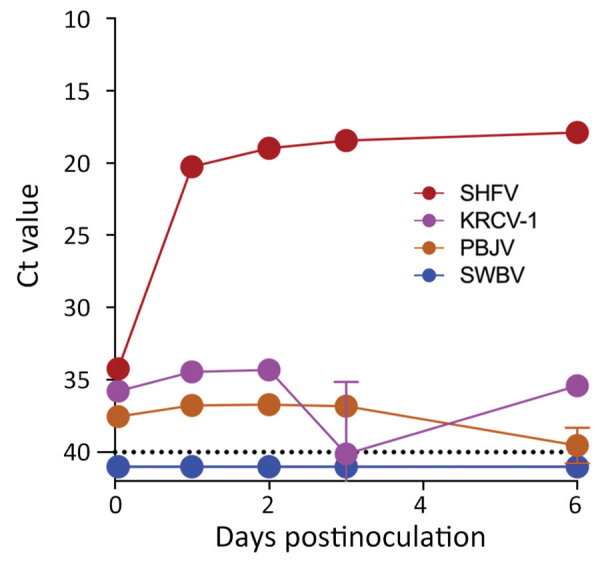
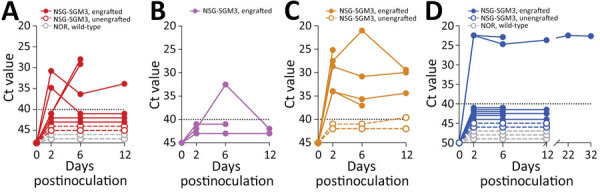
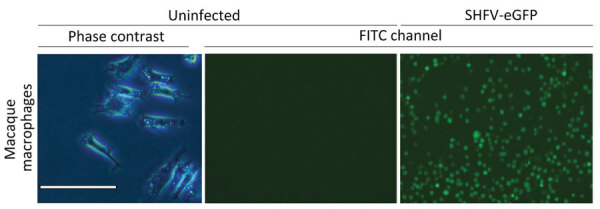
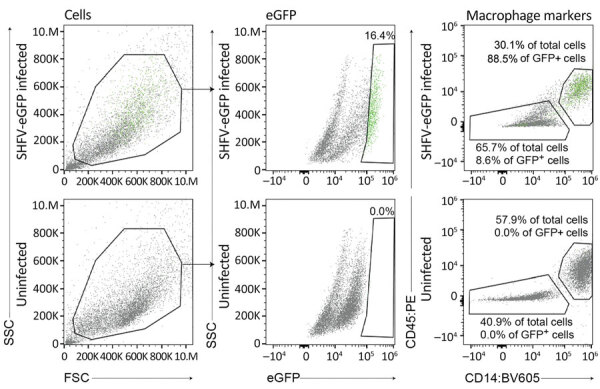
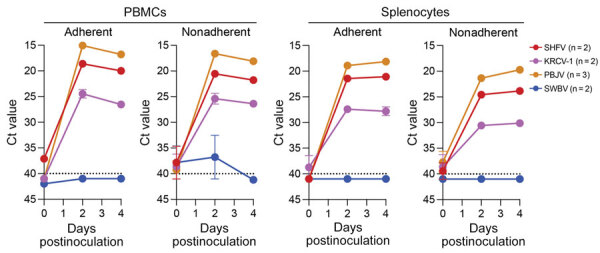
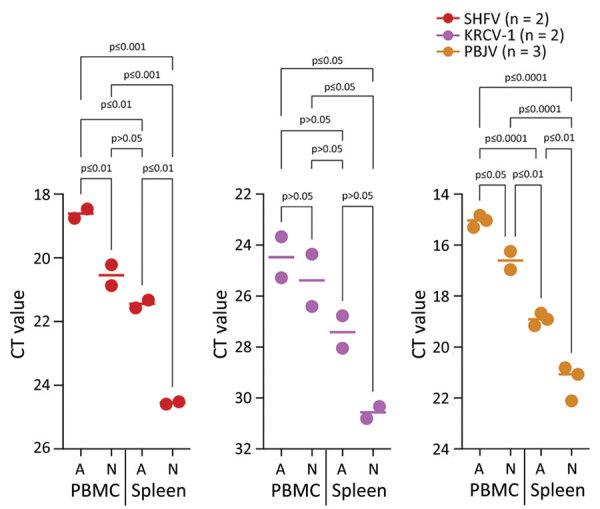
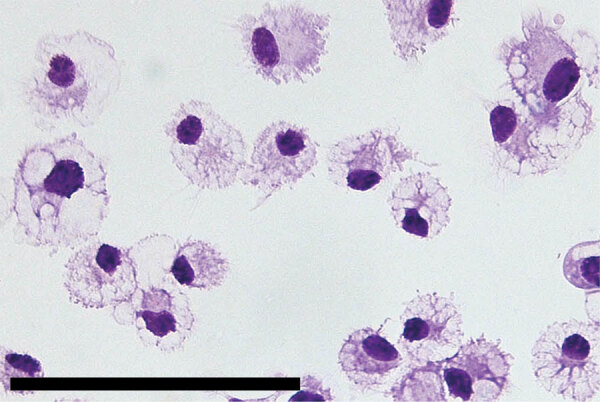
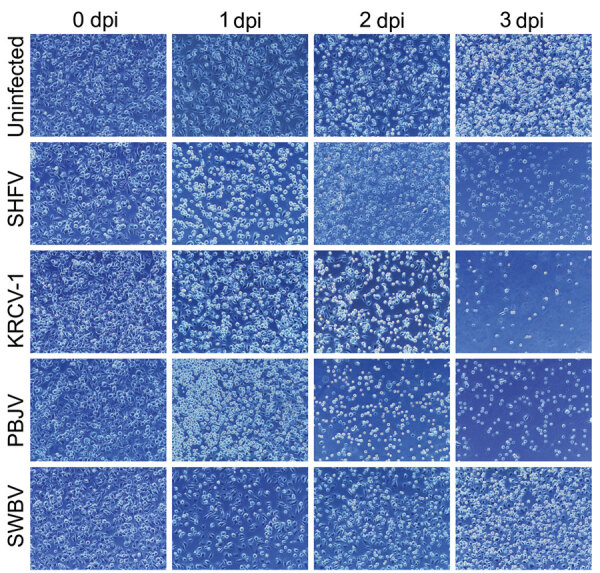
Genetically diverse simian arteriviruses (simarteriviruses) naturally infect geographically and phylogenetically diverse monkeys, and cross-species transmission and emergence are of considerable concern. Characterization of most simarteriviruses beyond sequence analysis has not been possible because the viruses fail to propagate in the laboratory. We attempted to isolate 4 simarteriviruses, Kibale red colobus virus 1, Pebjah virus, simian hemorrhagic fever virus, and Southwest baboon virus 1, by inoculating an immortalized grivet cell line (known to replicate simian hemorrhagic fever virus), primary macaque cells, macrophages derived from macaque induced pluripotent stem cells, and mice engrafted with macaque CD34+-enriched hematopoietic stem cells. The combined effort resulted in successful virus isolation; however, no single approach was successful for all 4 simarteriviruses. We describe several approaches that might be used to isolate additional simarteriviruses for phenotypic characterization. Our results will expedite laboratory studies of simarteriviruses to elucidate virus-host interactions, assess zoonotic risk, and develop medical countermeasures.
遗传多样性的猴动脉炎病毒(simarteriviruses)自然感染地理和系统发育上多样化的猴子,种间传播和出现引起了相当大的关注。由于病毒在实验室中无法繁殖,大多数 simarteriviruses 的特征除了序列分析之外还无法确定。我们试图通过接种永生化绿猴细胞系(已知可复制猴出血热病毒)、原代猕猴细胞、来自猕猴诱导多能干细胞的巨噬细胞和移植有猕猴 CD34+富集造血干细胞的小鼠来分离 4 种猴动脉炎病毒,即基巴莱红疣猴病毒 1、Pebjah 病毒、猴出血热病毒和西南狒狒病毒 1。虽然努力取得了成功的病毒分离,但没有一种方法适用于所有 4 种 simarteriviruses。我们描述了几种可能用于分离其他 simarteriviruses 进行表型特征分析的方法。我们的结果将加速对 simarteriviruses 的实验室研究,以阐明病毒-宿主相互作用、评估人畜共患病风险和开发医疗对策。