Facultad de Medicina, Departamento de Bioquímica Humana, Universidad de Buenos Aires, Ciudad Autónoma de Buenos Aires, Argentina.
Equipo de Soporte Nutricional, Hospital Británico de Buenos Aires, Ciudad Autónoma de Buenos Aires, Argentina.
Curr Nutr Rep. 2024 Jun;13(2):194-213. doi: 10.1007/s13668-024-00528-w. Epub 2024 Mar 25.
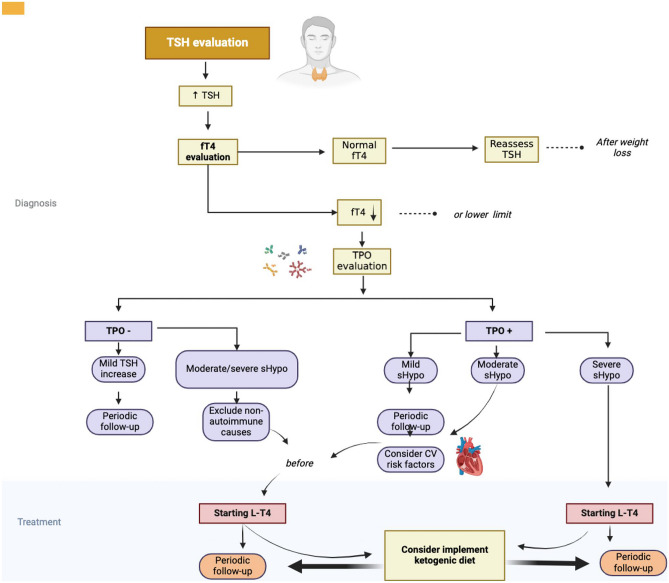
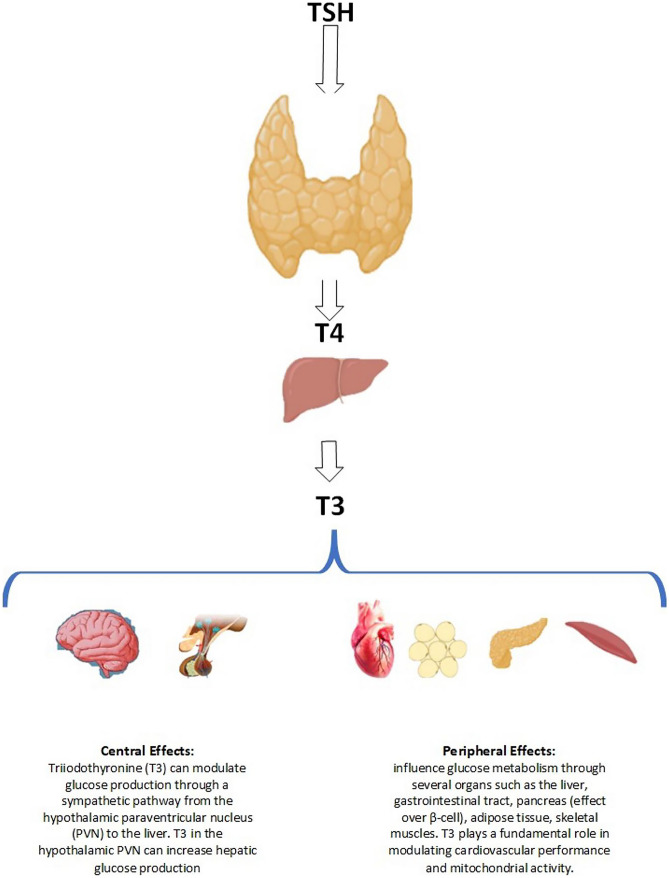
This review aims to explore in-depth the different aspects of the association between very low-calorie ketogenic diet (VLCKD), obesity and obesity-related thyroid dysfunction.
The VLCKD, proposed as a non-pharmacological strategy for the management of certain chronic diseases, is becoming increasingly popular worldwide. Initially used to treat epilepsy, it has been shown to be effective in controlling body weight gain and addressing various pathophysiological conditions. Research has shown that a low-calorie, high-fat diet can affect thyroid hormone levels. Weight loss can also influence thyroid hormone levels. Studies have suggested that long-term use of VLCKD for refractory epilepsy may be related to the development of hypothyroidism, with an effect seen in various populations. In particular, women with obesity following VLCKD tend to have reduced T3 levels. We propose further research to unravel the underlying mechanisms linking VLCKD to obesity and obesity-related thyroid dysfunction.
本文旨在深入探讨极低卡路里生酮饮食(VLCKD)、肥胖和肥胖相关甲状腺功能障碍之间关联的不同方面。
VLCKD 最初被提议作为治疗某些慢性疾病的非药物策略,在全球范围内越来越受欢迎。它已被证明在控制体重增加和解决各种病理生理状况方面有效。研究表明,低卡路里、高脂肪饮食会影响甲状腺激素水平。减肥也会影响甲状腺激素水平。研究表明,长期使用 VLCKD 治疗难治性癫痫可能与甲状腺功能减退症的发展有关,在各种人群中都有影响。特别是肥胖的女性在进行 VLCKD 后,T3 水平往往会降低。我们建议进一步研究,以揭示将 VLCKD 与肥胖和肥胖相关甲状腺功能障碍联系起来的潜在机制。