Bever Ronnie Joe, Edwards Stephen W, Antonijevic Todor, Nelms Mark D, Ring Caroline, Harris Danni, Lynn Scott G, Williams David, Chappell Grace, Boyles Rebecca, Borghoff Susan, Markey Kristan J
U.S. Environmental Protection Agency, Washington, DC, United States.
RTI International, Research Triangle Park, NC, United States.
Front Toxicol. 2024 Mar 11;6:1347364. doi: 10.3389/ftox.2024.1347364. eCollection 2024.
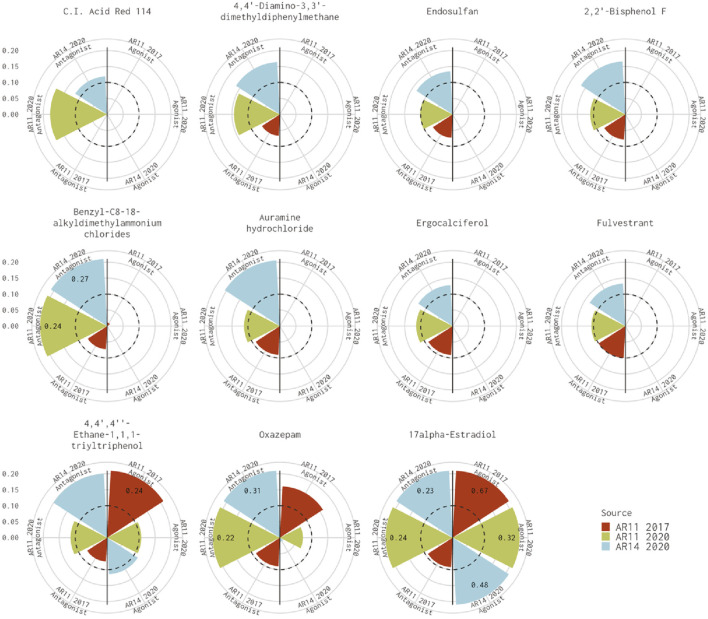
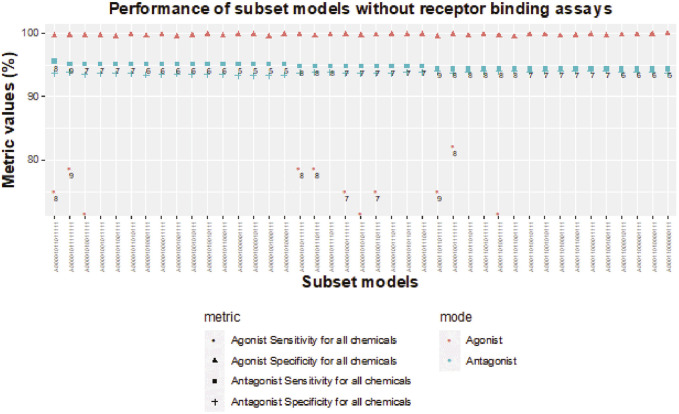
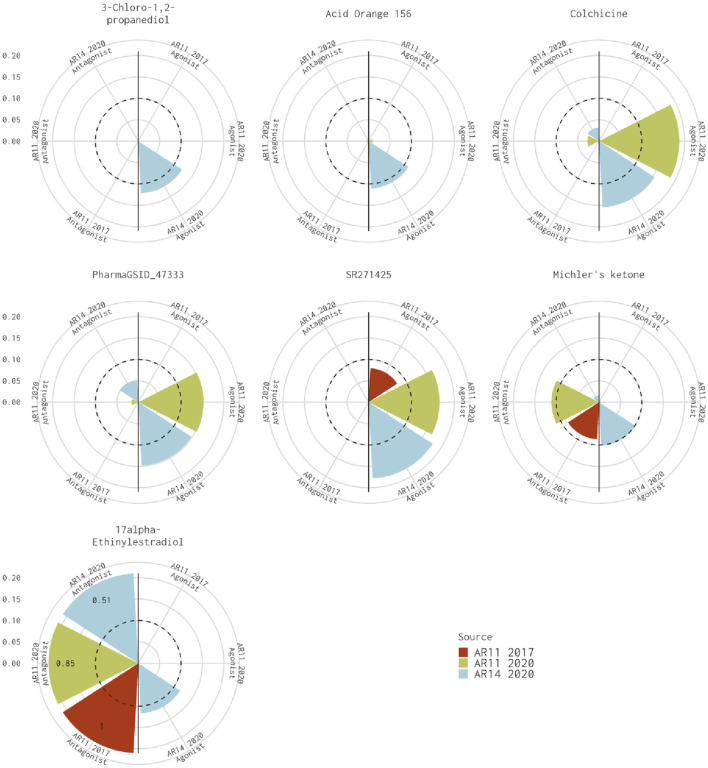
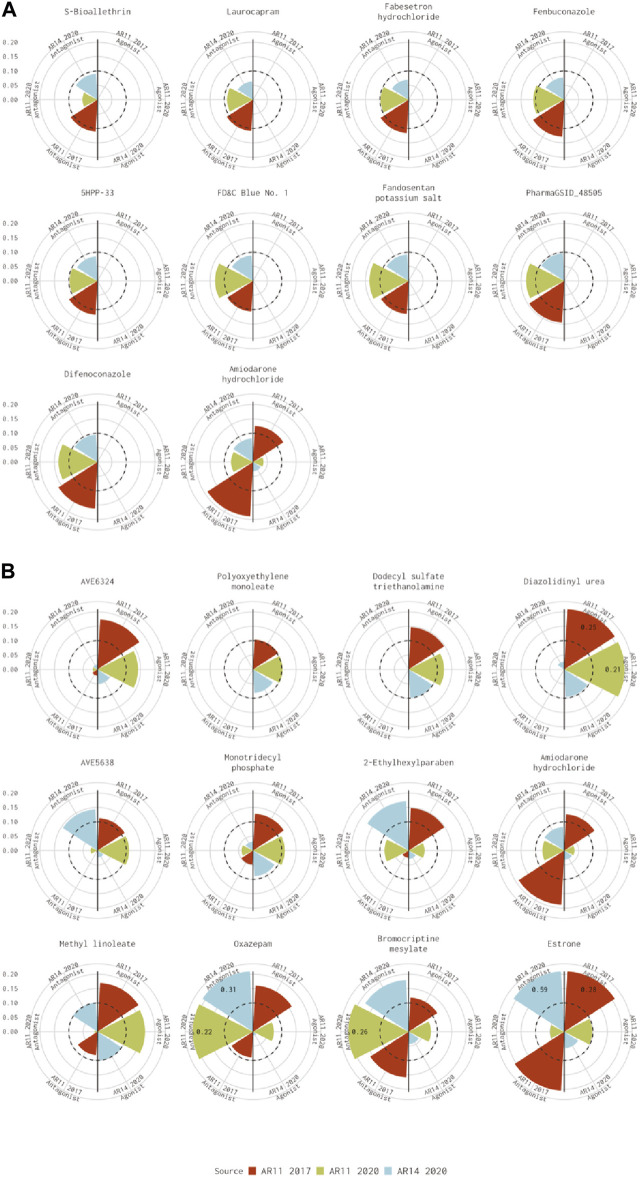
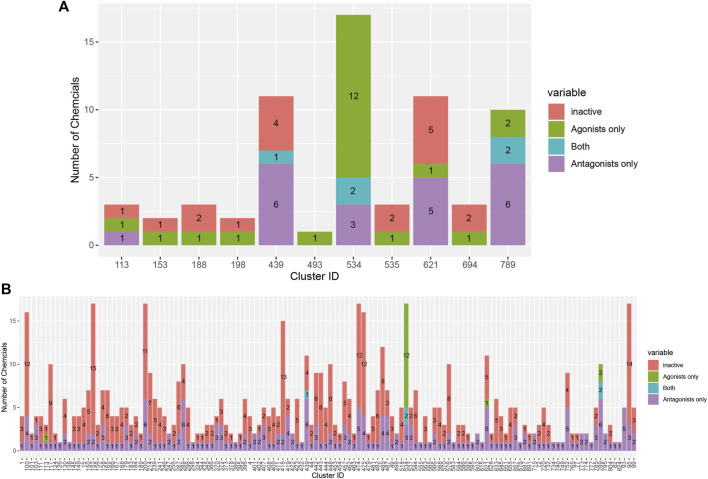
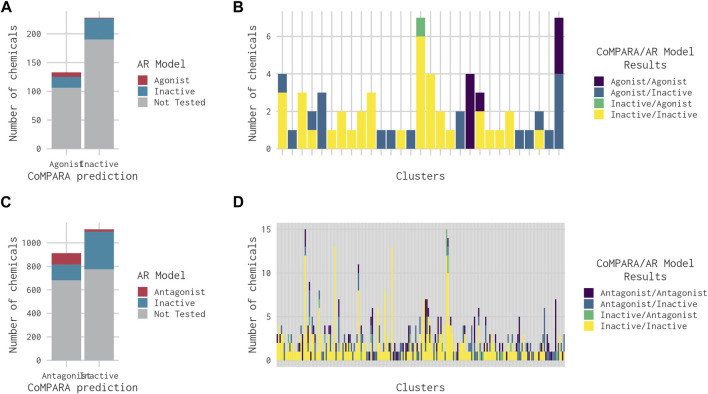
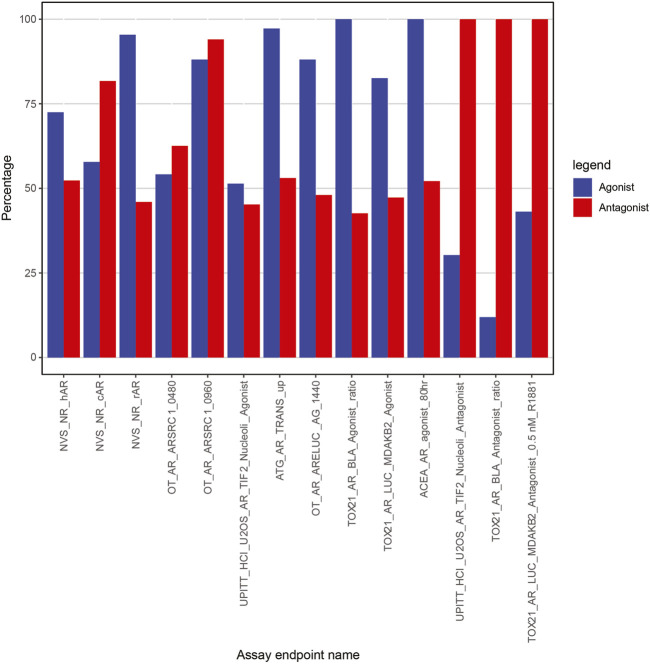
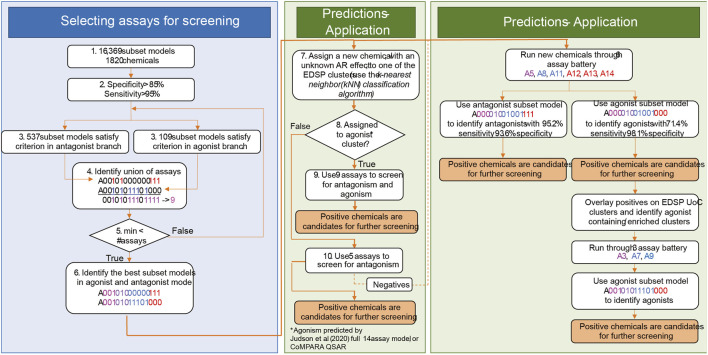
Computational models using data from high-throughput screening assays have promise for prioritizing and screening chemicals for testing under the U.S. Environmental Protection Agency's Endocrine Disruptor Screening Program (EDSP). The purpose of this work was to demonstrate a data processing method for the determination of optimal minimal assay batteries from a larger comprehensive model, to provide a uniform method of evaluating the performance of future minimal assay batteries compared with the androgen receptor (AR) pathway model, and to incorporate chemical cluster analysis into this evaluation. Although several of the assays in the AR pathway model are no longer available through the original vendor, this approach could be used for future evaluations of minimal assay models for prioritization and screening. We compared two previously published models and found that an expanded 14-assay model had higher sensitivity for antagonists, whereas the original 11-assay model had slightly higher sensitivity for agonists. We then investigated subsets of assays in the original AR pathway model to optimize overall testing strategies that minimize cost while maintaining sensitivity across a broad chemical space. Evaluation of the critical assays across subset models derived from the 14-assay model identified three critical assays for predicting antagonism and two critical assays for predicting agonism. A minimum of nine assays is required for predicting agonism and antagonism with high sensitivity (95%). However, testing workflows guided by chemical structure-based clusters can reduce the average number of assays needed per chemical by basing the assays selected for testing on the likelihood of a chemical being an AR agonist, according to its structure. Our results show that a multi-stage testing workflow can provide 95% sensitivity while requiring only 48% of the resources required for running all assays from the original full models. The resources can be reduced further by incorporating activity predictions. This work illustrates a data-driven approach that incorporates chemical clustering and simultaneous consideration of antagonism and agonism mechanisms to more efficiently screen chemicals. This case study provides a proof of concept for prioritization and screening strategies that can be utilized in future analyses to minimize the overall number of assays needed for predicting AR activity, which will maximize the number of chemicals that can be tested and allow data-driven prioritization of chemicals for further screening under the EDSP.
利用高通量筛选试验数据构建的计算模型,有望在美国环境保护局的内分泌干扰物筛选计划(EDSP)下,对用于测试的化学品进行优先级排序和筛选。这项工作的目的是展示一种数据处理方法,用于从一个更大的综合模型中确定最佳最小检测组合,提供一种统一的方法来评估未来最小检测组合与雄激素受体(AR)途径模型相比的性能,并将化学聚类分析纳入该评估。尽管AR途径模型中的一些检测方法已无法从原供应商处获得,但这种方法可用于未来对用于优先级排序和筛选的最小检测模型的评估。我们比较了两个先前发表的模型,发现扩展后的14项检测模型对拮抗剂具有更高的敏感性,而原始的11项检测模型对激动剂的敏感性略高。然后,我们研究了原始AR途径模型中的检测子集,以优化整体测试策略,在保持广泛化学空间敏感性的同时将成本降至最低。对源自14项检测模型的子集模型中的关键检测进行评估,确定了三个用于预测拮抗作用的关键检测和两个用于预测激动作用的关键检测。要以高灵敏度(95%)预测激动作用和拮抗作用,至少需要九项检测。然而,基于化学结构的聚类指导的测试工作流程可以根据化学物质作为AR激动剂的可能性,基于其结构选择用于测试的检测方法,从而减少每种化学物质所需的平均检测数量。我们的结果表明,多阶段测试工作流程可以提供95%的灵敏度,同时只需要运行原始完整模型中所有检测所需资源的48%。通过纳入活性预测,资源可以进一步减少。这项工作展示了一种数据驱动的方法,该方法结合了化学聚类以及对拮抗作用和激动作用机制的同时考虑,以更有效地筛选化学物质。这个案例研究为优先级排序和筛选策略提供了一个概念验证,可用于未来的分析,以尽量减少预测AR活性所需的检测总数,这将最大限度地增加可测试的化学物质数量,并允许在EDSP下对化学物质进行数据驱动的优先级排序以进行进一步筛选。