Dodd Ryan, Awuor Alex O, Garcia Bardales Paul F, Khanam Farhana, Mategula Donnie, Onwuchekwa Uma, Sarwar Golam, Yousafzai Mohammad Tahir, Ahmed Naveed, Atlas Hannah E, Amirul Islam Bhuiyan Md, Colston Josh M, Conteh Bakary, Diawara Manan, Dilruba Nasrin, Elwood Sarah, Fatima Irum, Feutz Erika, Galagan Sean R, Haque Shahinur, Taufiqul Islam Md, Karim Mehrab, Keita Belali, Kosek Margaret N, Kotloff Karen L, Lefu Clement, Mballow Mamadou, Ndalama Maureen, Ndeketa Latif, Ogwel Billy, Okonji Caleb, Paredes Olortegui Maribel, Pavlinac Patricia B, Pinedo Vasquez Tackeshy, Platts-Mills James A, Qadri Firdausi, Qureshi Sonia, Rogawski McQuade Elizabeth T, Sultana Shazia, Traore Moussa Oumar, Cunliffe Nigel A, Jahangir Hossain M, Omore Richard, Qamar Farah Naz, Tapia Milagritos D, Peñataro Yori Pablo, Zaman K, McGrath Christine J
Division of Infectious Diseases and International Health, School of Medicine, University of Virginia, Charlottesville, Virginia, USA.
Kenya Medical Research Institute, Center for Global Health Research (KEMRI-CGHR), Kisumu, Kenya.
Open Forum Infect Dis. 2024 Mar 25;11(Suppl 1):S17-S24. doi: 10.1093/ofid/ofae018. eCollection 2024 Mar.
Accurate estimation of diarrhea incidence from facility-based surveillance requires estimating the population at risk and accounting for case patients who do not seek care. The Enterics for Global Health (EFGH) surveillance study will characterize population denominators and healthcare-seeking behavior proportions to calculate incidence rates of diarrhea in children aged 6-35 months across 7 sites in Africa, Asia, and Latin America.
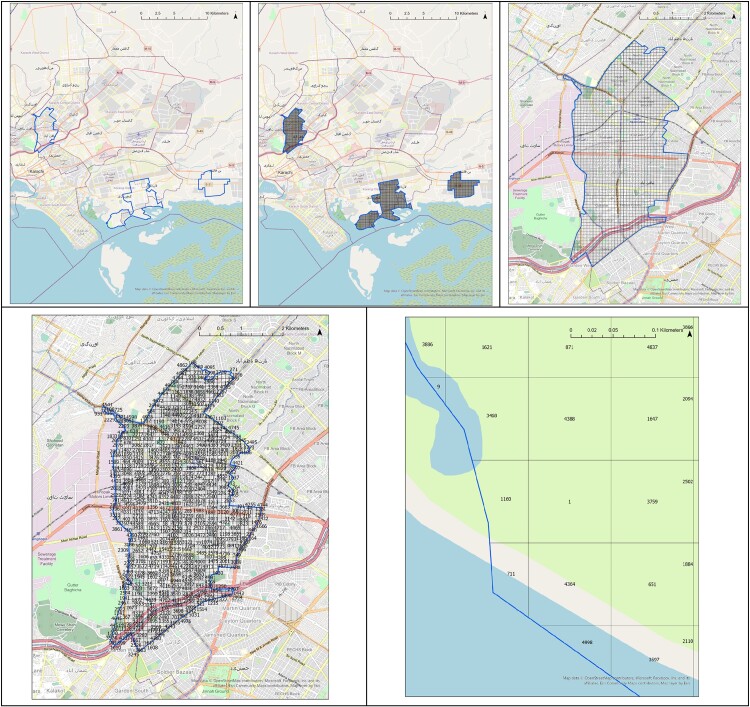
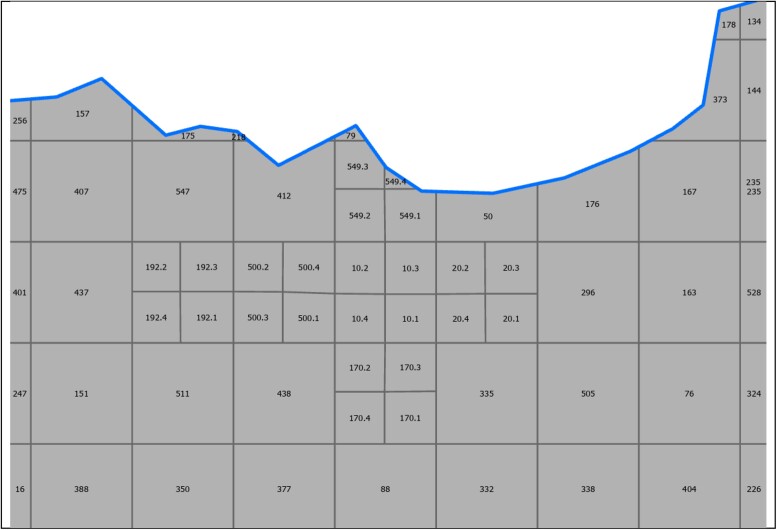
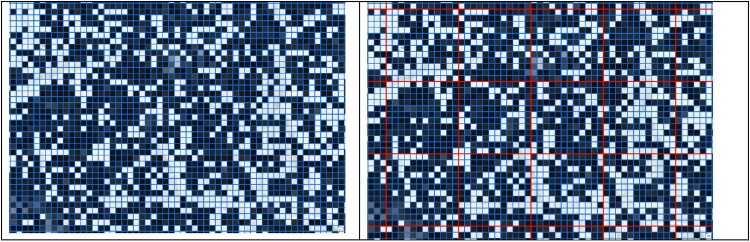
The Enterics for Global Health (EFGH) surveillance study will use a hybrid surveillance design, supplementing facility-based surveillance with population-based surveys to estimate population size and the proportion of children with diarrhea brought for care at EFGH health facilities. Continuous data collection over a 24 month period captures seasonality and ensures representative sampling of the population at risk during the period of facility-based enrollments. Study catchment areas are broken into randomized clusters, each sized to be feasibly enumerated by individual field teams.
The methods presented herein aim to minimize the challenges associated with hybrid surveillance, such as poor parity between survey area coverage and facility coverage, population fluctuations, seasonal variability, and adjustments to care-seeking behavior.
基于医疗机构的监测要准确估算腹泻发病率,需要估算高危人群数量,并考虑未就医的病例患者。全球健康肠道疾病监测研究(EFGH)将对人群分母和就医行为比例进行特征描述,以计算非洲、亚洲和拉丁美洲7个地点6至35个月儿童的腹泻发病率。
全球健康肠道疾病监测研究(EFGH)将采用混合监测设计,以基于人群的调查补充基于医疗机构的监测,以估算人口规模以及在EFGH医疗机构就医的腹泻儿童比例。在24个月期间持续收集数据可捕捉季节性变化,并确保在基于医疗机构登记期间对高危人群进行代表性抽样。研究集水区被划分为随机群组,每个群组的规模便于单个实地小组进行普查。
本文介绍的方法旨在尽量减少与混合监测相关的挑战,如调查区域覆盖范围与医疗机构覆盖范围之间的不均衡、人口波动、季节变化以及就医行为调整等。