
蜘蛛丝在生物医学和组织工程中的应用综述
Review of Spider Silk Applications in Biomedical and Tissue Engineering.
作者信息
Branković Marija, Zivic Fatima, Grujovic Nenad, Stojadinovic Ivan, Milenkovic Strahinja, Kotorcevic Nikola
机构信息
Institute for Information Technologies, University of Kragujevac, Jovana Cvijića bb, 34000 Kragujevac, Serbia.
Faculty of Engineering, University of Kragujevac, Liceja Knezevine Srbije 1A, 34000 Kragujevac, Serbia.
出版信息
Biomimetics (Basel). 2024 Mar 11;9(3):169. doi: 10.3390/biomimetics9030169.
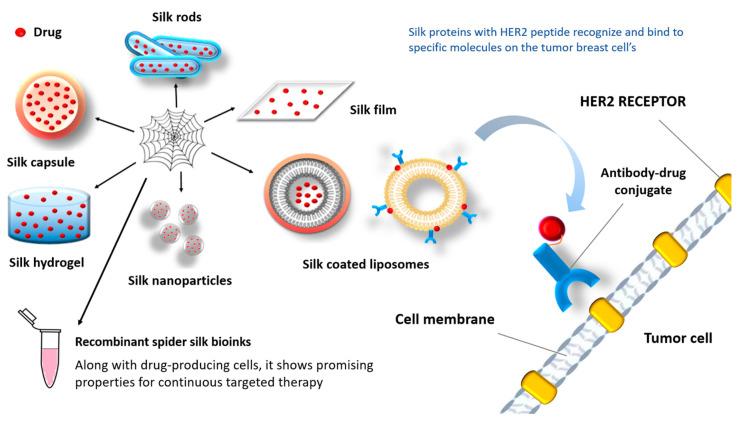
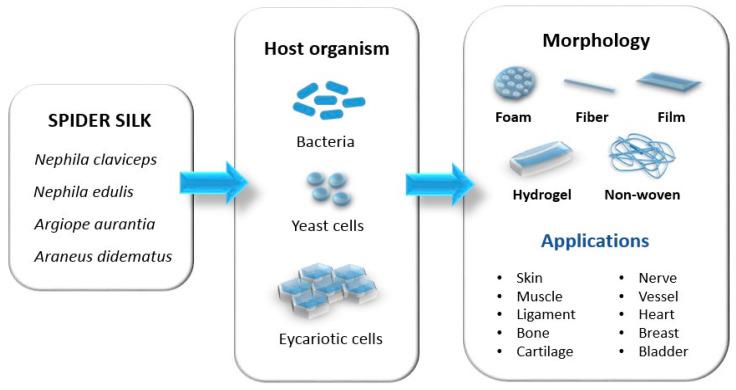
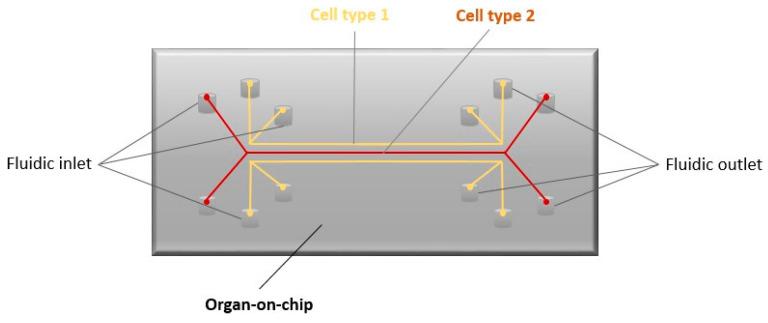
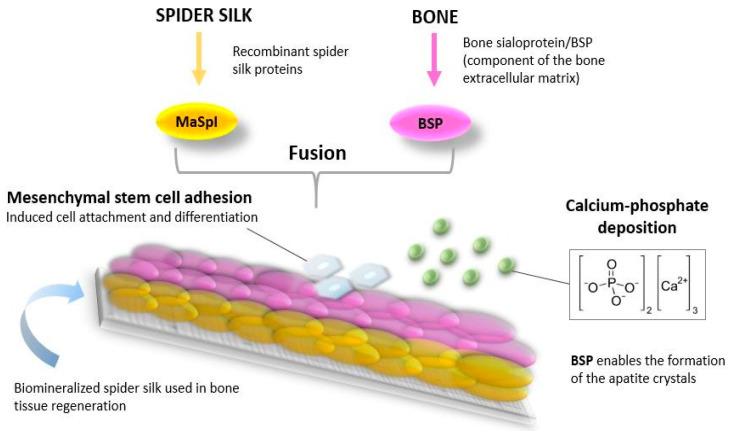
This review will present the latest research related to the production and application of spider silk and silk-based materials in reconstructive and regenerative medicine and tissue engineering, with a focus on musculoskeletal tissues, and including skin regeneration and tissue repair of bone and cartilage, ligaments, muscle tissue, peripheral nerves, and artificial blood vessels. Natural spider silk synthesis is reviewed, and the further recombinant production of spider silk proteins. Research insights into possible spider silk structures, like fibers (1D), coatings (2D), and 3D constructs, including porous structures, hydrogels, and organ-on-chip designs, have been reviewed considering a design of bioactive materials for smart medical implants and drug delivery systems. Silk is one of the toughest natural materials, with high strain at failure and mechanical strength. Novel biomaterials with silk fibroin can mimic the tissue structure and promote regeneration and new tissue growth. Silk proteins are important in designing tissue-on-chip or organ-on-chip technologies and micro devices for the precise engineering of artificial tissues and organs, disease modeling, and the further selection of adequate medical treatments. Recent research indicates that silk (films, hydrogels, capsules, or liposomes coated with silk proteins) has the potential to provide controlled drug release at the target destination. However, even with clear advantages, there are still challenges that need further research, including clinical trials.
本综述将介绍与蜘蛛丝及丝基材料在重建与再生医学以及组织工程中的生产和应用相关的最新研究,重点关注肌肉骨骼组织,包括皮肤再生以及骨、软骨、韧带、肌肉组织、周围神经的组织修复和人造血管。本文综述了天然蜘蛛丝的合成以及蜘蛛丝蛋白的进一步重组生产。考虑到用于智能医疗植入物和药物递送系统的生物活性材料的设计,对蜘蛛丝可能的结构,如纤维(一维)、涂层(二维)和三维构建体,包括多孔结构、水凝胶和芯片器官设计的研究见解也进行了综述。丝绸是最坚韧的天然材料之一,具有高断裂应变和机械强度。含有丝素蛋白的新型生物材料可以模拟组织结构并促进再生和新组织生长。丝蛋白在设计芯片组织或芯片器官技术以及用于人工组织和器官精确工程、疾病建模和进一步选择适当医疗治疗的微型设备方面很重要。最近的研究表明,丝绸(薄膜、水凝胶、胶囊或涂有丝蛋白的脂质体)有可能在目标部位实现可控药物释放。然而,即使有明显优势,仍存在需要进一步研究的挑战,包括临床试验。
 Zotero 插件