Bhardwaj Raju Lal, Parashar Aabha, Parewa Hanuman Prasad, Vyas Latika
College of Agriculture, Sumerpur-Pali, Agriculture University, Jodhpur 342304, Rajasthan, India.
Agricultural Research Substation, Sumerpur-Pali, Agriculture University, Jodhpur 342304, Rajasthan, India.
Foods. 2024 Mar 14;13(6):877. doi: 10.3390/foods13060877.
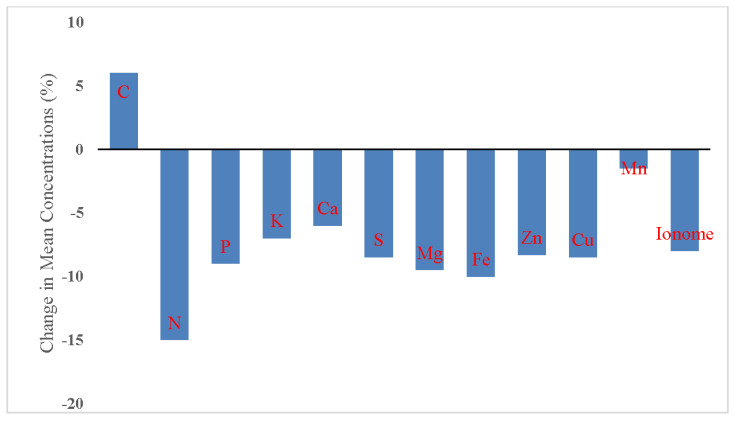
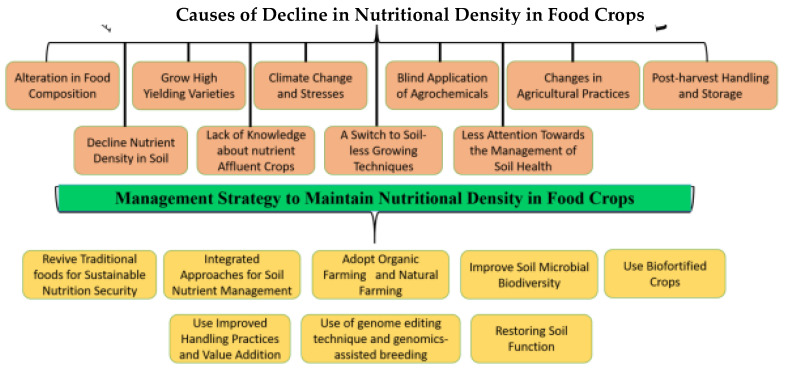
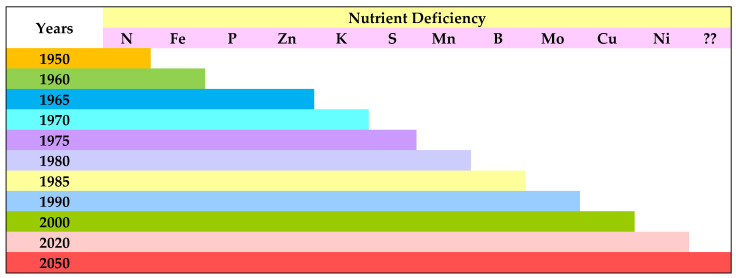
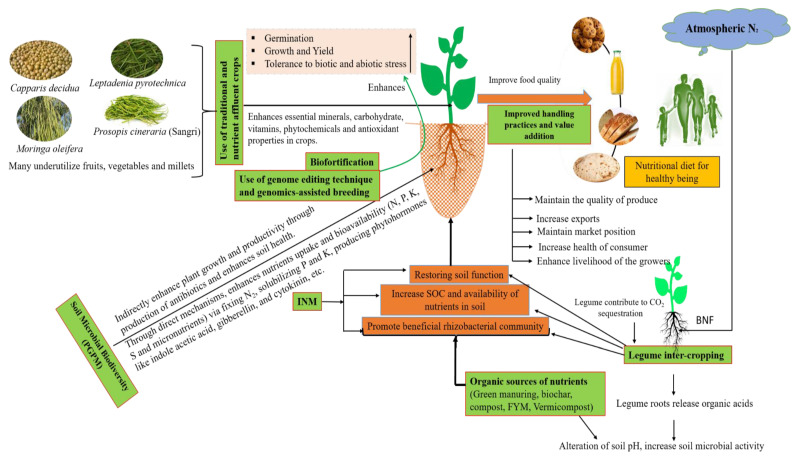
In the last sixty years, there has been an alarming decline in food quality and a decrease in a wide variety of nutritionally essential minerals and nutraceutical compounds in imperative fruits, vegetables, and food crops. The potential causes behind the decline in the nutritional quality of foods have been identified worldwide as chaotic mineral nutrient application, the preference for less nutritious cultivars/crops, the use of high-yielding varieties, and agronomic issues associated with a shift from natural farming to chemical farming. Likewise, the rise in atmospheric or synthetically elevated carbon dioxide could contribute to the extensive reductions in the nutritional quality of fruits, vegetables, and food crops. Since ancient times, nutrient-intense crops such as millets, conventional fruits, and vegetables have been broadly grown and are the most important staple food, but the area dedicated to these crops has been declining steadily over the past few decades and hastily after the green revolution era due to their poorer economic competitiveness with major commodities such as high-yielding varieties of potato, tomato, maize, wheat, and rice. The majority of the population in underdeveloped and developing countries have lower immune systems, are severely malnourished, and have multiple nutrient deficiency disorders due to poor dietary intake and less nutritious foods because of ignorance about the importance of our traditional nutrient-rich diets and ecofriendly organic farming methods. This critical review emphasizes the importance of balance and adequate nutrition as well as the need to improve soil biodiversity and fertility: those are main causes behind the decline in nutritional density. There is also emphasis on a possible way out of alleviating the decline nutritional density of food crops for the health and well-being of future generations.
在过去的六十年里,食物质量出现了惊人的下降,重要水果、蔬菜和粮食作物中多种营养必需矿物质和营养化合物的含量也有所减少。全球范围内,已确定食物营养质量下降背后的潜在原因包括混乱的矿物质养分施用、对营养较差的品种/作物的偏好、高产品种的使用以及与从自然种植向化学种植转变相关的农艺问题。同样,大气中二氧化碳浓度的上升或人为增加的二氧化碳也可能导致水果、蔬菜和粮食作物的营养质量大幅下降。自古以来,小米、传统水果和蔬菜等营养丰富的作物广泛种植,是最重要的主食,但由于它们与高产的土豆、番茄、玉米、小麦和水稻等主要大宗商品相比经济竞争力较差,在过去几十年里,尤其是绿色革命时代之后,这些作物的种植面积一直在稳步下降。由于对传统营养丰富饮食和生态友好型有机种植方法的重要性缺乏了解,欠发达国家和发展中国家的大多数人口免疫系统较弱,严重营养不良,且因饮食摄入不足和食物营养较差而患有多种营养缺乏症。这篇综述强调了营养均衡和充足的重要性,以及改善土壤生物多样性和肥力的必要性:这些是营养密度下降的主要原因。同时也强调了一种可能的方法,即减轻粮食作物营养密度下降,以保障子孙后代的健康和福祉。