Department of Gastroenterology, the Affiliated Hospital of Southwest Medical University, Luzhou, China.
Nuclear Medicine and Molecular Imaging Key Laboratory of Sichuan Province, Luzhou, China.
Transl Psychiatry. 2024 Mar 28;14(1):167. doi: 10.1038/s41398-024-02864-5.
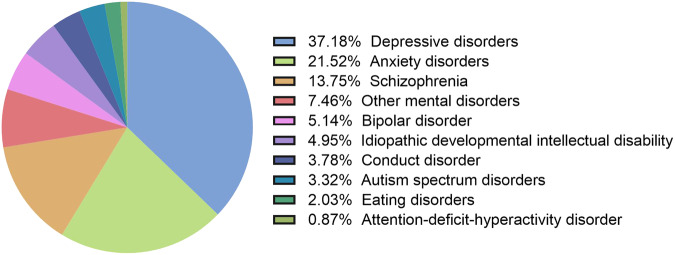
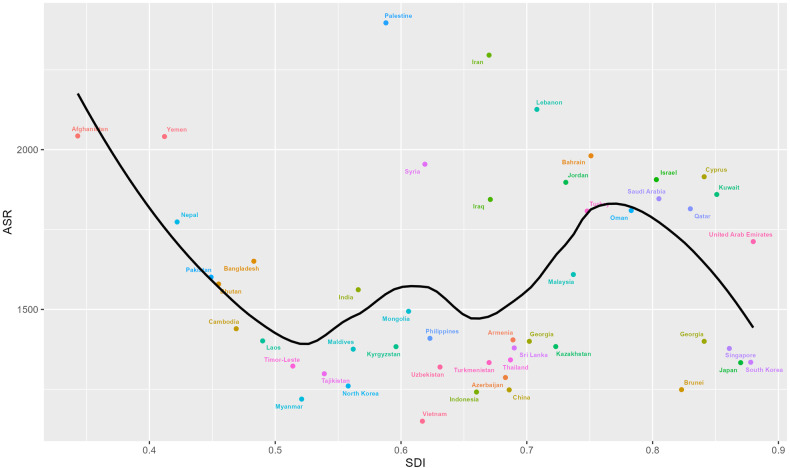
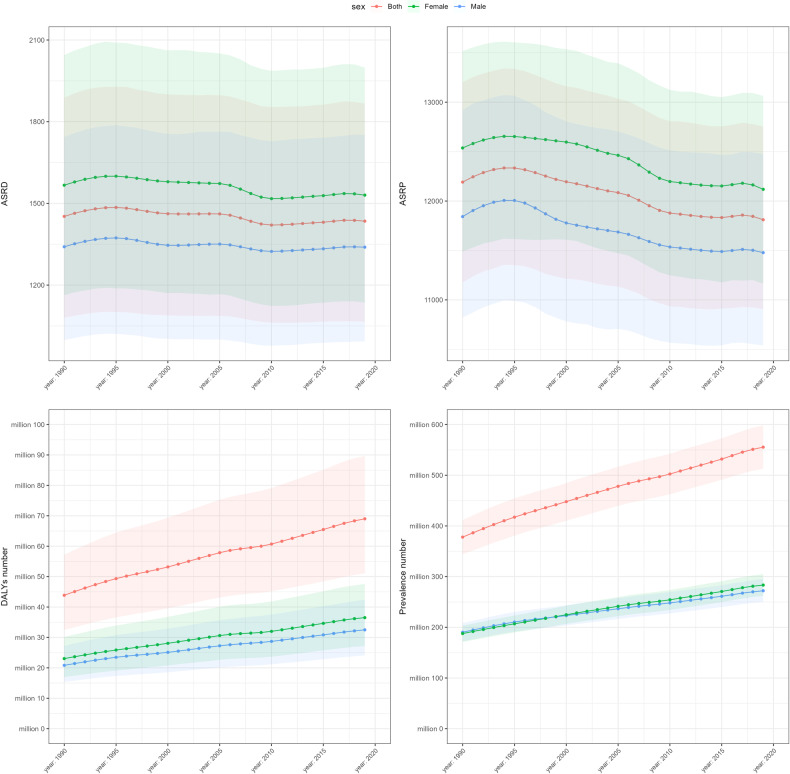
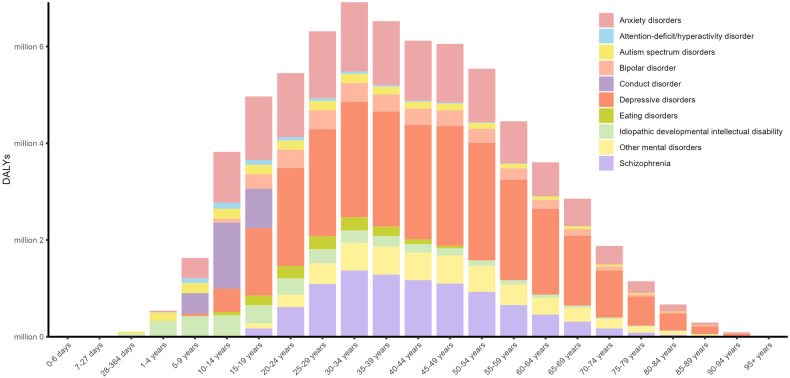
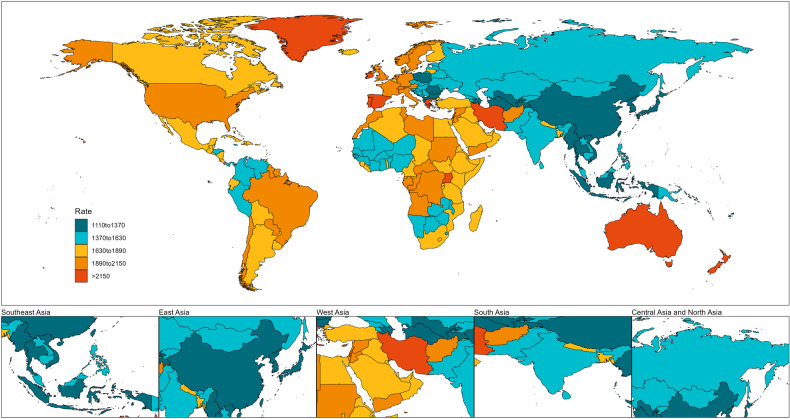
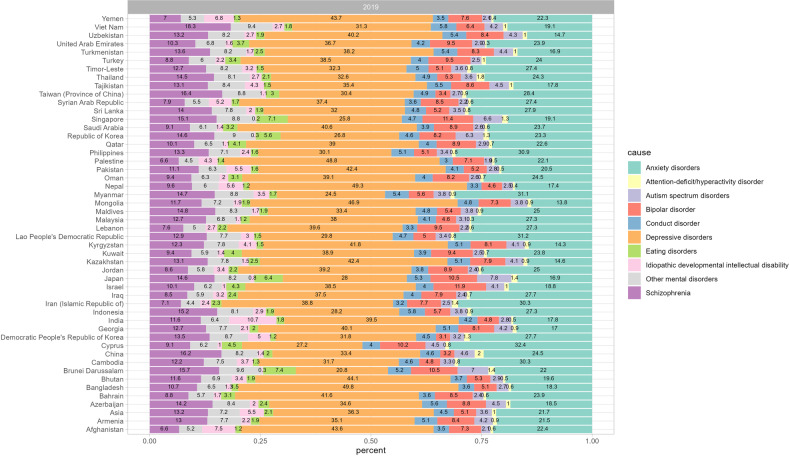
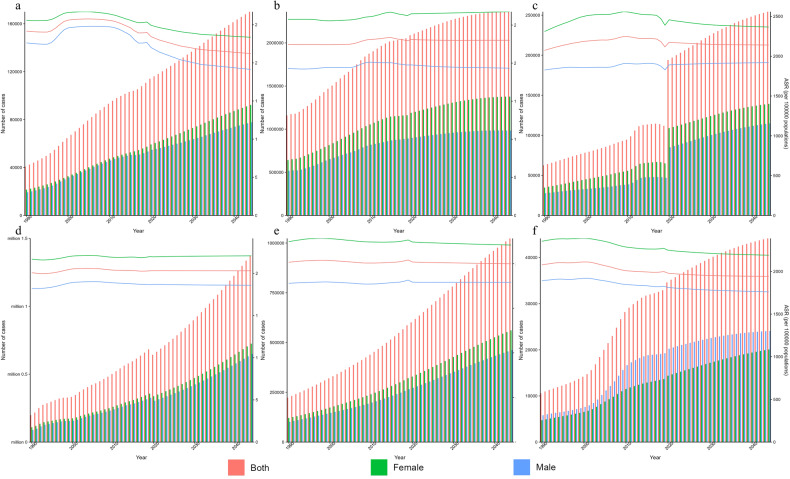
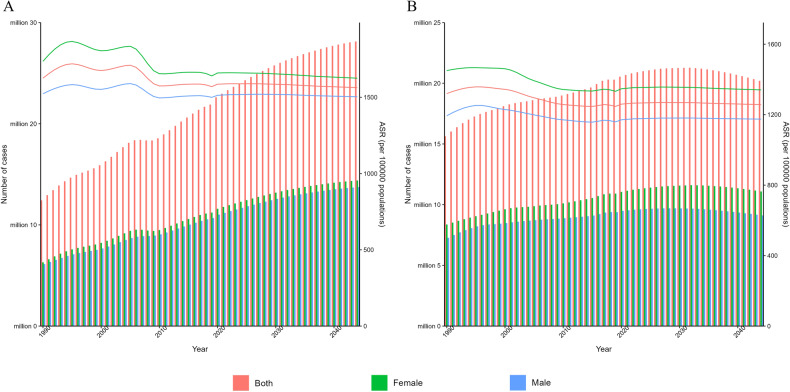
Mental disorders are the leading contributors to the globally nonfatal burden of disease. This study was aimed to estimate the burden of mental disorders in Asian countries. Based on GBD 2019, the prevalence and disability-adjusted life of years (DALYs) rates with 95% uncertainty intervals (UI) were estimated in Asian countries. Predictions for the future burden of 8 selected countries, ranks of the burden of mental disorders and correlations with Sociodemographic Index (SDI) were also estimated. During the past 3 decades, while the number of DALYs of mental disorders increased from 43.9 million (95% UI: 32.5-57.2) to 69.0 million (95% UI: 51.0-89.7), the age-standardized rates of DALYs of mental disorders remained largely consistent from 1452.2 (95% UI: 1080.16-1888.53) per 100,000 population in 1990 to 1434.82 (95% UI: 1065.02-1867.27) per 100,000 population in 2019, ranked as the eighth most significant disease burden in Asia in 2019. Depressive disorders (37.2%) were the leading contributors to the age-standardized DALY rates of mental disorders in Asia, followed by anxiety disorders (21.5%). The age-standardized DALY rates in females were higher than their male counterparts, both peaked at 30-34 years. The age-standardized DALY rates were predicted to remain stable, with the number of DALYs presented an upward trend in the future. There was no significant correlation between the burden of mental disorders and SDI. All mental disorders ranked higher in 2019, compared in 1990. To reduce this burden, urgent measures for prevention, treatment, and rehabilitation for mental disorders need to be taken by Asian governments.
精神障碍是全球非致命疾病负担的主要原因。本研究旨在估计亚洲国家精神障碍的负担。基于 GBD 2019,估计了亚洲国家精神障碍的患病率和残疾调整生命年(DALYs)率及其 95%置信区间(UI)。还预测了 8 个选定国家的未来负担、精神障碍负担的排名以及与社会人口指数(SDI)的相关性。在过去的 30 年中,尽管精神障碍的 DALYs 数量从 4390 万(95%UI:3250-5720)增加到 6900 万(95%UI:5100-8970),但精神障碍的年龄标准化 DALYs 率在很大程度上保持不变,从 1990 年的每 10 万人 1452.2(95%UI:1080.16-1888.53)到 2019 年的每 10 万人 1434.82(95%UI:1065.02-1867.27),在 2019 年被列为亚洲第八大疾病负担。在亚洲,抑郁障碍(37.2%)是导致精神障碍年龄标准化 DALY 率的主要原因,其次是焦虑障碍(21.5%)。女性的年龄标准化 DALY 率高于男性,两者都在 30-34 岁达到峰值。预计年龄标准化 DALY 率将保持稳定,未来 DALYs 数量呈上升趋势。精神障碍负担与 SDI 之间没有显著相关性。与 1990 年相比,所有精神障碍在 2019 年的排名都更高。为了减轻这一负担,亚洲各国政府需要采取紧急措施,预防、治疗和康复精神障碍。