Royal Netherlands Institute for Sea Research, Department of Coastal Systems, P.O. Box 59, 1790, AB, Den Burg, The Netherlands.
School of Aquatic and Fishery Sciences, University of Washington, 1122 NE Boat St, 98195, Seattle, WA, USA.
Nat Commun. 2024 Apr 3;15(1):2885. doi: 10.1038/s41467-024-47064-3.
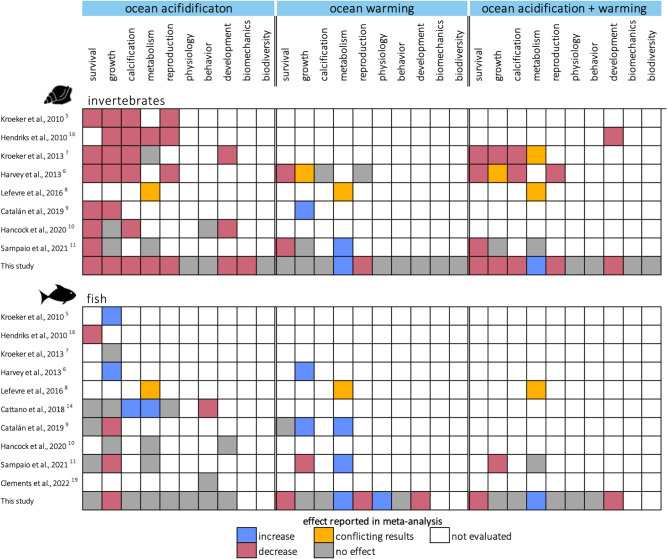
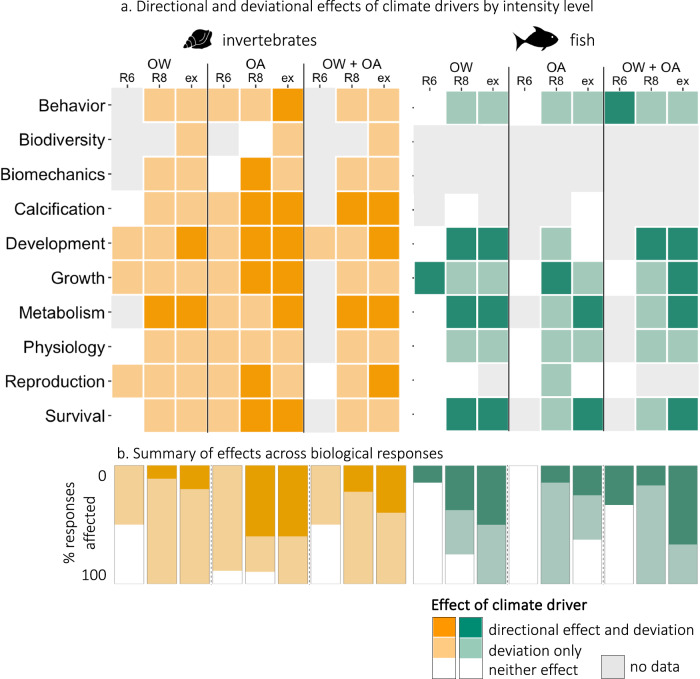
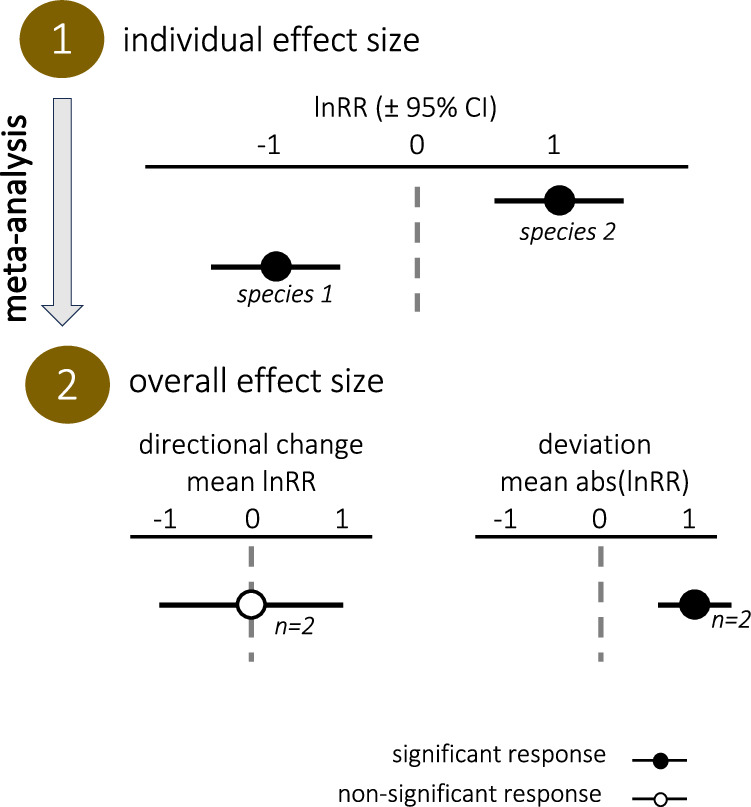
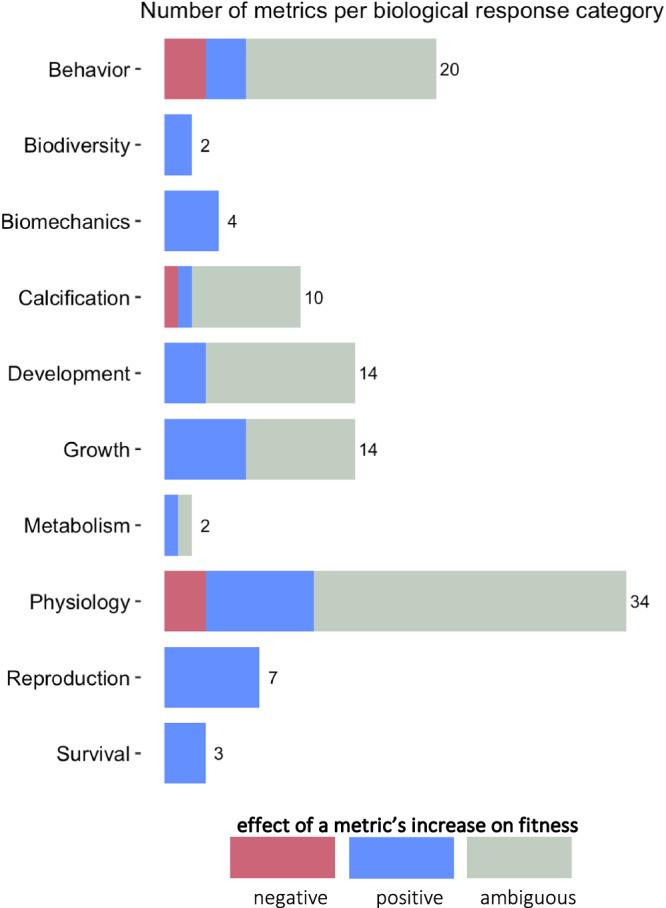
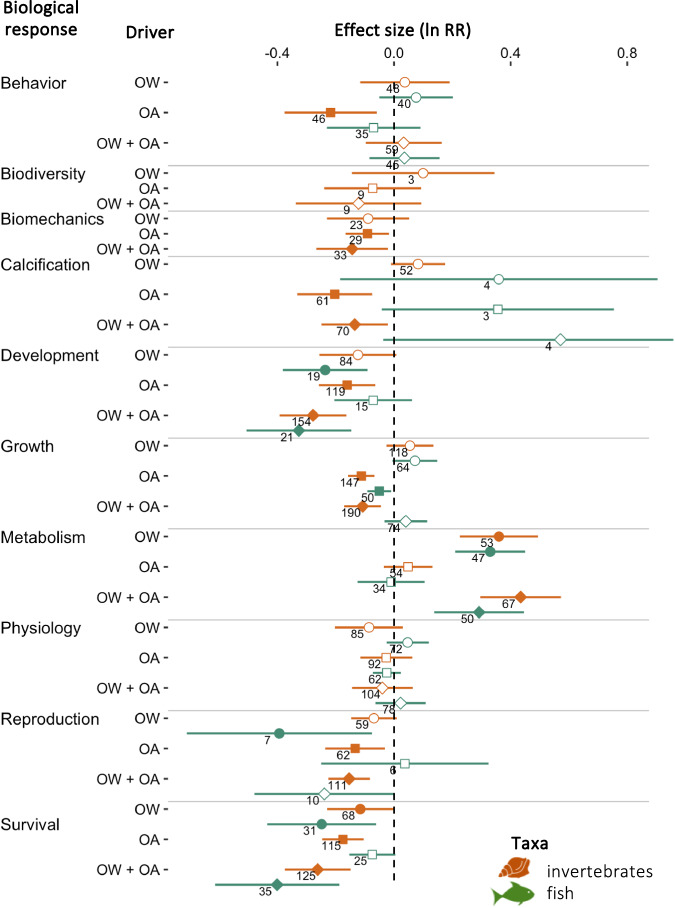
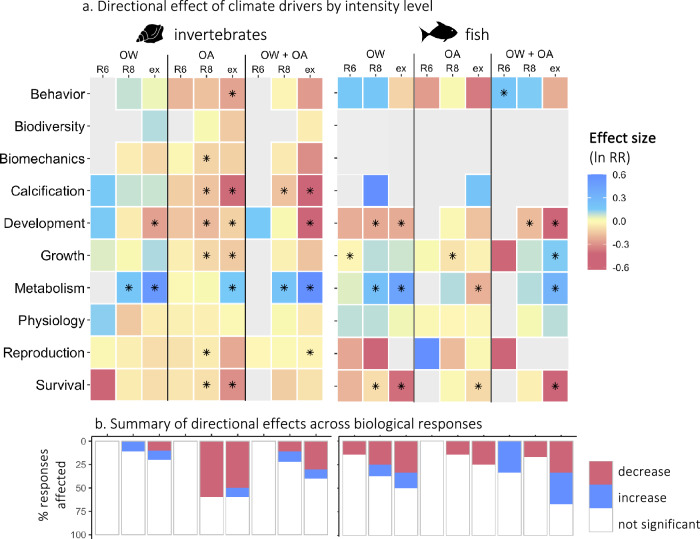
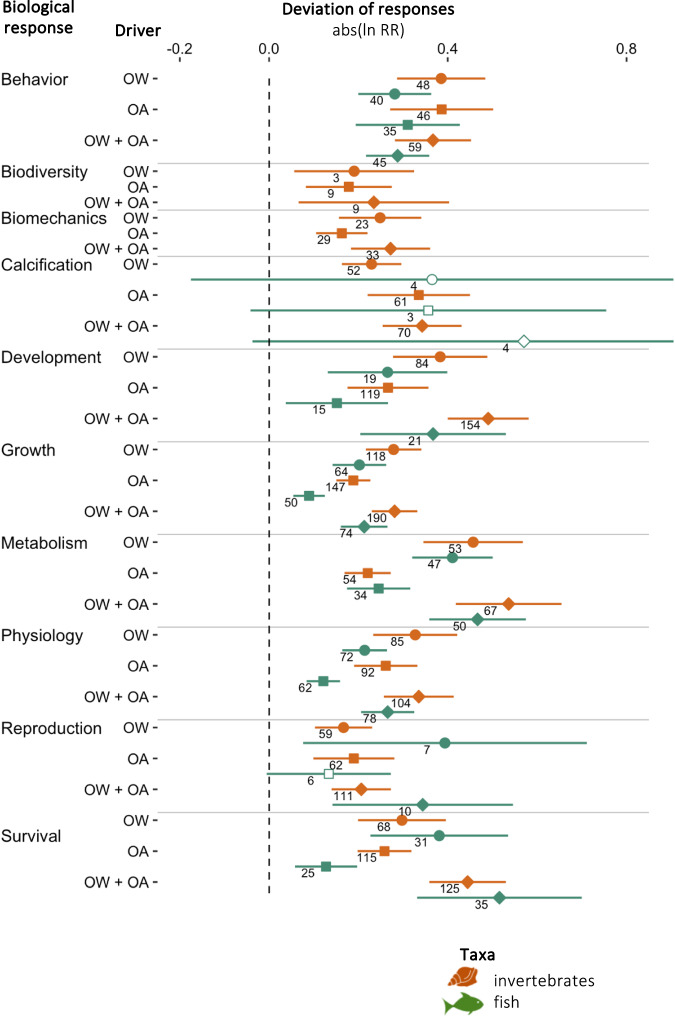
Conflicting results remain on the impacts of climate change on marine organisms, hindering our capacity to predict the future state of marine ecosystems. To account for species-specific responses and for the ambiguous relation of most metrics to fitness, we develop a meta-analytical approach based on the deviation of responses from reference values (absolute change) to complement meta-analyses of directional (relative) changes in responses. Using this approach, we evaluate responses of fish and invertebrates to warming and acidification. We find that climate drivers induce directional changes in calcification, survival, and metabolism, and significant deviations in twice as many biological responses, including physiology, reproduction, behavior, and development. Widespread deviations of responses are detected even under moderate intensity levels of warming and acidification, while directional changes are mostly limited to more severe intensity levels. Because such deviations may result in ecological shifts impacting ecosystem structures and processes, our results suggest that climate change will likely have stronger impacts than those previously predicted based on directional changes alone.
气候变化对海洋生物的影响仍存在争议,这阻碍了我们预测海洋生态系统未来状态的能力。为了考虑物种特异性的响应,以及大多数指标与适应性的关系不明确,我们开发了一种基于响应偏离参考值(绝对变化)的元分析方法,以补充对响应的定向(相对)变化的元分析。使用这种方法,我们评估了鱼类和无脊椎动物对变暖酸化的响应。我们发现,气候驱动因素导致钙化、生存和代谢发生定向变化,并且有两倍多的生物学响应出现显著偏差,包括生理学、繁殖、行为和发育。即使在中等强度的变暖酸化下,也检测到广泛的响应偏差,而定向变化主要限于更严重的强度水平。由于这种偏差可能导致影响生态系统结构和过程的生态转变,我们的结果表明,气候变化的影响可能比以前仅基于定向变化预测的影响更强烈。