
基于人工智能的矿山工人职业性噪声性听力损失早期预警系统的开发
Development of an artificial intelligence based occupational noise induced hearing loss early warning system for mine workers.
作者信息
Madahana Milka C I, Ekoru John E D, Sebothoma Ben, Khoza-Shangase Katijah
机构信息
School of Mining Engineering, University of the Witwatersrand, Johannesburg, South Africa.
School of Electrical and Information Engineering, University of the Witwatersrand, Johannesburg, South Africa.
出版信息
Front Neurosci. 2024 Mar 21;18:1321357. doi: 10.3389/fnins.2024.1321357. eCollection 2024.
INTRODUCTION
Occupational Noise Induced Hearing Loss (ONIHL) is one of the most prevalent conditions among mine workers globally. This reality is due to mine workers being exposed to noise produced by heavy machinery, rock drilling, blasting, and so on. This condition can be compounded by the fact that mine workers often work in confined workspaces for extended periods of time, where little to no attenuation of noise occurs. The objective of this research work is to present a preliminary study of the development of a hearing loss, early monitoring system for mine workers.
METHODOLOGY
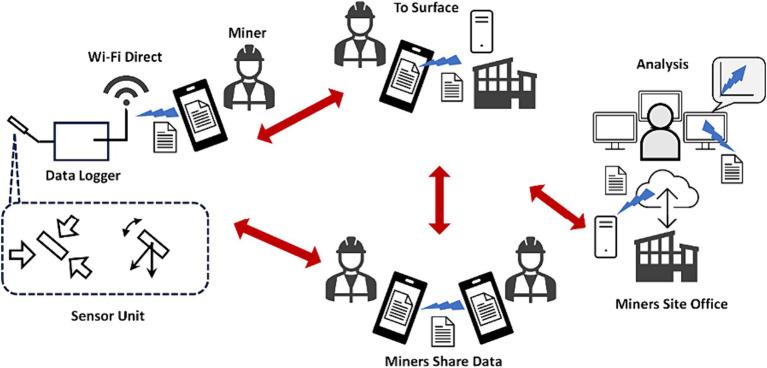
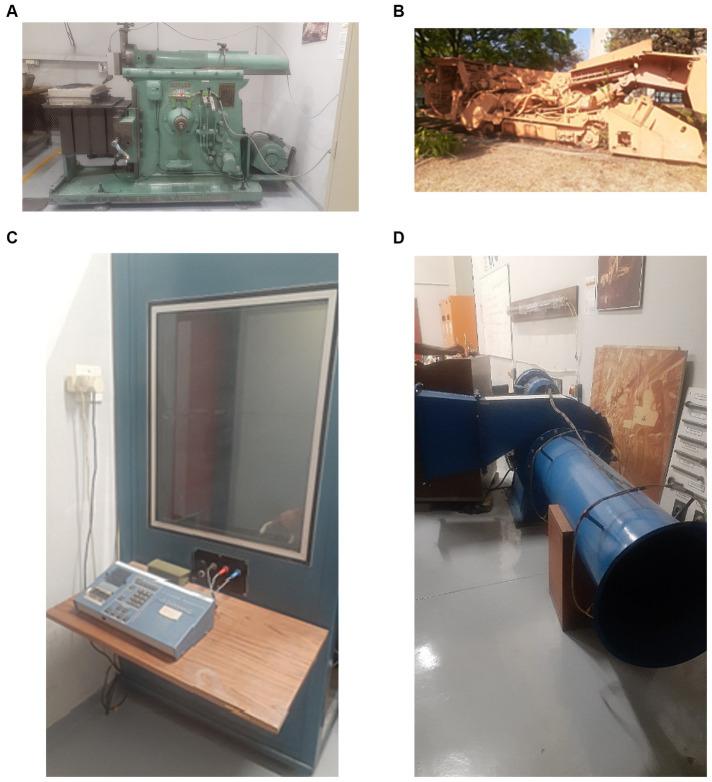
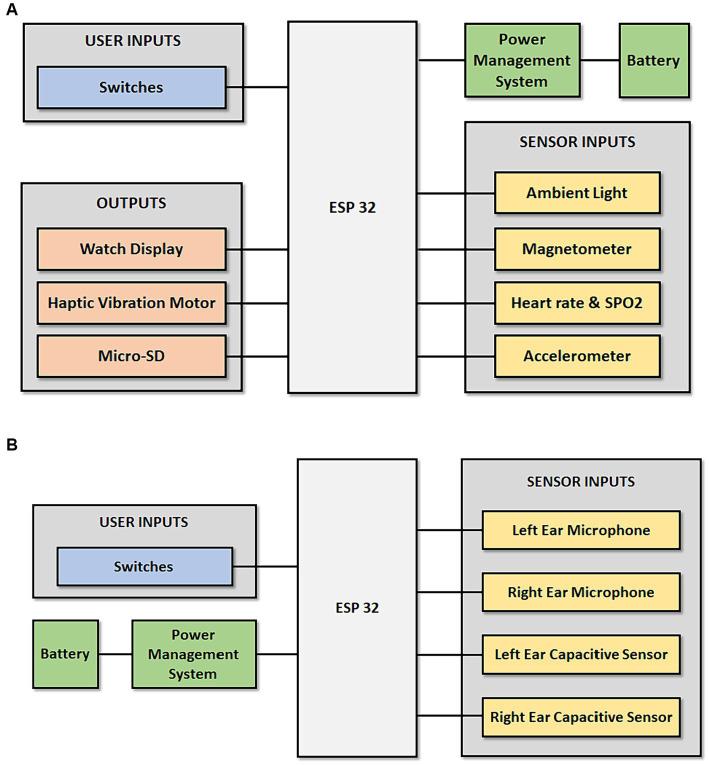
The system consists of a smart watch and smart hearing muff equipped with sound sensors which collect noise intensity levels and the frequency of exposure. The collected information is transferred to a database where machine learning algorithms namely the logistic regression, support vector machines, decision tree and Random Forest Classifier are used to classify and cluster it into levels of priority. Feedback is then sent from the database to a mine worker smart watch based on priority level. In cases where the priority level is extreme, indicating high levels of noise, the smart watch vibrates to alert the miner. The developed system was tested in a mock mine environment consisting of a 67 metres tunnel located in the basement of a building whose roof top represents the "surface" of a mine. The mock-mine shape, size of the tunnel, steel-support infrastructure, and ventilation system are analogous to deep hard-rock mine. The wireless channel propagation of the mock-mine is statistically characterized in 2.4-2.5 GHz frequency band. Actual underground mine material was used to build the mock mine to ensure it mimics a real mine as close as possible. The system was tested by 50 participants both male and female ranging from ages of 18 to 60 years.
RESULTS AND DISCUSSION
Preliminary results of the system show decision tree had the highest accuracy compared to the other algorithms used. It has an average testing accuracy of 91.25% and average training accuracy of 99.79%. The system also showed a good response level in terms of detection of noise input levels of exposure, transmission of the information to the data base and communication of recommendations to the miner. The developed system is still undergoing further refinements and testing prior to being tested in an actual mine.
引言
职业性噪声所致听力损失(ONIHL)是全球矿工中最普遍的病症之一。这一现状是由于矿工暴露于重型机械、凿岩、爆破等产生的噪声中。此外,矿工经常在狭小的工作空间长时间工作,噪声几乎没有或根本没有衰减,这使得情况更加复杂。本研究工作的目的是对一种针对矿工听力损失的早期监测系统的开发进行初步研究。
方法
该系统由一块智能手表和配备声音传感器的智能听力护罩组成,这些传感器收集噪声强度水平和暴露频率。收集到的信息被传输到一个数据库,在那里使用逻辑回归、支持向量机、决策树和随机森林分类器等机器学习算法对其进行分类并聚类为优先级水平。然后根据优先级水平从数据库向矿工智能手表发送反馈。在优先级水平极高,表明噪声水平很高的情况下,智能手表会振动以提醒矿工。所开发的系统在一个模拟矿井环境中进行了测试,该环境由位于一栋建筑地下室的一条67米长的隧道组成,其屋顶代表矿井的“地面”。模拟矿井的形状、隧道尺寸、钢支撑基础设施和通风系统类似于深部硬岩矿井。模拟矿井的无线信道传播在2.4 - 2.5 GHz频段进行了统计表征。使用实际的地下矿井材料建造模拟矿井,以确保其尽可能接近真实矿井。该系统由50名年龄在18至60岁之间的男女参与者进行了测试。
结果与讨论
该系统初步结果表明,与所使用的其他算法相比,决策树具有最高的准确率。其平均测试准确率为91.25%,平均训练准确率为99.79%。该系统在检测噪声暴露输入水平、将信息传输到数据库以及向矿工传达建议方面也表现出良好的响应水平。所开发的系统在实际矿井中进行测试之前仍在进一步完善和测试。





 Zotero 插件