Shaikh Raheel A, Vowles David J, Dinovitser Alex, Allison Andrew, Abbott Derek
School of Electrical and Mechanical Engineering, The University of Adelaide, Adelaide, SA 5005, Australia.
PNAS Nexus. 2024 Mar 25;3(4):pgae127. doi: 10.1093/pnasnexus/pgae127. eCollection 2024 Apr.
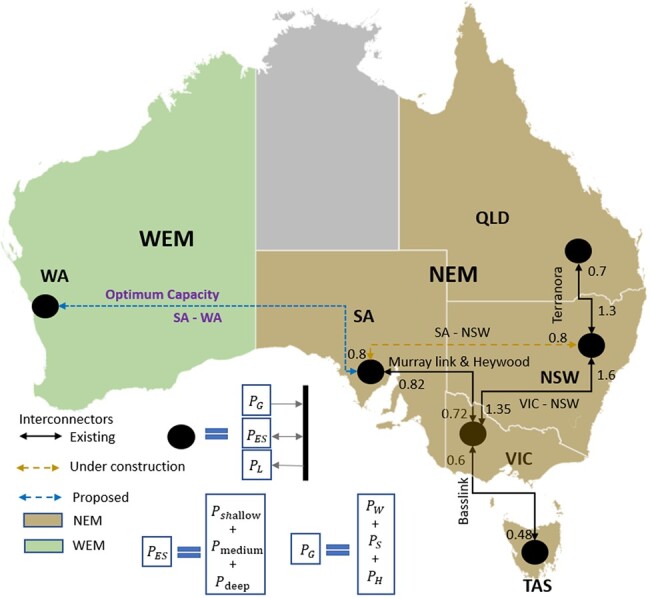
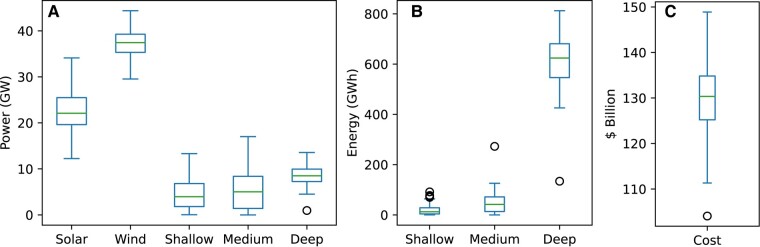
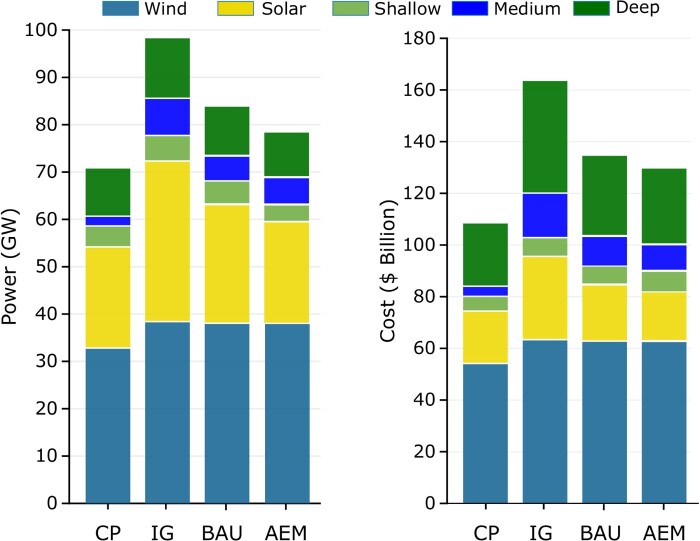
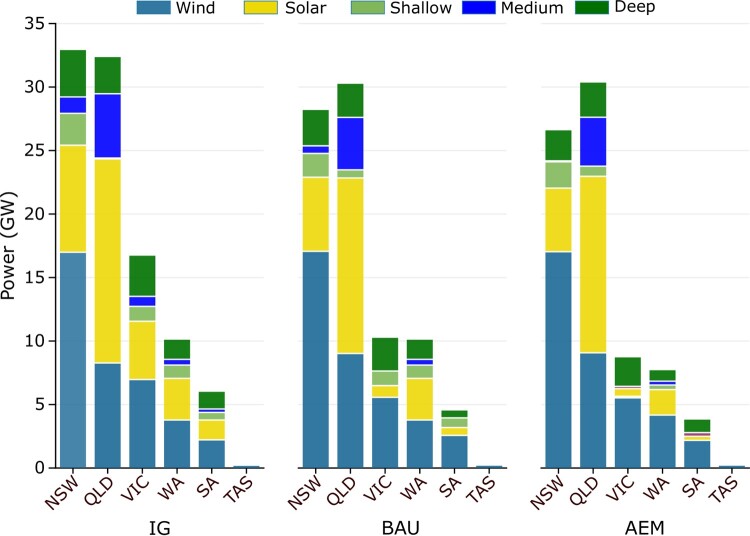
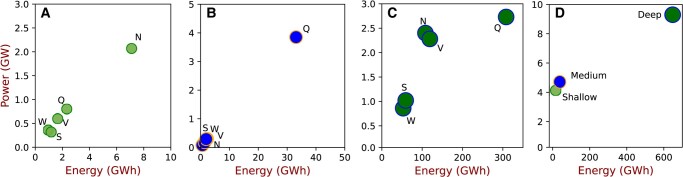
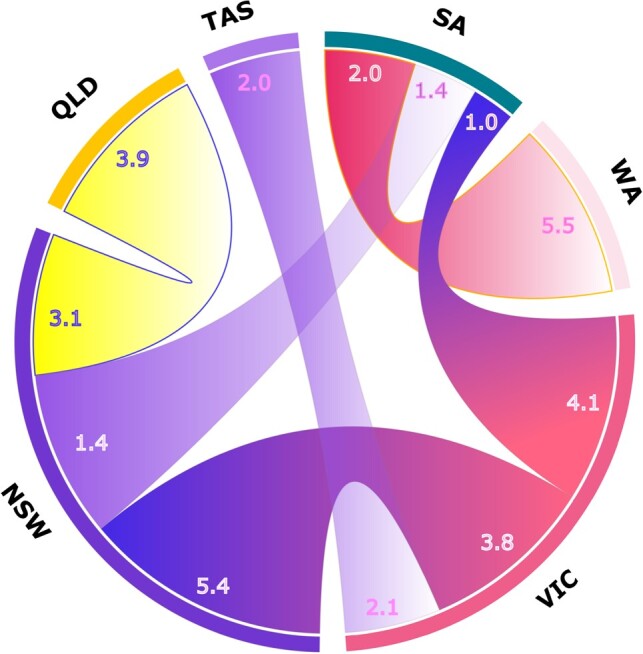
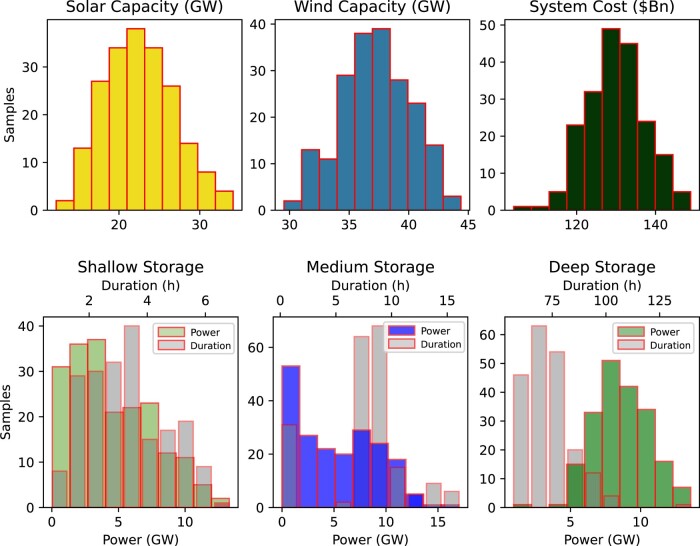
Transitioning from a fossil-fuel-dependent economy to one based on renewable energy requires significant investment and technological advancement. While wind and solar technologies provide lower cost electricity, enhanced energy storage and transmission infrastructure come at a cost for managing renewable intermittency. Energy storage systems vary in characteristics and costs, and future grids will incorporate multiple technologies, yet the optimal combination of storage technologies and the role of interconnectors in alleviating storage needs are not widely explored. This study focuses on optimal generation-storage capacity requirements to elucidate associated investments. We propose a multitimescale storage solution consisting of three storage categories and an interconnector between Australia's eastern and western grids. Subsequently, through an extensive sensitivity analysis, we investigate the impact of specific storage technologies and cost variations. Our findings demonstrate that the proposed interconnector offers a cost-effective solution, reducing generation and storage power capacity needs by 6 and 14%, respectively, resulting in 4% savings on overall investment costs. Moreover, the study's sensitivity analysis reveals that wind generation provides 50-70% of the energy demand for the least-cost solution. Despite storage inefficiencies, long-duration storage would need to be deployed to support power capacity for 2-4 days, representing 15-40% of peak demand, depending on future technology costs. Subsequently, achieving a fully renewable electricity sector in Australia requires a significant expansion of generation and storage infrastructure, with a 13-fold increase in storage power capacity and a 40-fold increase in storage energy capacity compared to existing levels.
从依赖化石燃料的经济向基于可再生能源的经济转型需要大量投资和技术进步。虽然风能和太阳能技术能提供成本较低的电力,但增强储能和输电基础设施来应对可再生能源的间歇性是有成本的。储能系统在特性和成本方面各不相同,未来的电网将采用多种技术,然而储能技术的最佳组合以及互联器在缓解储能需求方面的作用尚未得到广泛探讨。本研究聚焦于最优发电-储能容量需求以阐明相关投资。我们提出了一种多时间尺度储能解决方案,该方案由三类储能以及澳大利亚东部和西部电网之间的一个互联器组成。随后,通过广泛的敏感性分析,我们研究了特定储能技术和成本变化的影响。我们的研究结果表明,所提出的互联器提供了一种具有成本效益的解决方案,分别将发电和储能功率容量需求降低了6%和14%,使总体投资成本节省了4%。此外,该研究的敏感性分析表明,对于成本最低的解决方案,风能发电量满足50%-70%的能源需求。尽管存在储能效率低下的问题,但仍需要部署长时间储能来支持2至4天的功率容量,这占峰值需求的15%-40%,具体取决于未来的技术成本。随后,要在澳大利亚实现完全可再生的电力部门,需要大幅扩大发电和储能基础设施,与现有水平相比,储能功率容量增加13倍,储能能量容量增加40倍。