• 文献检索
  • 文档翻译
  • 深度研究
  • 学术资讯
  • Suppr Zotero 插件Zotero 插件
  • 邀请有礼
  • 套餐&价格
  • 历史记录
应用&插件
Suppr Zotero 插件Zotero 插件浏览器插件Mac 客户端Windows 客户端微信小程序
定价
高级版会员购买积分包购买API积分包
服务
文献检索文档翻译深度研究API 文档MCP 服务
关于我们
关于 Suppr公司介绍联系我们用户协议隐私条款
关注我们

Suppr 超能文献

核心技术专利:CN118964589B侵权必究
粤ICP备2023148730 号-1Suppr @ 2026

文献检索

告别复杂PubMed语法,用中文像聊天一样搜索,搜遍4000万医学文献。AI智能推荐,让科研检索更轻松。

立即免费搜索

文件翻译

保留排版,准确专业,支持PDF/Word/PPT等文件格式,支持 12+语言互译。

免费翻译文档

深度研究

AI帮你快速写综述,25分钟生成高质量综述,智能提取关键信息,辅助科研写作。

立即免费体验

经 TiO-AgNPs 处理的创新型纺织品,采用琥珀酸作为交联剂,用于医疗用途。

Innovative textiles treated with TiO-AgNPs with succinic acid as a cross-linking agent for medical uses.

机构信息

Biochemistry Department, Faculty of Agriculture, Cairo University, Giza, Egypt.

Cotton Technology Research Division, Cotton Research Institute, Agriculture Research Center, Giza, Egypt.

出版信息

Sci Rep. 2024 Apr 5;14(1):8045. doi: 10.1038/s41598-024-56653-7.

DOI:10.1038/s41598-024-56653-7
PMID:38580674
原文链接:https://pmc.ncbi.nlm.nih.gov/articles/PMC10997752/
Abstract

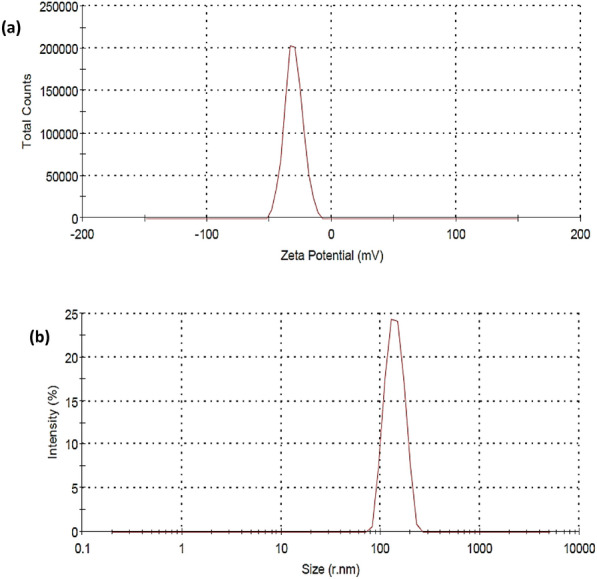
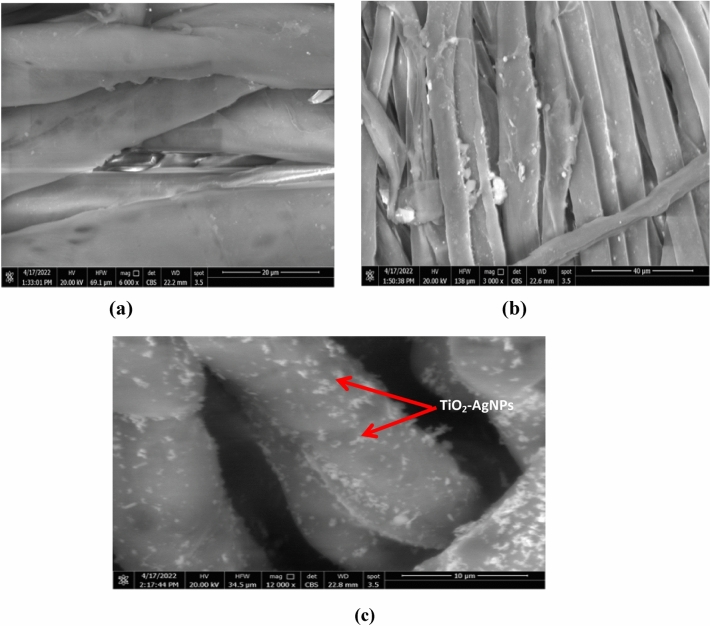
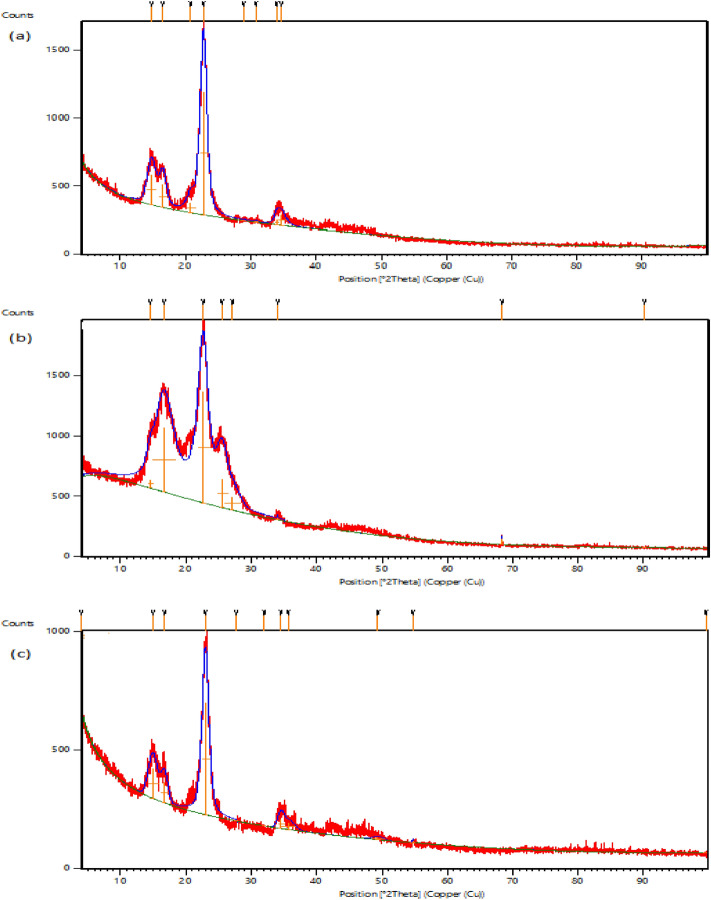
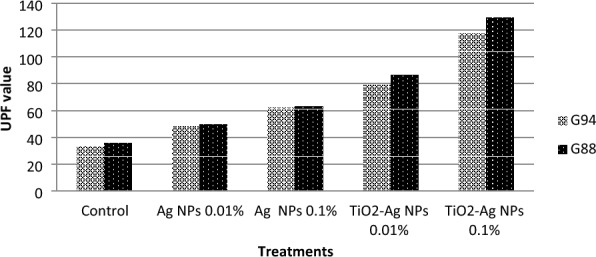
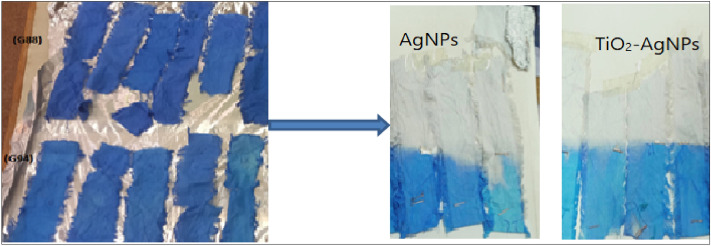
Silver and titanium-silver nanoparticles have unique properties that make the textile industry progress through the high quality of textiles. Preparation of AgNPs and TiO-Ag core-shell nanoparticles in different concentrations (0.01% and 0.1% OWF) and applying it to cotton fabrics (Giza 88 and Giza 94) by using succinic acid 5%/SHP as a cross-linking agent. Ultra-violet visible spectroscopy (UV-Vis), X-ray diffraction (XRD), dynamic light scattering (DLS), zeta potential, transmission electron microscopy (TEM), scanning electron microscopy/energy-dispersive X-ray (SEM-EDX) are tools for AgNPs and TiO-AgNPs characterization and the treated cotton. The resulting AgNPs and TiO-AgNPs were added to cotton fabrics at different concentrations. The antimicrobial activities, UV protection, self-cleaning, and the treated fabrics' mechanical characteristics were investigated. Silver nanoparticles and titanium dioxide-silver nanoparticles core-shell were prepared to be used in the treatment of cotton fabrics to improve their UV protection properties, self-cleaning, elongation and strength, as well as the antimicrobial activities to use the produced textiles for medical and laboratory uses and to increase protection for medical workers taking into account the spread of infection. The results demonstrated that a suitable distribution of prepared AgNPs supported the spherical form. Additionally, AgNPs and TiO-AgNPs have both achieved stability, with values of (- 20.8 mV and - 30 mV, respectively). The synthesized nanoparticles spread and penetrated textiles' surfaces with efficiency. The findings demonstrated the superior UV protection value (UPF 50+) and self-cleaning capabilities of AgNPs and TiO-AgNPs. In the treatment with 0.01% AgNPs and TiO-AgNPs, the tensile strength dropped, but the mechanical characteristics were enhanced by raising the concentration to 0.1%. The results of this investigation demonstrated that the cotton fabric treated with TiO-AgNPs exhibited superior general characteristics when compared to the sample treated only with AgNPs.

摘要

银和钛银纳米粒子具有独特的性质,使纺织工业通过高质量的纺织品取得进步。以琥珀酸 5%/SHP 为交联剂,在不同浓度(0.01%和 0.1%OWF)下制备 AgNPs 和 TiO-Ag 核壳纳米粒子,并将其应用于棉织物(Giza 88 和 Giza 94)。紫外可见分光光度法(UV-Vis)、X 射线衍射(XRD)、动态光散射(DLS)、zeta 电位、透射电子显微镜(TEM)、扫描电子显微镜/能谱(SEM-EDX)是 AgNPs 和 TiO-AgNPs 及处理后的棉纤维的表征工具。所得的 AgNPs 和 TiO-AgNPs 以不同浓度添加到棉织物中。研究了其抗菌活性、紫外防护、自清洁以及处理后织物的机械性能。制备银纳米粒子和二氧化钛-银纳米粒子核壳,用于处理棉织物,以提高其紫外防护性能、自清洁、伸长率和强度,以及抗菌活性,以便将所生产的纺织品用于医疗和实验室用途,并增加对医务人员的保护,以防止感染的传播。结果表明,AgNPs 具有合适的分布,支持其球形形态。此外,AgNPs 和 TiO-AgNPs 均达到稳定状态,zeta 电位分别为(-20.8 mV 和-30 mV)。合成的纳米粒子有效地扩散并渗透到纺织品的表面。研究结果表明,AgNPs 和 TiO-AgNPs 具有较高的紫外防护值(UPF50+)和自清洁能力。在处理 0.01%AgNPs 和 TiO-AgNPs 时,拉伸强度下降,但当浓度提高到 0.1%时,机械性能得到增强。研究结果表明,与仅用 AgNPs 处理的样品相比,用 TiO-AgNPs 处理的棉织物具有更好的综合特性。
https://cdn.ncbi.nlm.nih.gov/pmc/blobs/4e07/10997752/a141fcf2fb7c/41598_2024_56653_Fig12_HTML.jpg
https://cdn.ncbi.nlm.nih.gov/pmc/blobs/4e07/10997752/6e1399c52b41/41598_2024_56653_Fig1_HTML.jpg
https://cdn.ncbi.nlm.nih.gov/pmc/blobs/4e07/10997752/8e4977ffeb5b/41598_2024_56653_Fig2_HTML.jpg
https://cdn.ncbi.nlm.nih.gov/pmc/blobs/4e07/10997752/f974938ac1f0/41598_2024_56653_Fig3_HTML.jpg
https://cdn.ncbi.nlm.nih.gov/pmc/blobs/4e07/10997752/56f01b458d2c/41598_2024_56653_Fig4_HTML.jpg
https://cdn.ncbi.nlm.nih.gov/pmc/blobs/4e07/10997752/64a1dc57ce4e/41598_2024_56653_Fig5_HTML.jpg
https://cdn.ncbi.nlm.nih.gov/pmc/blobs/4e07/10997752/559c7c723918/41598_2024_56653_Fig6_HTML.jpg
https://cdn.ncbi.nlm.nih.gov/pmc/blobs/4e07/10997752/b6873751a71f/41598_2024_56653_Fig7_HTML.jpg
https://cdn.ncbi.nlm.nih.gov/pmc/blobs/4e07/10997752/5b8cc1dd49ad/41598_2024_56653_Fig8_HTML.jpg
https://cdn.ncbi.nlm.nih.gov/pmc/blobs/4e07/10997752/674c87548f6b/41598_2024_56653_Fig9_HTML.jpg
https://cdn.ncbi.nlm.nih.gov/pmc/blobs/4e07/10997752/b3496c34c26b/41598_2024_56653_Fig10_HTML.jpg
https://cdn.ncbi.nlm.nih.gov/pmc/blobs/4e07/10997752/e47a808028d2/41598_2024_56653_Fig11_HTML.jpg
https://cdn.ncbi.nlm.nih.gov/pmc/blobs/4e07/10997752/a141fcf2fb7c/41598_2024_56653_Fig12_HTML.jpg
https://cdn.ncbi.nlm.nih.gov/pmc/blobs/4e07/10997752/6e1399c52b41/41598_2024_56653_Fig1_HTML.jpg
https://cdn.ncbi.nlm.nih.gov/pmc/blobs/4e07/10997752/8e4977ffeb5b/41598_2024_56653_Fig2_HTML.jpg
https://cdn.ncbi.nlm.nih.gov/pmc/blobs/4e07/10997752/f974938ac1f0/41598_2024_56653_Fig3_HTML.jpg
https://cdn.ncbi.nlm.nih.gov/pmc/blobs/4e07/10997752/56f01b458d2c/41598_2024_56653_Fig4_HTML.jpg
https://cdn.ncbi.nlm.nih.gov/pmc/blobs/4e07/10997752/64a1dc57ce4e/41598_2024_56653_Fig5_HTML.jpg
https://cdn.ncbi.nlm.nih.gov/pmc/blobs/4e07/10997752/559c7c723918/41598_2024_56653_Fig6_HTML.jpg
https://cdn.ncbi.nlm.nih.gov/pmc/blobs/4e07/10997752/b6873751a71f/41598_2024_56653_Fig7_HTML.jpg
https://cdn.ncbi.nlm.nih.gov/pmc/blobs/4e07/10997752/5b8cc1dd49ad/41598_2024_56653_Fig8_HTML.jpg
https://cdn.ncbi.nlm.nih.gov/pmc/blobs/4e07/10997752/674c87548f6b/41598_2024_56653_Fig9_HTML.jpg
https://cdn.ncbi.nlm.nih.gov/pmc/blobs/4e07/10997752/b3496c34c26b/41598_2024_56653_Fig10_HTML.jpg
https://cdn.ncbi.nlm.nih.gov/pmc/blobs/4e07/10997752/e47a808028d2/41598_2024_56653_Fig11_HTML.jpg
https://cdn.ncbi.nlm.nih.gov/pmc/blobs/4e07/10997752/a141fcf2fb7c/41598_2024_56653_Fig12_HTML.jpg

相似文献

1
Innovative textiles treated with TiO-AgNPs with succinic acid as a cross-linking agent for medical uses.经 TiO-AgNPs 处理的创新型纺织品,采用琥珀酸作为交联剂,用于医疗用途。
Sci Rep. 2024 Apr 5;14(1):8045. doi: 10.1038/s41598-024-56653-7.
2
Functionalization of cotton fabrics with titanium oxide doped silver nanoparticles: Antimicrobial and UV protection activities.掺杂氧化钛的银纳米颗粒对棉织物的功能化处理:抗菌和紫外线防护活性
Luminescence. 2022 May;37(5):854-864. doi: 10.1002/bio.4229. Epub 2022 Mar 29.
3
In-situ green myco-synthesis of silver nanoparticles onto cotton fabrics for broad spectrum antimicrobial activity.原位绿色生物合成法将银纳米粒子负载到棉织物上以实现广谱抗菌活性。
Int J Biol Macromol. 2018 Oct 15;118(Pt B):2121-2130. doi: 10.1016/j.ijbiomac.2018.07.062. Epub 2018 Jul 20.
4
Antimicrobial fabrication of cotton fabric and leather using green-synthesized nanosilver.采用绿色合成纳米银对棉织物和皮革进行抗菌处理。
Carbohydr Polym. 2014 Jun 15;106:319-25. doi: 10.1016/j.carbpol.2014.02.021. Epub 2014 Feb 15.
5
TiO2 nanowire and TiO2 nanowire doped Ag-PVP nanocomposite for antimicrobial and self-cleaning cotton textile.用于抗菌和自清洁棉纺织品的 TiO2 纳米线和 TiO2 纳米线掺杂 Ag-PVP 纳米复合材料。
Carbohydr Polym. 2013 Jan 16;91(2):549-59. doi: 10.1016/j.carbpol.2012.08.068. Epub 2012 Aug 27.
6
Laminating of chemically modified silan based nanosols for advanced functionalization of cotton textiles.用于棉织物高级功能化的化学改性硅烷基纳米溶胶的层压
Int J Biol Macromol. 2017 Feb;95:429-437. doi: 10.1016/j.ijbiomac.2016.10.082. Epub 2016 Nov 16.
7
Characterization of nanosilver coated cotton fabrics and evaluation of its antibacterial efficacy.纳米银涂层棉织物的特性及其抗菌功效评价。
Carbohydr Polym. 2014 Jul 17;107:174-81. doi: 10.1016/j.carbpol.2014.02.024. Epub 2014 Feb 26.
8
Preparation of cellulose-based wipes treated with antimicrobial and antiviral silver nanoparticles as novel effective high-performance coronavirus fighter.制备经抗菌和抗病毒纳米银处理的纤维素基湿巾,作为新型高效抗冠状病毒制剂。
Int J Biol Macromol. 2021 Jun 30;181:990-1002. doi: 10.1016/j.ijbiomac.2021.04.071. Epub 2021 Apr 20.
9
Green synthesis of silver nanoparticles from Curcuma longa L. and coating on the cotton fabrics for antimicrobial applications and wound healing activity.从姜黄中绿色合成银纳米粒子并将其涂覆在棉织物上,用于抗菌应用和伤口愈合活性。
J Photochem Photobiol B. 2020 Mar;204:111806. doi: 10.1016/j.jphotobiol.2020.111806. Epub 2020 Jan 25.
10
Evaluation of UPF and antibacterial activity of cotton fabric coated with colloidal seaweed extract functionalized silver nanoparticles.评价经胶体海藻提取物功能化银纳米粒子涂层处理的棉织物的 UPF 和抗菌活性。
J Photochem Photobiol B. 2018 Jun;183:75-87. doi: 10.1016/j.jphotobiol.2018.04.028. Epub 2018 Apr 18.

引用本文的文献

1
Fully exposed Pt cluster catalysts enable cascade oxidation of polyol to dicarboxylic acid.完全暴露的铂簇催化剂能够实现多元醇向二元羧酸的级联氧化。
Nat Commun. 2025 Jul 31;16(1):7030. doi: 10.1038/s41467-025-62192-0.
2
Advancements in Antimicrobial Textiles: Fabrication, Mechanisms of Action, and Applications.抗菌纺织品的进展:制备、作用机制及应用
ACS Omega. 2025 Mar 28;10(13):12772-12816. doi: 10.1021/acsomega.4c11356. eCollection 2025 Apr 8.
3
Eco-friendly lignin nanoparticles as antioxidant and antimicrobial material for enhanced textile production.

本文引用的文献

1
Green synthesized silver nanoparticles using L. extract as a potential antiviral agent against infectious laryngotracheitis and infectious bronchitis viruses in chickens.利用L.提取物绿色合成银纳米颗粒,作为一种潜在的抗病毒剂,用于对抗鸡的传染性喉气管炎病毒和传染性支气管炎病毒。
Chem Biol Technol Agric. 2022;9(1):55. doi: 10.1186/s40538-022-00325-z. Epub 2022 Aug 12.
2
An Analysis of the Toxicity, Antioxidant, and Anti-Cancer Activity of Cinnamon Silver Nanoparticles in Comparison with Extracts and Fractions of Cinnamomum Cassia at Normal and Cancer Cell Levels.肉桂银纳米颗粒与肉桂提取物及馏分在正常细胞和癌细胞水平下的毒性、抗氧化及抗癌活性分析
Nanomaterials (Basel). 2023 Mar 5;13(5):945. doi: 10.3390/nano13050945.
3
环保型木质素纳米粒子作为抗氧化和抗菌材料,用于提高纺织品的生产。
Sci Rep. 2024 Jul 29;14(1):17470. doi: 10.1038/s41598-024-67449-0.
Proximate Analysis of Leaves and the Antimicrobial Activities of Successive Leaf Ethanolic and Aqueous Extracts Compared with Green Chemically Synthesized Ag-NPs and Crude Aqueous Extract against Some Pathogens.
叶的直接分析及与绿色化学合成 Ag-NPs 和粗水提物相比的连续叶乙醇和水提物的抗微生物活性对一些病原体的作用。
Int J Mol Sci. 2023 Feb 9;24(4):3529. doi: 10.3390/ijms24043529.
4
Characterization and photocatalytic activity of TiO nanoparticles on cotton fabrics, for antibacterial masks.用于抗菌口罩的棉织物上TiO纳米颗粒的表征及光催化活性
Appl Nanosci. 2022;12(12):4019-4032. doi: 10.1007/s13204-022-02634-z. Epub 2022 Sep 15.
5
Functionalization of cotton fabrics with titanium oxide doped silver nanoparticles: Antimicrobial and UV protection activities.掺杂氧化钛的银纳米颗粒对棉织物的功能化处理:抗菌和紫外线防护活性
Luminescence. 2022 May;37(5):854-864. doi: 10.1002/bio.4229. Epub 2022 Mar 29.
6
Surface Modification of Cotton Fabric Using TiO Nanoparticles for Self-Cleaning, Oil-Water Separation, Antistain, Anti-Water Absorption, and Antibacterial Properties.使用二氧化钛纳米颗粒对棉织物进行表面改性以实现自清洁、油水分离、抗污渍、抗吸水和抗菌性能
ACS Omega. 2020 Mar 31;5(14):7850-7860. doi: 10.1021/acsomega.9b04067. eCollection 2020 Apr 14.
7
A Simple Drop-and-Dry Approach to Grass-Like Multifunctional Nanocoating on Flexible Cotton Fabrics Using In Situ-Generated Coating Solution Comprising Titanium-Oxo Clusters and Silver Nanoparticles.一种利用包含钛氧簇和银纳米颗粒的原位生成涂层溶液在柔性棉织物上制备草状多功能纳米涂层的简单滴干方法。
ACS Appl Mater Interfaces. 2020 Mar 11;12(10):12093-12100. doi: 10.1021/acsami.9b22768. Epub 2020 Feb 28.
8
Facile synthesis of chitosan-silver nanoparticles onto linen for antibacterial activity and free-radical scavenging textiles.壳聚糖-银纳米粒子在亚麻布上的简便合成及其对纺织品的抗菌活性和自由基清除作用。
Int J Biol Macromol. 2019 Jul 15;133:1134-1141. doi: 10.1016/j.ijbiomac.2019.04.186. Epub 2019 Apr 29.
9
Visible light sensitive Ag/TiO/graphene composite as a potential coating material for control of Campylobacter jejuni.可见光敏感的 Ag/TiO/graphene 复合材料作为一种潜在的涂层材料,用于控制空肠弯曲杆菌。
Mater Sci Eng C Mater Biol Appl. 2019 May;98:125-133. doi: 10.1016/j.msec.2018.12.087. Epub 2018 Dec 28.
10
Silver nanoparticles as an effective disinfectant: A review.银纳米粒子作为一种有效的消毒剂:综述。
Mater Sci Eng C Mater Biol Appl. 2019 Apr;97:954-965. doi: 10.1016/j.msec.2018.12.102. Epub 2018 Dec 28.