Chatanaka Miyo K, Avery Lisa M, Pasic Maria D, Sithravadivel Shanthan, Rotstein Dalia, Demos Catherine, Cohen Rachel, Gorham Taron, Wang Mingyue, Stengelin Martin, Mathew Anu, Sigal George, Wohlstadter Jacob, Prassas Ioannis, Diamandis Eleftherios P
Department of Laboratory and Medicine Pathobiology, University of Toronto, 60 Murray St. Box 32, Floor 6, Rm L6-201, Toronto, ON, M5T 3L9, Canada.
Laboratory Medicine Program, University Health Network, Toronto, ON, Canada.
Clin Proteomics. 2024 Apr 5;21(1):28. doi: 10.1186/s12014-024-09466-9.
Certain demyelinating disorders, such as neuromyelitis optica spectrum disorder (NMOSD) and myelin oligodendrocyte glycoprotein antibody-associated disease (MOGAD) exhibit serum autoantibodies against aquaporin-4 (αAQP4) and myelin oligodendrocyte glycoprotein (αMOG). The variability of the autoantibody presentation warrants further research into subtyping each case.
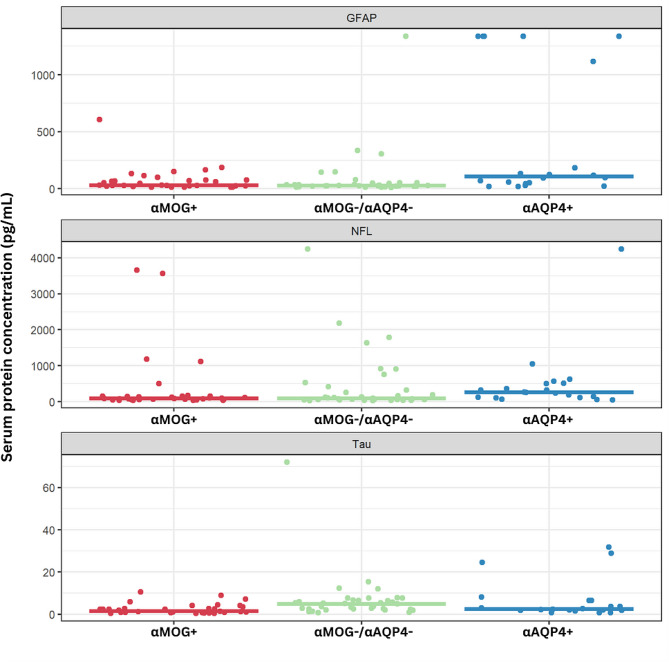
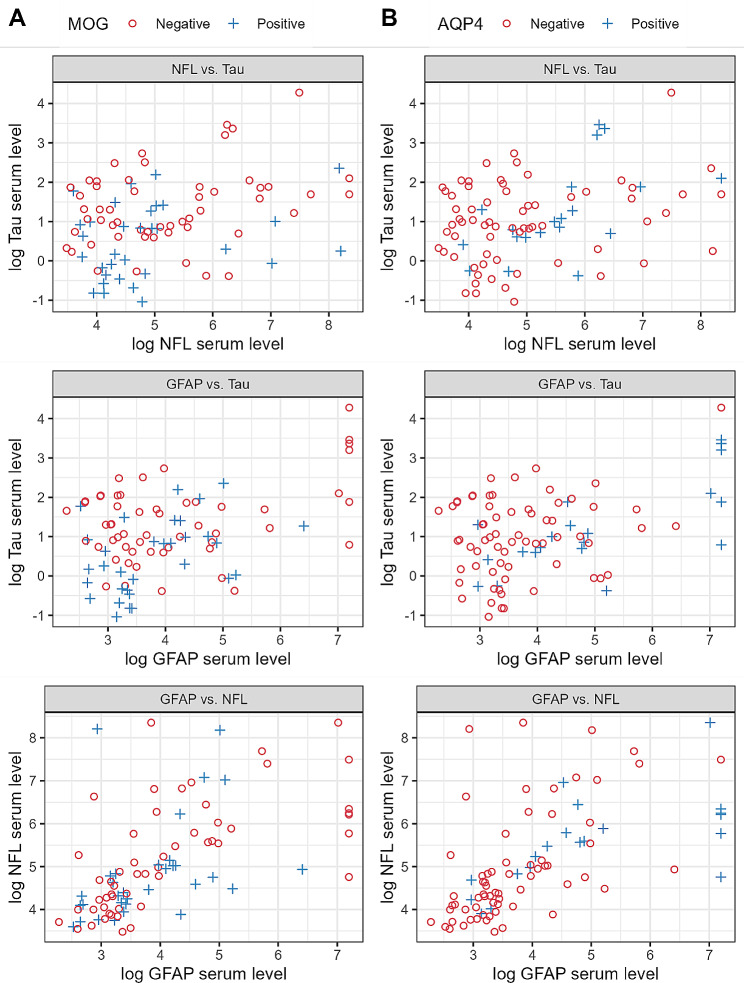
To elucidate the relationship between astroglial and neuronal protein concentrations in the peripheral circulation with occurrence of these autoantibodies, 86 serum samples were analyzed using immunoassays. The protein concentration of glial fibrillary acidic protein (GFAP), neurofilament light chain (NFL) and tau protein was measured in 3 groups of subcategories of suspected NMOSD: αAQP4 positive (n = 20), αMOG positive (n = 32) and αMOG/αAQP4 seronegative (n = 34). Kruskal-Wallis analysis, univariate predictor analysis, and multivariate logistic regression with ROC curves were performed.
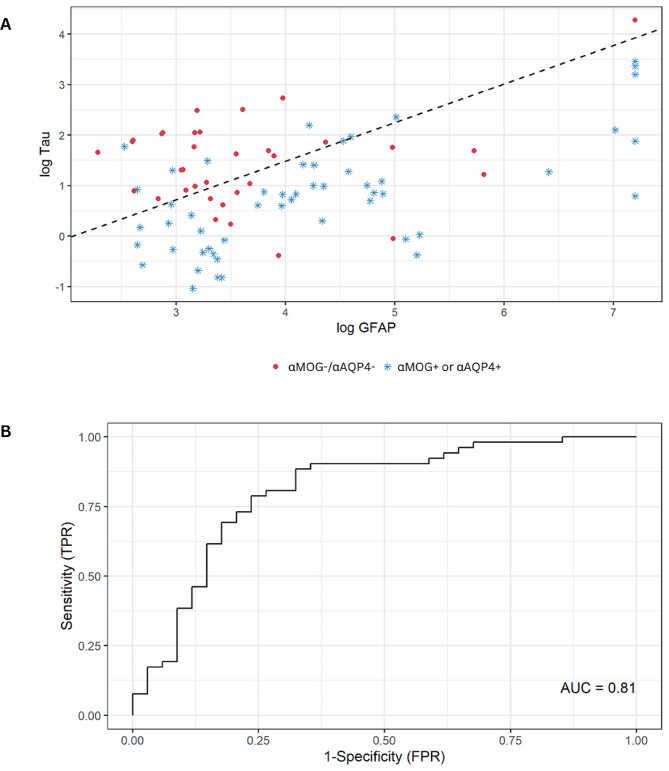
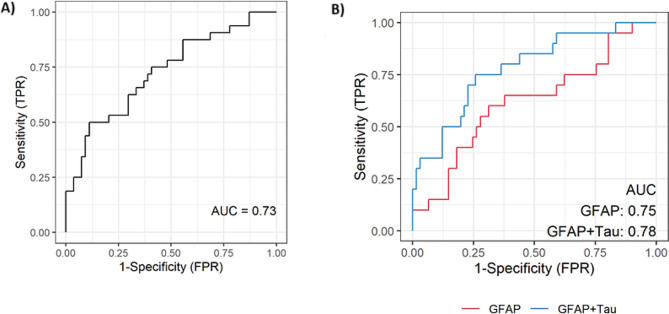
GFAP and NFL concentrations were significantly elevated in the αAQP4 positive group (p = 0.003; p = 0.042, respectively), and tau was elevated in the αMOG/αAQP4 seronegative group (p < 0.001). A logistic regression model to classify serostatus was able to separate αAQP4 seropositivity using GFAP + tau, and αMOG seropositivity using tau. The areas under the ROC curves (AUCs) were 0.77 and 0.72, respectively. Finally, a combined seropositivity versus negative status logistic regression model was generated, with AUC = 0.80.
The 3 markers can univariately and multivariately classify with moderate accuracy the samples with seropositivity and seronegativity for αAQP4 and αMOG.
某些脱髓鞘疾病,如视神经脊髓炎谱系障碍(NMOSD)和髓鞘少突胶质细胞糖蛋白抗体相关疾病(MOGAD),表现出针对水通道蛋白4(αAQP4)和髓鞘少突胶质细胞糖蛋白(αMOG)的血清自身抗体。自身抗体表现的变异性值得对每个病例进行进一步的亚型研究。
为了阐明外周循环中星形胶质细胞和神经元蛋白浓度与这些自身抗体出现之间的关系,使用免疫测定法分析了86份血清样本。在疑似NMOSD的3组亚类中测量了胶质纤维酸性蛋白(GFAP)、神经丝轻链(NFL)和tau蛋白的蛋白浓度:αAQP4阳性(n = 20)、αMOG阳性(n = 32)和αMOG/αAQP4血清阴性(n = 34)。进行了Kruskal-Wallis分析、单变量预测分析以及带有ROC曲线的多变量逻辑回归分析。
αAQP4阳性组中GFAP和NFL浓度显著升高(分别为p = 0.003;p = 0.042),αMOG/αAQP4血清阴性组中tau升高(p < 0.001)。用于分类血清状态的逻辑回归模型能够使用GFAP + tau区分αAQP4血清阳性,使用tau区分αMOG血清阳性。ROC曲线下面积(AUC)分别为0.77和0.72。最后,生成了一个联合血清阳性与阴性状态的逻辑回归模型,AUC = 0.80。
这3种标志物能够以中等准确性对αAQP4和αMOG血清阳性和血清阴性样本进行单变量和多变量分类。