Department of Neurology, RKH Klinikum Ludwigsburg, Posilipostr. 4, 71640, Ludwigsburg, Germany.
Department of Neurology, University Hospital Frankfurt, Goethe-University, Frankfurt am Main, Germany.
Crit Care. 2024 Apr 5;28(1):109. doi: 10.1186/s13054-024-04892-5.
Prehospital triage and treatment of patients with acute coma is challenging for rescue services, as the underlying pathological conditions are highly heterogenous. Recently, glial fibrillary acidic protein (GFAP) has been identified as a biomarker of intracranial hemorrhage. The aim of this prospective study was to test whether prehospital GFAP measurements on a point-of-care device have the potential to rapidly differentiate intracranial hemorrhage from other causes of acute coma.
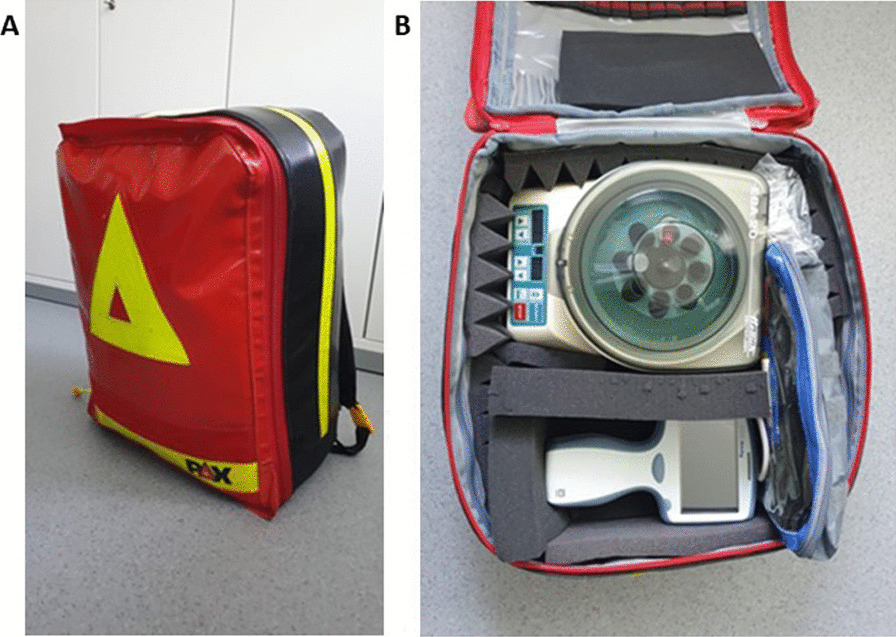
This study was conducted at the RKH Klinikum Ludwigsburg, a tertiary care hospital in the northern vicinity of Stuttgart, Germany. Patients who were admitted to the emergency department with the prehospital diagnosis of acute coma (Glasgow Coma Scale scores between 3 and 8) were enrolled prospectively. Blood samples were collected in the prehospital phase. Plasma GFAP measurements were performed on the i-STAT Alinity® (Abbott) device (duration of analysis 15 min) shortly after hospital admission.
143 patients were enrolled (mean age 65 ± 20 years, 42.7% female). GFAP plasma concentrations were strongly elevated in patients with intracranial hemorrhage (n = 51) compared to all other coma etiologies (3352 pg/mL [IQR 613-10001] vs. 43 pg/mL [IQR 29-91.25], p < 0.001). When using an optimal cut-off value of 101 pg/mL, sensitivity for identifying intracranial hemorrhage was 94.1% (specificity 78.9%, positive predictive value 71.6%, negative predictive value 95.9%). In-hospital mortality risk was associated with prehospital GFAP values.
Increased GFAP plasma concentrations in patients with acute coma identify intracranial hemorrhage with high diagnostic accuracy. Prehospital GFAP measurements on a point-of-care platform allow rapid stratification according to the underlying cause of coma by rescue services. This could have major impact on triage and management of these critically ill patients.
对于救援服务来说,对急性昏迷患者进行院前分诊和治疗具有挑战性,因为潜在的病理状况高度异质。最近,胶质纤维酸性蛋白 (GFAP) 已被确定为颅内出血的生物标志物。本前瞻性研究旨在测试在床边设备上进行的院前 GFAP 测量是否有可能快速区分颅内出血与其他急性昏迷的原因。
本研究在德国斯图加特北部附近的三级护理医院 RKH Klinikum Ludwigsburg 进行。前瞻性招募以院前诊断为急性昏迷(格拉斯哥昏迷量表评分为 3 至 8 分)被收入急诊科的患者。在院前阶段采集血样。入院后不久,在 i-STAT Alinity®(雅培)设备上进行血浆 GFAP 测量(分析持续时间 15 分钟)。
共纳入 143 例患者(平均年龄 65 ± 20 岁,42.7%为女性)。与所有其他昏迷病因相比,颅内出血患者的 GFAP 血浆浓度明显升高(n = 51)(10001 pg/mL [613-10001] vs. 43 pg/mL [29-91.25],p < 0.001)。当使用 101 pg/mL 的最佳截断值时,识别颅内出血的敏感性为 94.1%(特异性 78.9%,阳性预测值 71.6%,阴性预测值 95.9%)。入院时 GFAP 值与住院死亡率风险相关。
急性昏迷患者 GFAP 血浆浓度升高可高度准确地识别颅内出血。床边平台上的院前 GFAP 测量可让救援服务根据昏迷的潜在原因快速分层。这可能对这些危重病患者的分诊和管理产生重大影响。