Department of Medical Chemistry, Faculty of Medicine, University of Debrecen, 4032 Debrecen, Hungary.
Doctoral School of Molecular Medicine, University of Debrecen, 4032 Debrecen, Hungary.
Int J Mol Sci. 2024 Mar 22;25(7):3601. doi: 10.3390/ijms25073601.
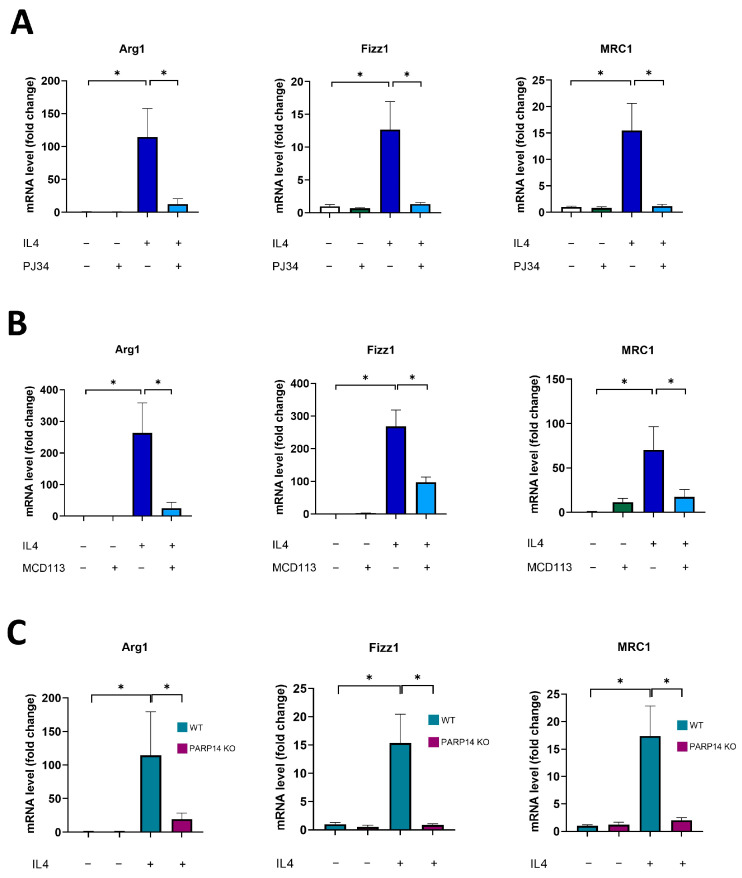
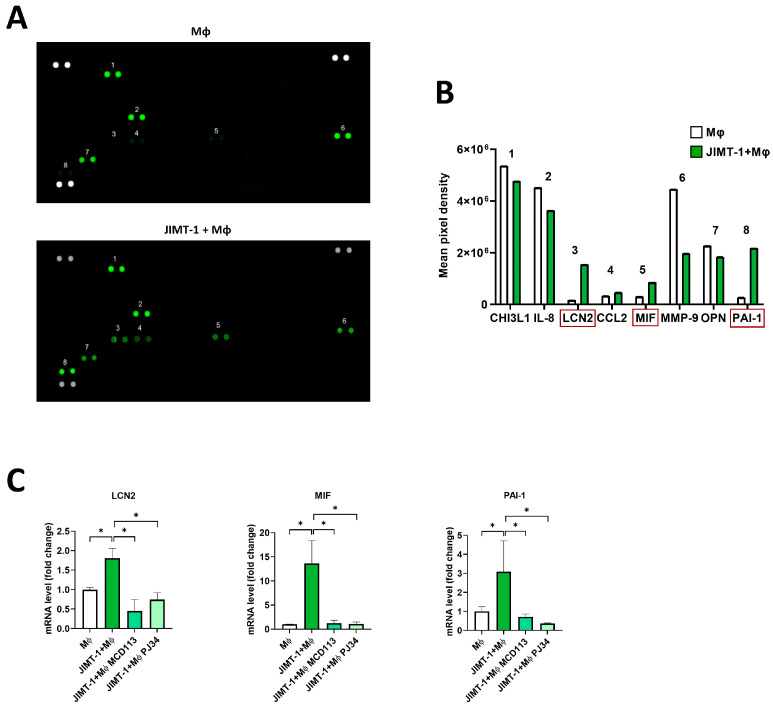
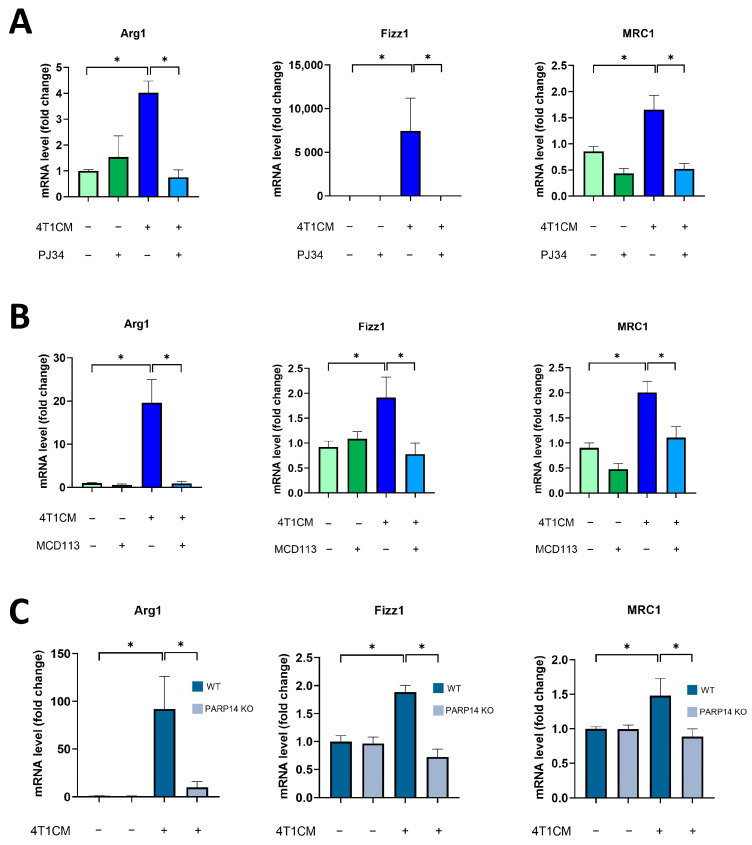
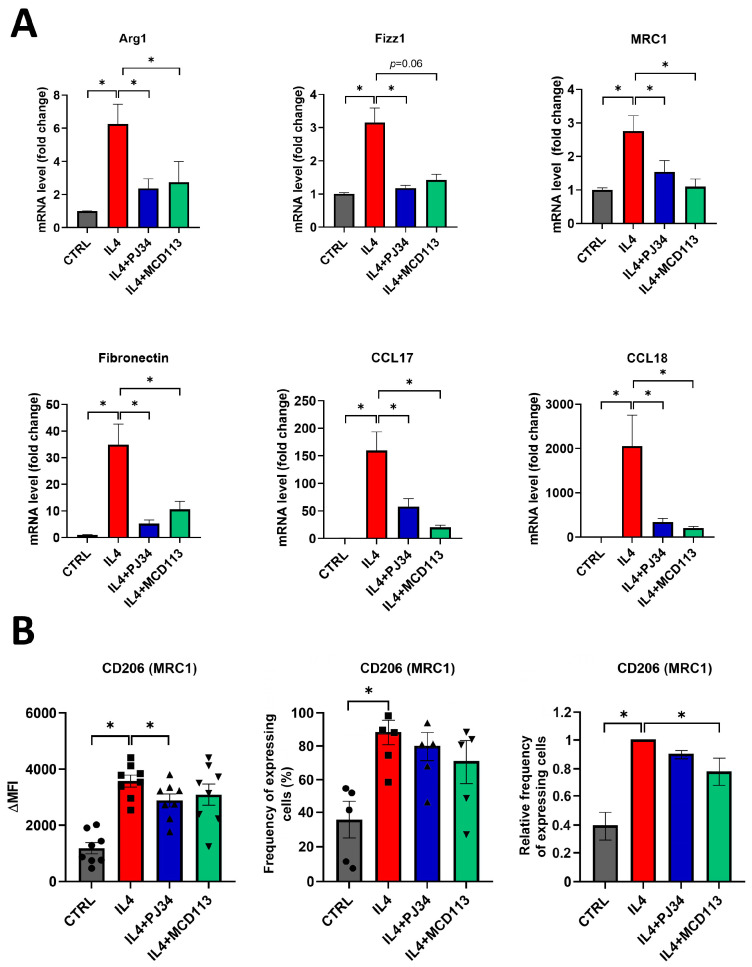
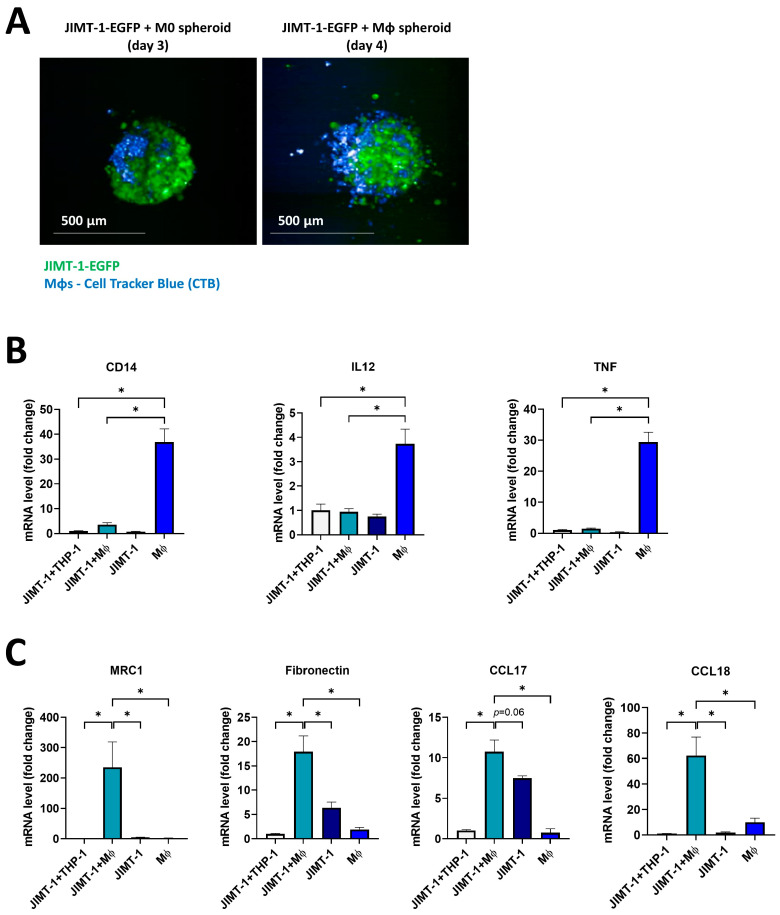
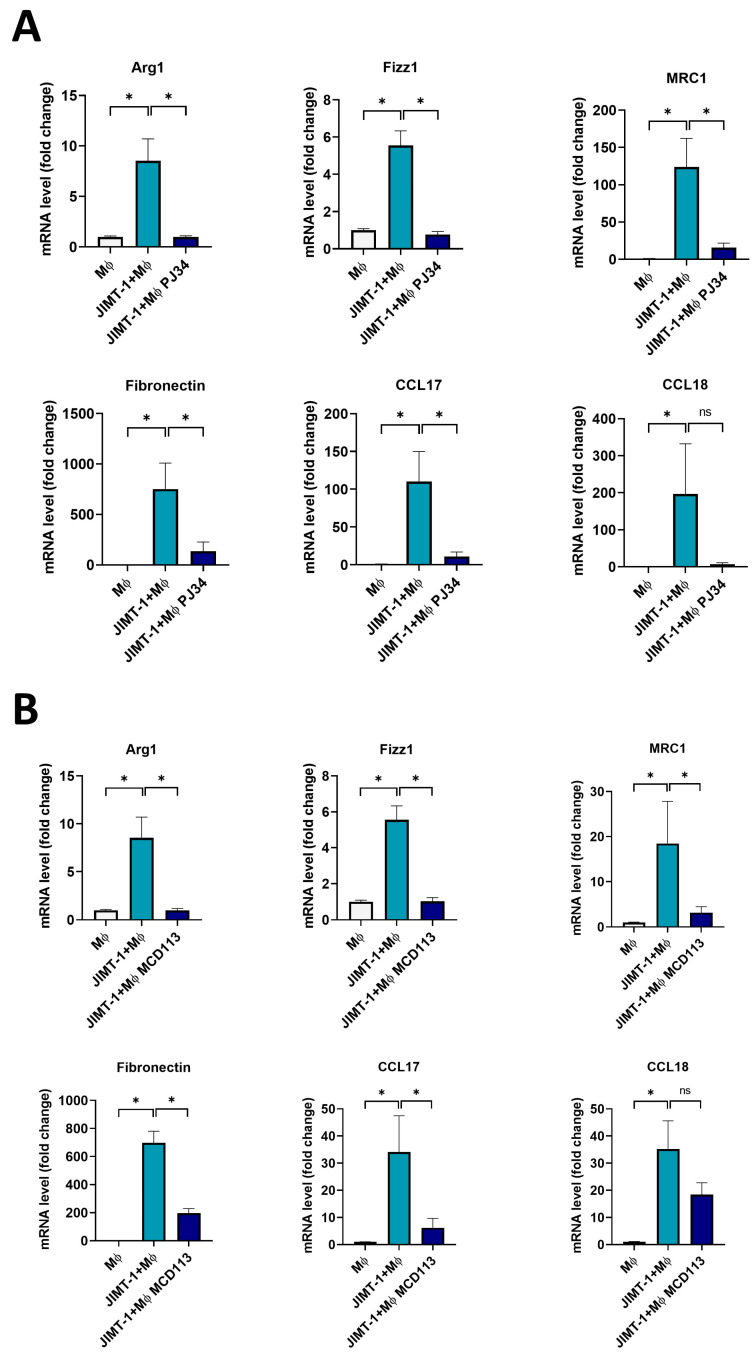
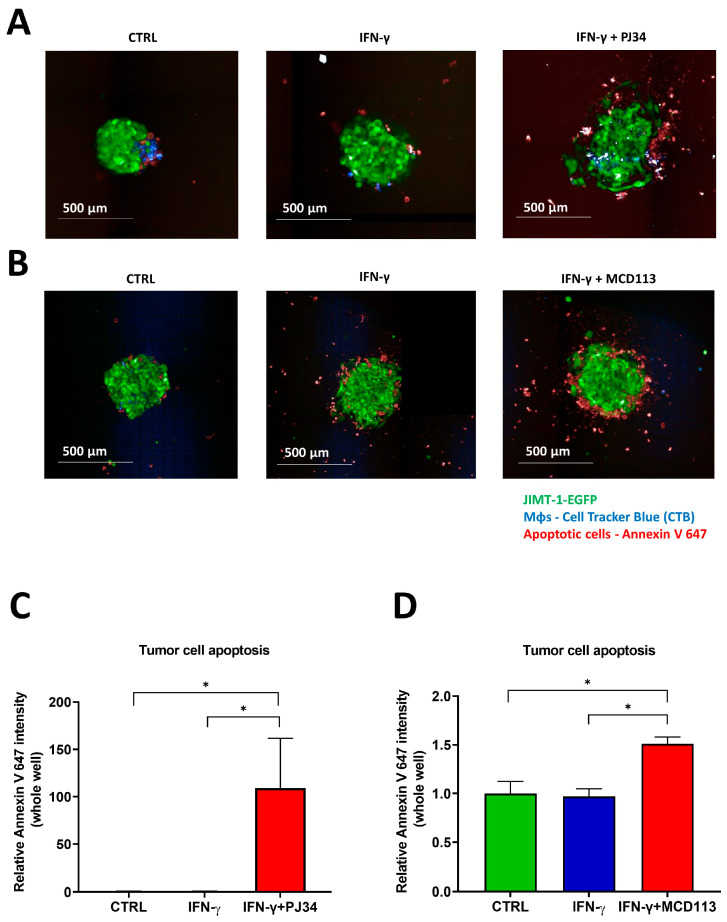
Cancers reprogram macrophages (MΦs) to a tumor-growth-promoting TAM (tumor-associated MΦ) phenotype that is similar to the anti-inflammatory M2 phenotype. Poly(ADP-ribose) polymerase (PARP) enzymes regulate various aspects of MΦ biology, but their role in the development of TAM phenotype has not yet been investigated. Here, we show that the multispectral PARP inhibitor (PARPi) PJ34 and the PARP14 specific inhibitor MCD113 suppress the expression of M2 marker genes in IL-4-polarized primary murine MΦs, in THP-1 monocytic human MΦs, and in primary human monocyte-derived MΦs. MΦs isolated from PARP14 knockout mice showed a limited ability to differentiate to M2 cells. In a murine model of TAM polarization (4T1 breast carcinoma cell supernatant transfer to primary MΦs) and in a human TAM model (spheroids formed from JIMT-1 breast carcinoma cells and THP-1-MΦs), both PARPis and the PARP14 KO phenotype caused weaker TAM polarization. Increased JIMT-1 cell apoptosis in co-culture spheroids treated with PARPis suggested reduced functional TAM reprogramming. Protein profiling arrays identified lipocalin-2, macrophage migration inhibitory factor, and plasminogen activator inhibitor-1 as potential (ADP-ribosyl)ation-dependent mediators of TAM differentiation. Our data suggest that PARP14 inhibition might be a viable anticancer strategy with a potential to boost anticancer immune responses by reprogramming TAMs.
癌症将巨噬细胞(MΦ)重编程为促进肿瘤生长的 TAM(肿瘤相关巨噬细胞)表型,这种表型类似于抗炎的 M2 表型。多聚(ADP-核糖)聚合酶(PARP)酶调节 MΦ 生物学的各个方面,但它们在 TAM 表型发展中的作用尚未得到研究。在这里,我们表明多光谱 PARP 抑制剂(PARPi)PJ34 和 PARP14 特异性抑制剂 MCD113 可抑制 IL-4 极化的原代小鼠 MΦ、THP-1 单核人 MΦ 和原代人单核细胞衍生的 MΦ 中 M2 标记基因的表达。从 PARP14 敲除小鼠中分离的 MΦ 显示出向 M2 细胞分化的有限能力。在 TAM 极化的小鼠模型(4T1 乳腺癌细胞上清液转移到原代 MΦ)和人类 TAM 模型(JIMT-1 乳腺癌细胞和 THP-1-MΦ 形成的球体)中,两种 PARPi 和 PARP14 KO 表型均导致 TAM 极化减弱。PARPi 处理的共培养球体中 JIMT-1 细胞凋亡增加表明功能 TAM 重编程减少。蛋白质谱分析鉴定出脂联素 2、巨噬细胞迁移抑制因子和纤溶酶原激活物抑制剂-1 作为潜在的(ADP-核糖基)化依赖的 TAM 分化介质。我们的数据表明,PARP14 抑制可能是一种可行的抗癌策略,通过重编程 TAMs 增强抗肿瘤免疫反应的潜力。