
慢性疼痛研究中的脑源性神经营养因子(BDNF):十年文献计量分析与网络可视化
Brain-derived neurotrophic factor (BDNF) in chronic pain research: A decade of bibliometric analysis and network visualization.
作者信息
Ismail Che Aishah Nazariah, Zakaria Rahimah, Azman Khairunnuur Fairuz, Shafin Nazlahshaniza, Bakar Noor Azlina Abu
机构信息
Department of Physiology, Universiti Sains Malaysia Health Campus, 16150 Kubang Kerian, Kelantan, MALAYSIA.
Brain and Behaviour Cluster, School of Medical Sciences, Universiti Sains Malaysia Health Campus, 16150 Kubang Kerian, Kelantan, MALAYSIA.
出版信息
AIMS Neurosci. 2024 Jan 11;11(1):1-24. doi: 10.3934/Neuroscience.2024001. eCollection 2024.
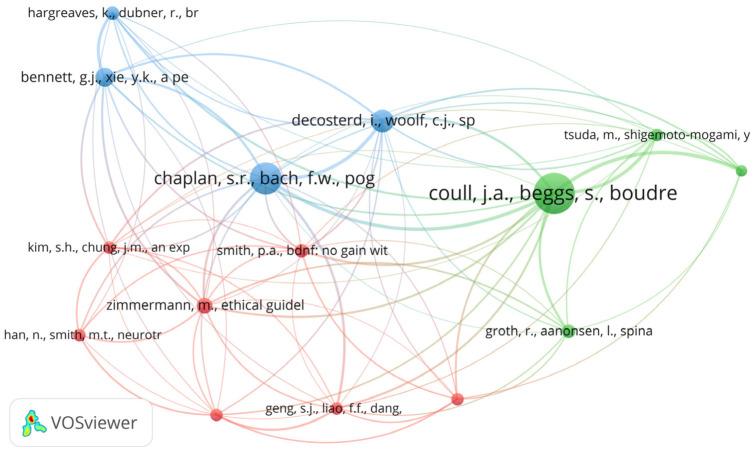
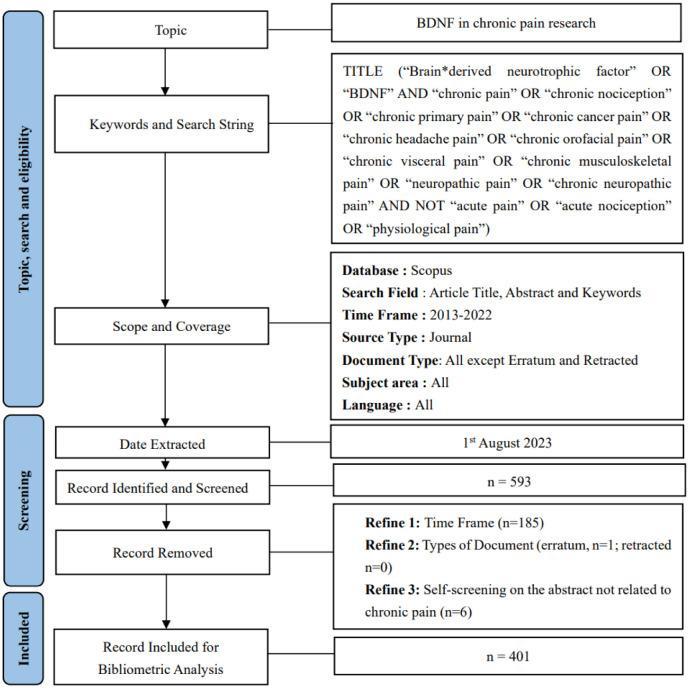
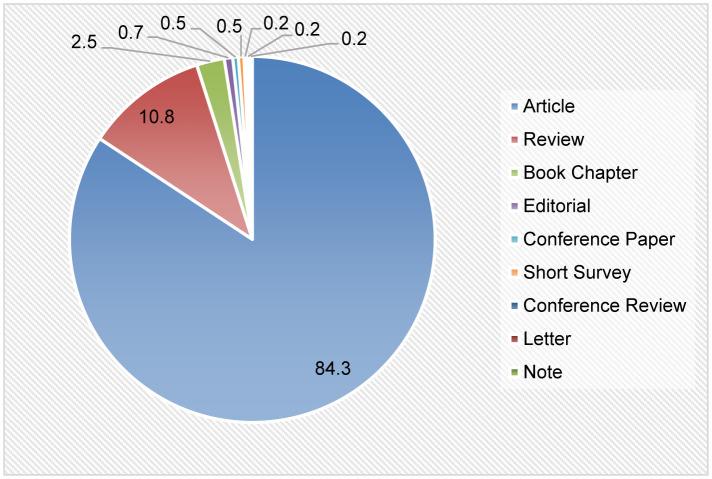
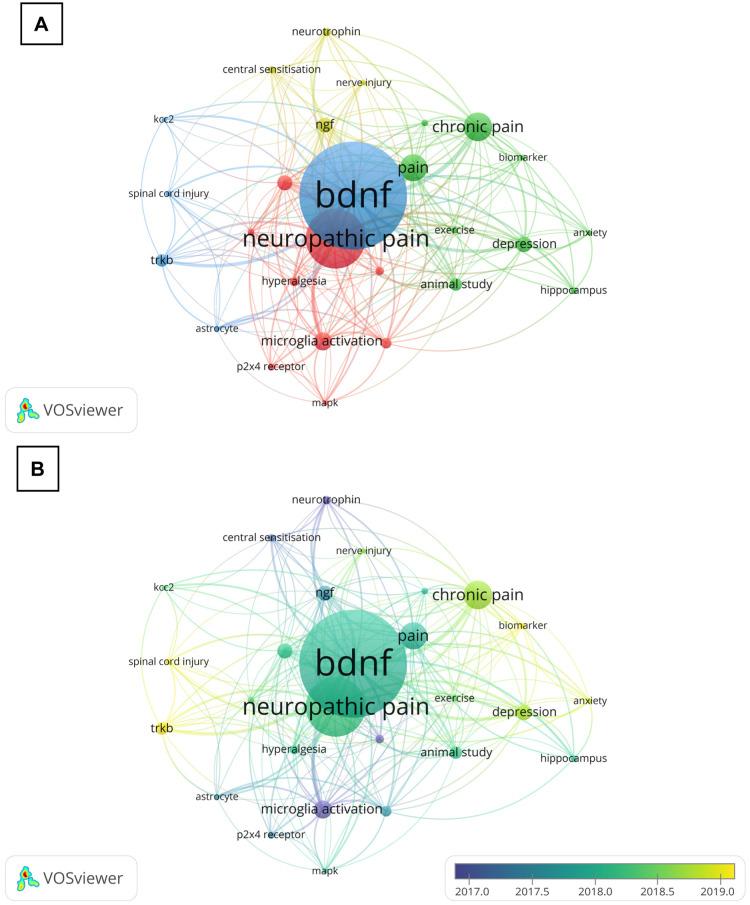
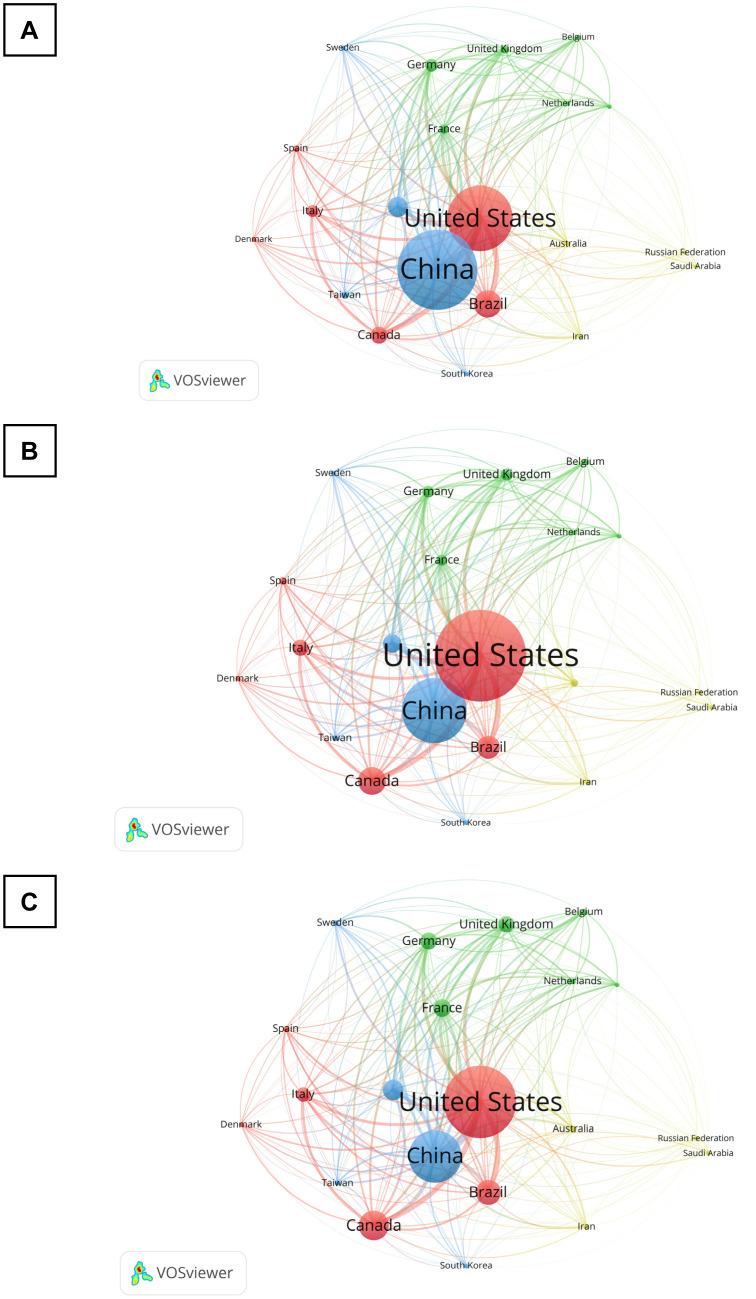
Chronic pain research, with a specific focus on the brain-derived neurotrophic factor (BDNF), has made impressive progress in the past decade, as evident in the improved research quality and increased publications. To better understand this evolving landscape, a quantitative approach is needed. The main aim of this study is to identify the hotspots and trends of BDNF in chronic pain research. We screened relevant publications from 2013 to 2022 in the Scopus database using specific search subject terms. A total of 401 documents were selected for further analysis. We utilized several tools, including Microsoft Excel, Harzing's Publish or Perish, and VOSViewer, to perform a frequency analysis, citation metrics, and visualization, respectively. Key indicators that were examined included publication growth, keyword analyses, topmost influential articles and journals, networking by countries and co-citation of cited references. Notably, there was a persistent publication growth between 2015 and 2021. "Neuropathic pain" emerged as a prominent keyword in 2018, alongside "microglia" and "depression". The journal Pain® was the most impactful journal that published BDNF and chronic pain research, while the most influential publications came from open-access reviews and original articles. China was the leading contributor, followed by the United States (US), and maintained a leadership position in the total number of publications and collaborations. In conclusion, this study provides a comprehensive list of the most influential publications on BDNF in chronic pain research, thereby aiding in the understanding of academic concerns, research hotspots, and global trends in this specialized field.
在过去十年中,以脑源性神经营养因子(BDNF)为特定重点的慢性疼痛研究取得了令人瞩目的进展,研究质量的提高和出版物数量的增加便是明证。为了更好地理解这一不断演变的格局,需要一种定量方法。本研究的主要目的是确定慢性疼痛研究中BDNF的热点和趋势。我们使用特定的搜索主题词在Scopus数据库中筛选了2013年至2022年的相关出版物。共选出401篇文献进行进一步分析。我们分别利用了包括Microsoft Excel、Harzing的Publish or Perish和VOSViewer在内的多种工具来进行频率分析、引文计量和可视化。所考察的关键指标包括出版物增长、关键词分析、最具影响力的文章和期刊、国家间的网络关系以及被引参考文献的共引情况。值得注意的是,2015年至2021年间出版物持续增长。“神经性疼痛”在2018年成为一个突出的关键词,与“小胶质细胞”和“抑郁症”一同出现。《疼痛》杂志是发表BDNF和慢性疼痛研究的最具影响力的期刊,而最具影响力的出版物来自开放获取综述和原创文章。中国是主要贡献者,其次是美国,在出版物总数和合作方面保持领先地位。总之,本研究提供了慢性疼痛研究中关于BDNF的最具影响力出版物的全面清单,从而有助于了解这一专业领域的学术关注点、研究热点和全球趋势。
 Zotero 插件