Wu Christine C, Tsantilas Kristine A, Park Jea, Plubell Deanna, Sanders Justin A, Naicker Previn, Govender Ireshyn, Buthelezi Sindisiwe, Stoychev Stoyan, Jordaan Justin, Merrihew Gennifer, Huang Eric, Parker Edward D, Riffle Michael, Hoofnagle Andrew N, Noble William S, Poston Kathleen L, Montine Thomas J, MacCoss Michael J
Department of Genome Sciences, University of Washington, Seattle, WA, USA.
Department of Computer Science, University of Washington, Seattle, WA, USA.
bioRxiv. 2024 Apr 2:2023.06.10.544439. doi: 10.1101/2023.06.10.544439.
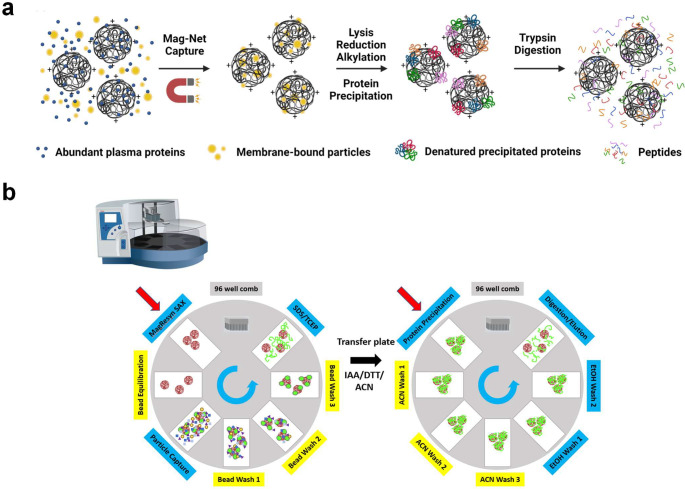
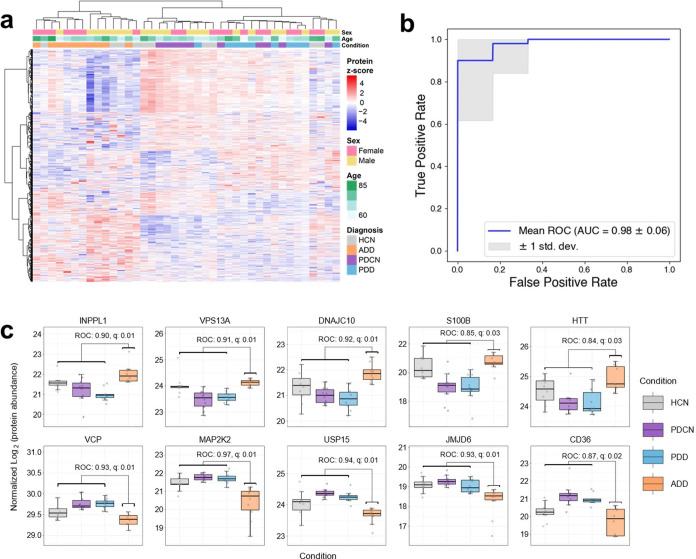
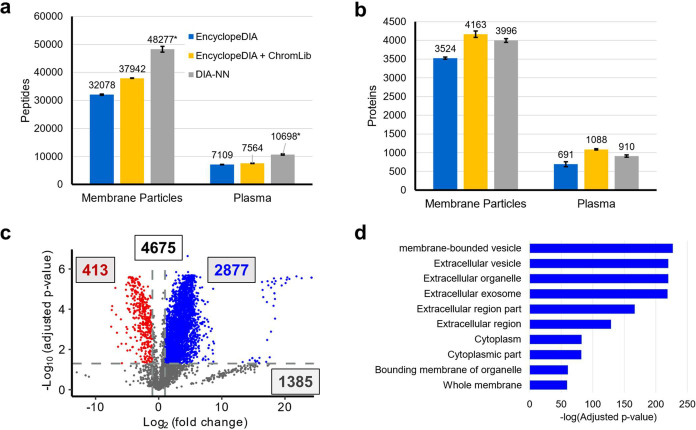
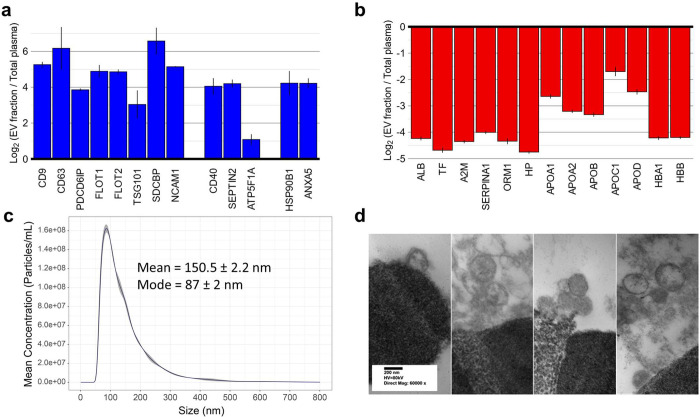
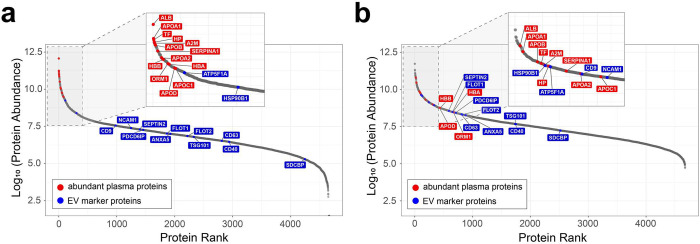
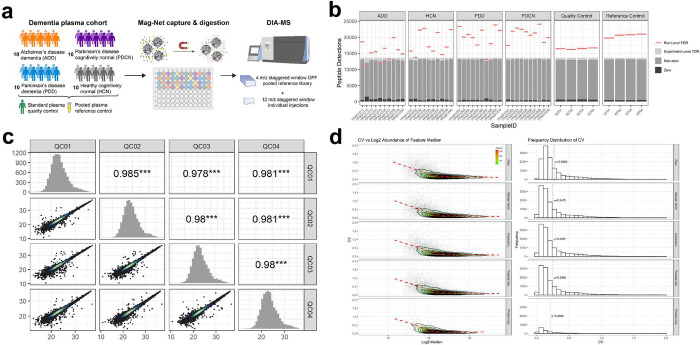
Membrane-bound particles in plasma are composed of exosomes, microvesicles, and apoptotic bodies and represent ~1-2% of the total protein composition. Proteomic interrogation of this subset of plasma proteins augments the representation of tissue-specific proteins, representing a "liquid biopsy," while enabling the detection of proteins that would otherwise be beyond the dynamic range of liquid chromatography-tandem mass spectrometry of unfractionated plasma. We have developed an enrichment strategy (Mag-Net) using hyper-porous strong-anion exchange magnetic microparticles to sieve membrane-bound particles from plasma. The Mag-Net method is robust, reproducible, inexpensive, and requires <100 μL plasma input. Coupled to a quantitative data-independent mass spectrometry analytical strategy, we demonstrate that we can collect results for >37,000 peptides from >4,000 plasma proteins with high precision. Using this analytical pipeline on a small cohort of patients with neurodegenerative disease and healthy age-matched controls, we discovered 204 proteins that differentiate (q-value < 0.05) patients with Alzheimer's disease dementia (ADD) from those without ADD. Our method also discovered 310 proteins that were different between Parkinson's disease and those with either ADD or healthy cognitively normal individuals. Using machine learning we were able to distinguish between ADD and not ADD with a mean ROC AUC = 0.98 ± 0.06.
血浆中的膜结合颗粒由外泌体、微泡和凋亡小体组成,约占总蛋白组成的1%-2%。对这部分血浆蛋白进行蛋白质组学分析可增加组织特异性蛋白的代表性,这相当于一种“液体活检”,同时能够检测那些在未分级血浆的液相色谱-串联质谱动态范围之外的蛋白质。我们开发了一种富集策略(Mag-Net),利用超多孔强阴离子交换磁性微粒从血浆中筛选膜结合颗粒。Mag-Net方法稳健、可重复、成本低,且血浆输入量<100μL。结合定量数据非依赖型质谱分析策略,我们证明能够高精度地从4000多种血浆蛋白中收集超过37000种肽段的结果。在一小群神经退行性疾病患者和年龄匹配的健康对照者中使用这种分析流程,我们发现了204种可区分阿尔茨海默病痴呆(ADD)患者和非ADD患者的蛋白质(q值<0.05)。我们的方法还发现了310种在帕金森病患者与ADD患者或认知正常的健康个体之间存在差异的蛋白质。通过机器学习,我们能够区分ADD患者和非ADD患者,平均受试者工作特征曲线下面积(ROC AUC)=0.98±0.06。