Chua Shaun Kai Kiat, Wong Walter-Soon-Yaw, Koh Don Thong Siang, Sultana Rehena, Soong Junwei, Lee Kong Hwee, Bin Abd Razak Hamid Rahmatullah
Ministry of Health, Singapore.
Department of Orthopaedic Surgery, Sengkang General Hospital, Singapore.
Cartilage. 2025 Mar;16(1):24-35. doi: 10.1177/19476035241246609. Epub 2024 Apr 16.
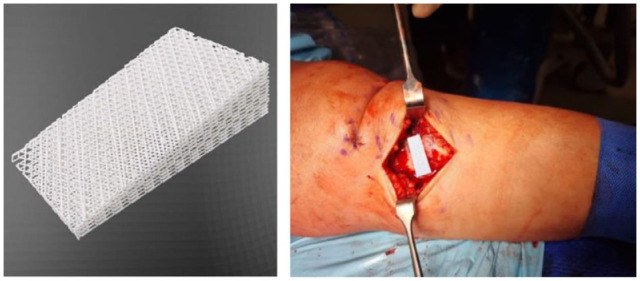
The use of synthetic bone substitute material (BSM) as osteotomy gap fillers have been reported to improve outcomes in medial opening wedge high tibial osteotomy (MOWHTO). This study aims to evaluate the early radiological outcomes (bone union) and complication rates of the novel patient-specific 3D-printed honeycomb-structured polycaprolactone and tricalcium phosphate (PCL-TCP) synthetic graft compared to allogeneic bone grafts as an osteotomy gap filler in MOWHTO.
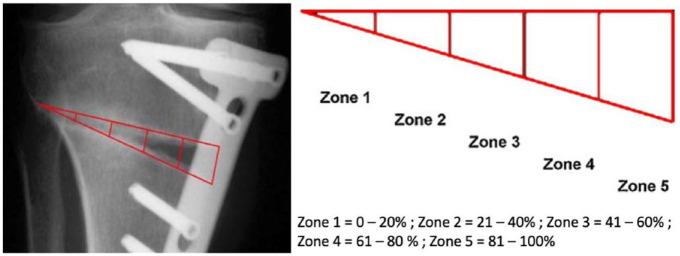
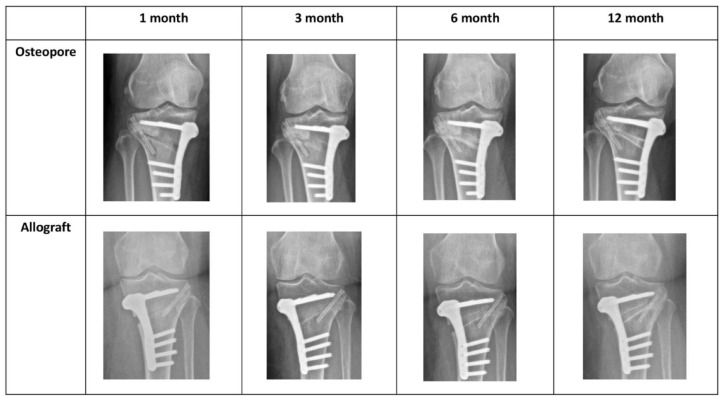
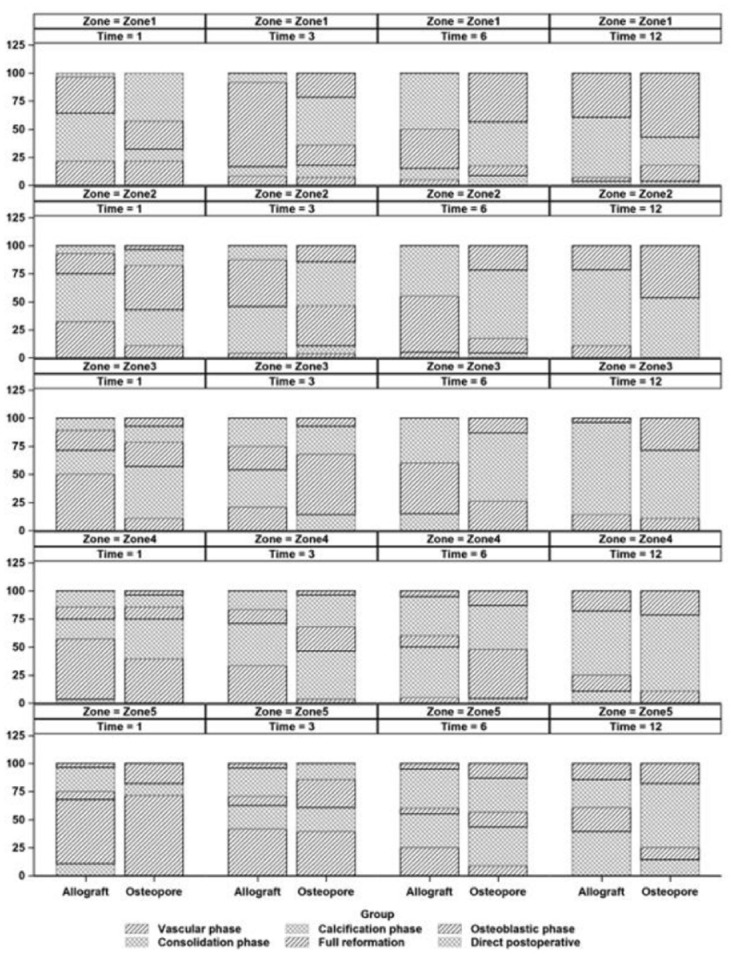
A retrospective matched-pair analysis of patients who underwent MOWHTO with either PCL-TCP synthetic graft or allogenic femoral head allograft as osteotomy gap filler was performed. The osteotomy gap was split into equal zones (Zone 1-5), and bone union was evaluated on anteroposterior radiographs based on the van Hemert classification at 1, 3, 6, and 12 months postoperatively. Postoperative complications including infection, lateral hinge fractures, and persistent pain was measured. The study and control group were matched for age, smoking status, diabetes mellitus, and osteotomy gap size.
Significantly greater bone union progression was observed in the PCL-TCP group than in the allograft group at 1 month (Zones 1-3), 3 months (Zones 1-4), 6 months (Zones 1-2, 4), and 12 months (Zones 2-3, 5) postoperatively ( < 0.05). No significant difference in complications rates was noted between the two groups at 1 year.
Bone union rates observed in patients who underwent MOWHTO with the PCL-TCP synthetic graft osteotomy gap filler were superior to those in the allograft group at 1 year postoperatively, with no significant difference in complication rates (postoperative infection, lateral hinge fractures, and persistent pain).
据报道,使用合成骨替代材料(BSM)作为截骨间隙填充物可改善内侧开口楔形高位胫骨截骨术(MOWHTO)的疗效。本研究旨在评估新型患者特异性3D打印蜂窝结构聚己内酯和磷酸三钙(PCL-TCP)合成移植物与同种异体骨移植物作为MOWHTO截骨间隙填充物的早期放射学结果(骨愈合)和并发症发生率。
对接受MOWHTO并使用PCL-TCP合成移植物或同种异体股骨头移植作为截骨间隙填充物的患者进行回顾性配对分析。将截骨间隙分为相等区域(区域1-5),并根据术后1、3、6和12个月的范赫默特分类在前后位X线片上评估骨愈合情况。测量术后并发症,包括感染、外侧铰链骨折和持续性疼痛。研究组和对照组在年龄、吸烟状况、糖尿病和截骨间隙大小方面进行匹配。
术后1个月(区域1-3)、3个月(区域1-4)、6个月(区域1-2、4)和12个月(区域2-3、5)时,PCL-TCP组的骨愈合进展明显大于同种异体移植组(<0.05)。两组在1年时的并发症发生率无显著差异。
接受MOWHTO并使用PCL-TCP合成移植物截骨间隙填充物的患者在术后1年的骨愈合率优于同种异体移植组,并发症发生率(术后感染、外侧铰链骨折和持续性疼痛)无显著差异。