Sargent Charli, Jasinski Summer, Capodilupo Emily R, Powers Jeremy, Miller Dean J, Roach Gregory D
CQUniversity, Appleton Institute for Behavioural Science, Adelaide, SA, Australia.
Whoop Inc, Data Science and Research, Boston, MA, USA.
Sports Med Open. 2024 Apr 16;10(1):39. doi: 10.1186/s40798-024-00716-6.
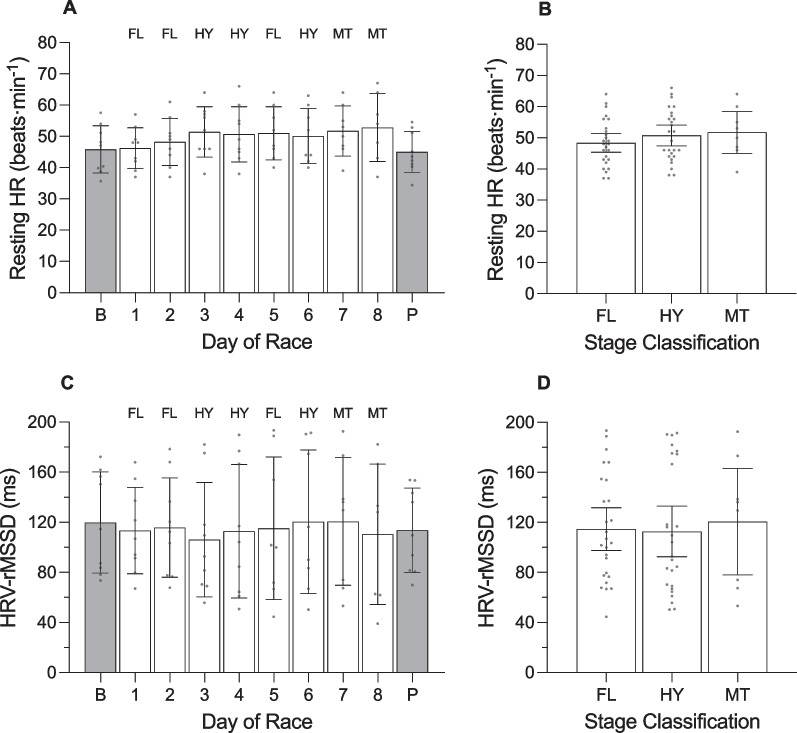
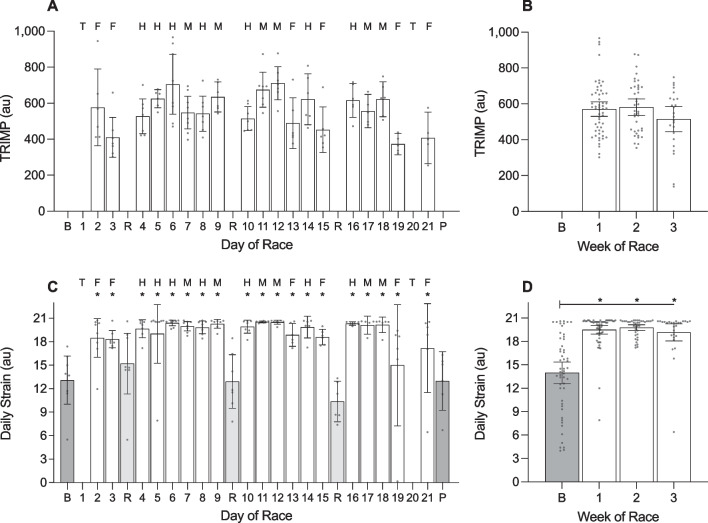
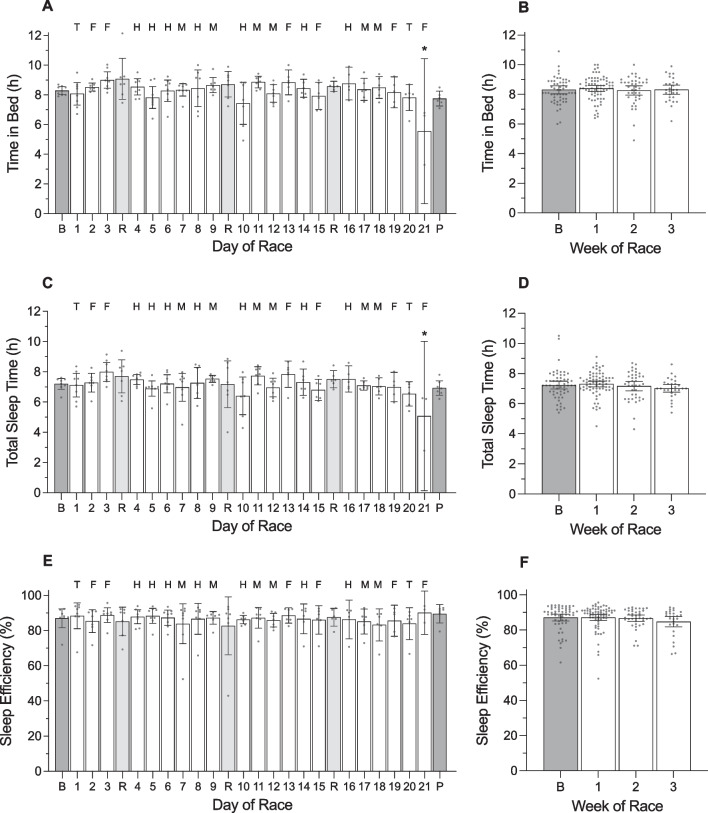
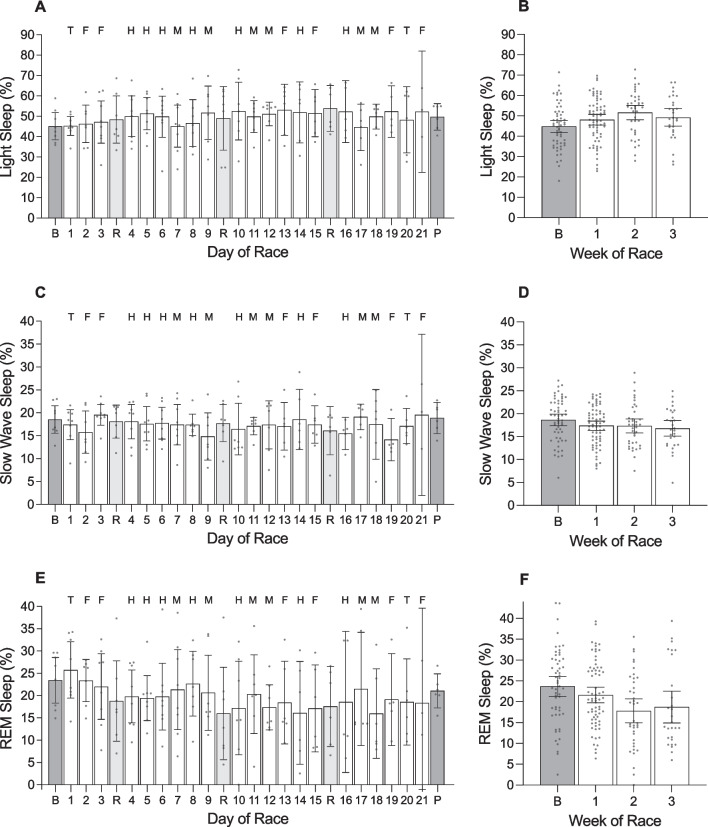
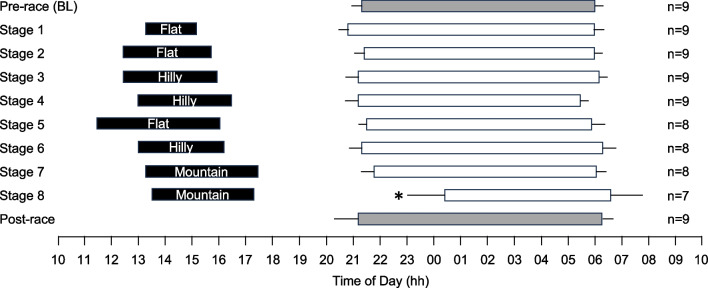
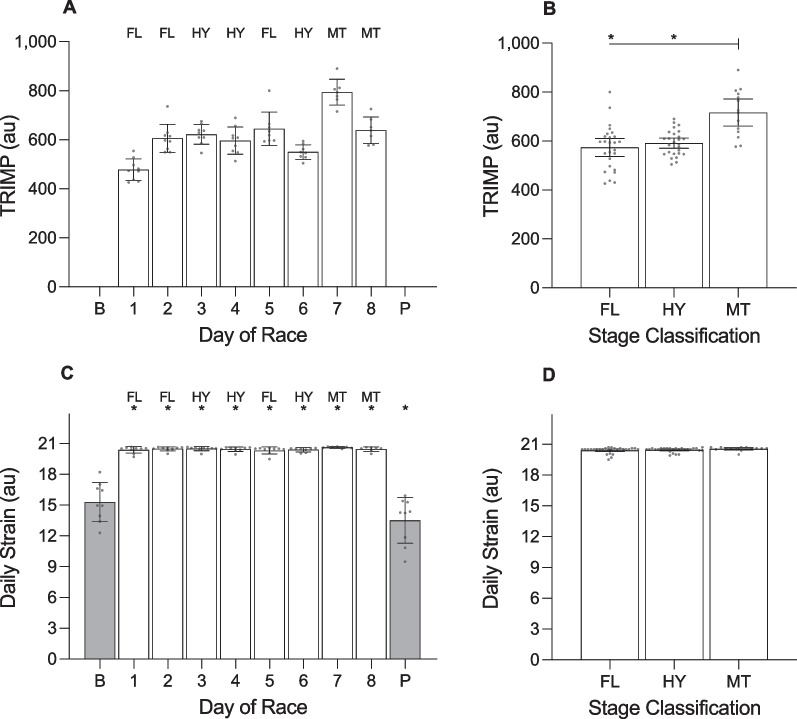
Sleep is a critical component of recovery, but it can be disrupted following prolonged endurance exercise. The objective of this study was to examine the capacity of male and female professional cyclists to recover between daily race stages while competing in the 2022 Tour de France and the 2022 Tour de France Femmes, respectively. The 17 participating cyclists (8 males from a single team and 9 females from two teams) wore a fitness tracker (WHOOP 4.0) to capture recovery metrics related to night-time sleep and autonomic activity for the entirety of the events and for 7 days of baseline before the events. The primary analyses tested for a main effect of 'stage classification'-i.e., rest, flat, hilly, mountain or time trial for males and flat, hilly or mountain for females-on the various recovery metrics.
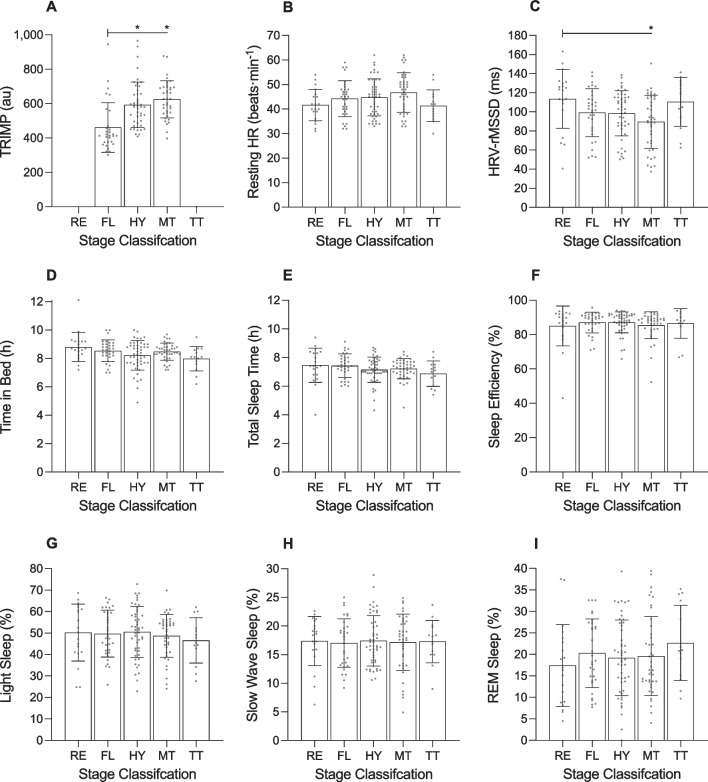
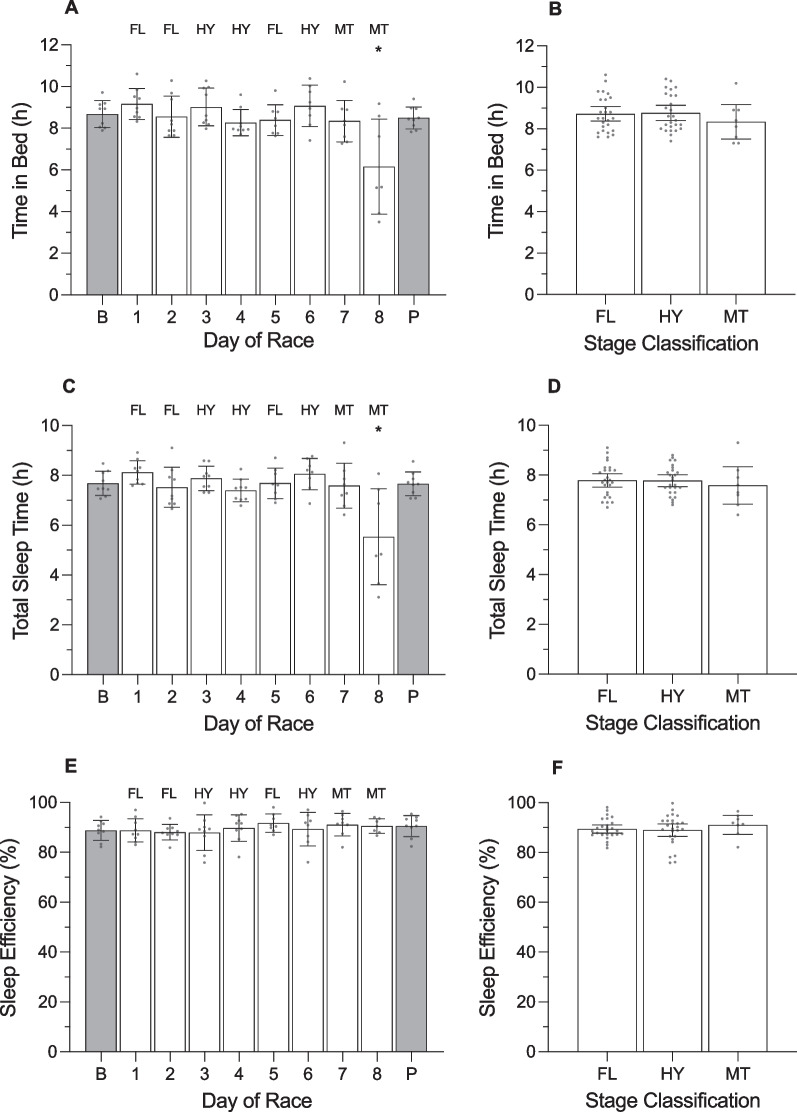
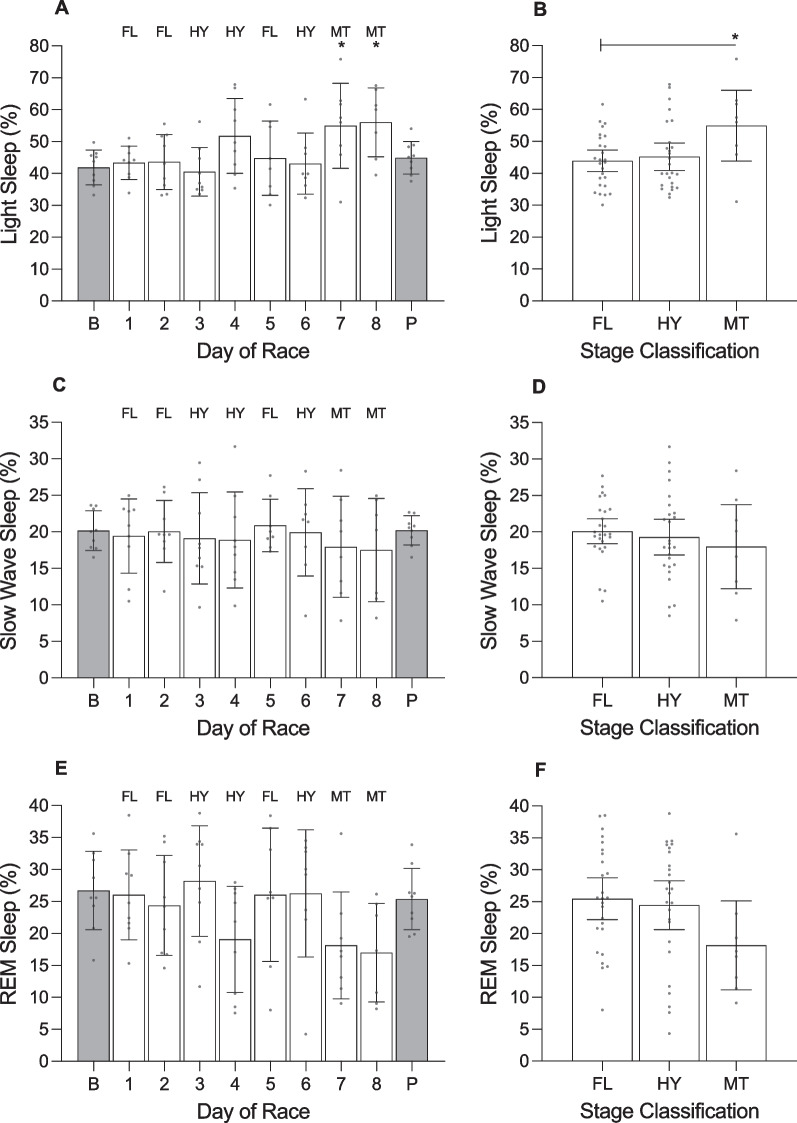
During baseline, total sleep time was 7.2 ± 0.3 h for male cyclists (mean ± 95% confidence interval) and 7.7 ± 0.3 h for female cyclists, sleep efficiency was 87.0 ± 4.4% for males and 88.8 ± 2.6% for females, resting HR was 41.8 ± 4.5 beats·min for males and 45.8 ± 4.9 beats·min for females, and heart rate variability during sleep was 108.5 ± 17.0 ms for males and 119.8 ± 26.4 ms for females. During their respective events, total sleep time was 7.2 ± 0.1 h for males and 7.5 ± 0.3 h for females, sleep efficiency was 86.4 ± 1.2% for males and 89.6 ± 1.2% for females, resting HR was 44.5 ± 1.2 beats·min for males and 50.2 ± 2.0 beats·min for females, and heart rate variability during sleep was 99.1 ± 4.2 ms for males and 114.3 ± 11.2 ms for females. For male cyclists, there was a main effect of 'stage classification' on recovery, such that heart rate variability during sleep was lowest after mountain stages. For female cyclists, there was a main effect of 'stage classification' on recovery, such that the percentage of light sleep (i.e., lower-quality sleep) was highest after mountain stages.
Some aspects of recovery were compromised after the most demanding days of racing, i.e., mountain stages. Overall however, the cyclists obtained a reasonable amount of good-quality sleep while competing in these physiologically demanding endurance events. This study demonstrates that it is now feasible to assess recovery in professional athletes during multiple-day endurance events using validated fitness trackers.
睡眠是恢复的关键组成部分,但长时间耐力运动后睡眠可能会受到干扰。本研究的目的是分别考察参加2022年环法自行车赛和2022年环法女子自行车赛的男女职业自行车运动员在每日赛段之间的恢复能力。17名参赛自行车运动员(来自一个车队的8名男性和来自两个车队的9名女性)佩戴了一个健身追踪器(WHOOP 4.0),以获取与夜间睡眠和自主神经活动相关的恢复指标,涵盖整个赛事期间以及赛事前7天的基线期。主要分析测试了“赛段类型”(即男性的休息、平路、丘陵、山地或个人计时赛段,女性的平路、丘陵或山地赛段)对各种恢复指标的主效应。
在基线期,男性自行车运动员的总睡眠时间为7.2±0.3小时(平均值±95%置信区间),女性自行车运动员为7.7±0.3小时;男性的睡眠效率为87.0±4.4%,女性为88.8±2.6%;男性的静息心率为41.8±4.5次/分钟,女性为45.8±4.9次/分钟;男性睡眠期间的心率变异性为108.5±17.0毫秒,女性为119.8±26.4毫秒。在各自的赛事期间,男性的总睡眠时间为7.2±0.1小时,女性为7.5±0.3小时;男性的睡眠效率为86.4±1.2%,女性为89.6±1.2%;男性的静息心率为44.5±1.2次/分钟,女性为50.2±2.0次/分钟;男性睡眠期间的心率变异性为99.1±4.2毫秒,女性为114.3±11.2毫秒。对于男性自行车运动员,“赛段类型”对恢复有主效应,即山地赛段后睡眠期间的心率变异性最低。对于女性自行车运动员,“赛段类型”对恢复有主效应,即山地赛段后浅睡眠(即质量较低的睡眠)百分比最高。
在要求最高的比赛日(即山地赛段)之后,恢复的某些方面受到了影响。然而总体而言,这些自行车运动员在参加这些生理要求较高的耐力赛事期间获得了适量的高质量睡眠。本研究表明,现在使用经过验证的健身追踪器来评估职业运动员在多日耐力赛事中的恢复情况是可行的。