• 文献检索
  • 文档翻译
  • 深度研究
  • 学术资讯
  • Suppr Zotero 插件Zotero 插件
  • 邀请有礼
  • 套餐&价格
  • 历史记录
应用&插件
Suppr Zotero 插件Zotero 插件浏览器插件Mac 客户端Windows 客户端微信小程序
定价
高级版会员购买积分包购买API积分包
服务
文献检索文档翻译深度研究API 文档MCP 服务
关于我们
关于 Suppr公司介绍联系我们用户协议隐私条款
关注我们

Suppr 超能文献

核心技术专利:CN118964589B侵权必究
粤ICP备2023148730 号-1Suppr @ 2026

文献检索

告别复杂PubMed语法,用中文像聊天一样搜索,搜遍4000万医学文献。AI智能推荐,让科研检索更轻松。

立即免费搜索

文件翻译

保留排版,准确专业,支持PDF/Word/PPT等文件格式,支持 12+语言互译。

免费翻译文档

深度研究

AI帮你快速写综述,25分钟生成高质量综述,智能提取关键信息,辅助科研写作。

立即免费体验

大脑基因登记处:数据快照。

The Brain Gene Registry: a data snapshot.

机构信息

Department of Pediatrics, Washington University School of Medicine in St. Louis, St. Louis, MO, USA.

Institute for Informatics, Data Science and Biostatistics, Washington University School of Medicine in St. Louis, St. Louis, MO, USA.

出版信息

J Neurodev Disord. 2024 Apr 17;16(1):17. doi: 10.1186/s11689-024-09530-3.

DOI:10.1186/s11689-024-09530-3
PMID:38632549
原文链接:https://pmc.ncbi.nlm.nih.gov/articles/PMC11022437/
Abstract

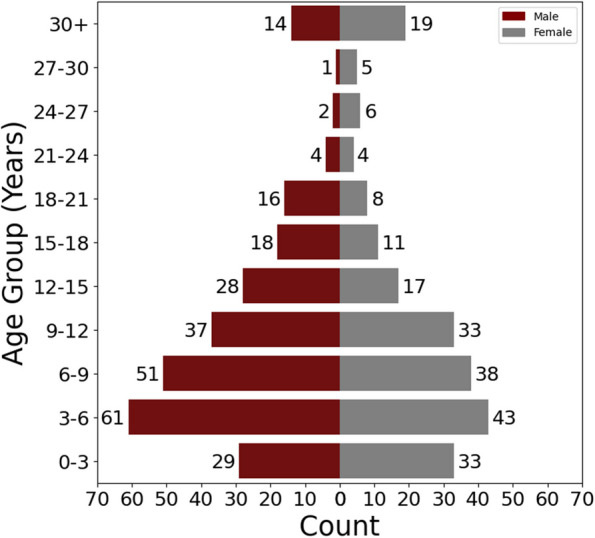
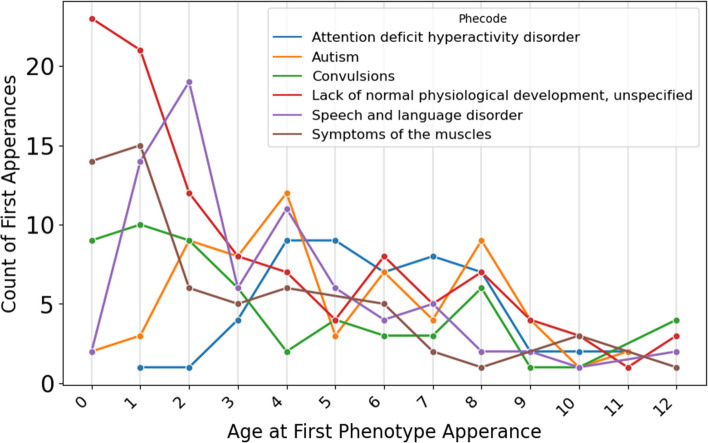
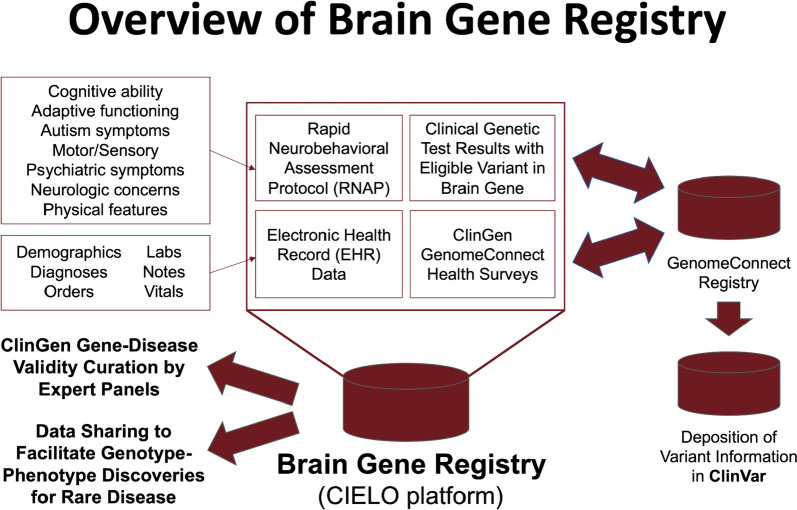
Monogenic disorders account for a large proportion of population-attributable risk for neurodevelopmental disabilities. However, the data necessary to infer a causal relationship between a given genetic variant and a particular neurodevelopmental disorder is often lacking. Recognizing this scientific roadblock, 13 Intellectual and Developmental Disabilities Research Centers (IDDRCs) formed a consortium to create the Brain Gene Registry (BGR), a repository pairing clinical genetic data with phenotypic data from participants with variants in putative brain genes. Phenotypic profiles are assembled from the electronic health record (EHR) and a battery of remotely administered standardized assessments collectively referred to as the Rapid Neurobehavioral Assessment Protocol (RNAP), which include cognitive, neurologic, and neuropsychiatric assessments, as well as assessments for attention deficit hyperactivity disorder (ADHD) and autism spectrum disorder (ASD). Co-enrollment of BGR participants in the Clinical Genome Resource's (ClinGen's) GenomeConnect enables display of variant information in ClinVar. The BGR currently contains data on 479 participants who are 55% male, 6% Asian, 6% Black or African American, 76% white, and 12% Hispanic/Latine. Over 200 genes are represented in the BGR, with 12 or more participants harboring variants in each of these genes: CACNA1A, DNMT3A, SLC6A1, SETD5, and MYT1L. More than 30% of variants are de novo and 43% are classified as variants of uncertain significance (VUSs). Mean standard scores on cognitive or developmental screens are below average for the BGR cohort. EHR data reveal developmental delay as the earliest and most common diagnosis in this sample, followed by speech and language disorders, ASD, and ADHD. BGR data has already been used to accelerate gene-disease validity curation of 36 genes evaluated by ClinGen's BGR Intellectual Disability (ID)-Autism (ASD) Gene Curation Expert Panel. In summary, the BGR is a resource for use by stakeholders interested in advancing translational research for brain genes and continues to recruit participants with clinically reported variants to establish a rich and well-characterized national resource to promote research on neurodevelopmental disorders.

摘要

单基因疾病在神经发育障碍的人群归因风险中占很大比例。然而,对于特定遗传变异与特定神经发育障碍之间因果关系的推断,往往缺乏必要的数据。为了应对这一科学障碍,13 个智力和发育障碍研究中心(IDDRC)成立了一个联盟,创建了大脑基因登记处(BGR),该登记处将临床遗传数据与假定大脑基因变异参与者的表型数据配对。表型谱是从电子健康记录(EHR)和一系列远程管理的标准化评估中汇编而成的,统称为快速神经行为评估协议(RNAP),其中包括认知、神经和神经精神病评估,以及注意力缺陷多动障碍(ADHD)和自闭症谱系障碍(ASD)的评估。BGR 参与者共同参与临床基因组资源(ClinGen)的 GenomeConnect 可在 ClinVar 中显示变异信息。BGR 目前包含 479 名参与者的数据,其中 55%为男性,6%为亚洲人,6%为黑人或非裔美国人,76%为白人,12%为西班牙裔或拉丁裔。BGR 中包含 200 多种基因,其中每个基因都有 12 个或更多参与者携带变异:CACNA1A、DNMT3A、SLC6A1、SETD5 和 MYT1L。超过 30%的变异是新生的,43%被归类为意义不明的变异(VUSs)。认知或发育筛查的平均标准分数低于 BGR 队列的平均值。EHR 数据显示,发育迟缓是该样本中最早和最常见的诊断,其次是言语和语言障碍、ASD 和 ADHD。BGR 数据已被用于加速 ClinGen 的 BGR 智力障碍(ID)-自闭症(ASD)基因验证专家小组评估的 36 个基因的基因-疾病有效性验证。总之,BGR 是对大脑基因感兴趣的利益相关者推进转化研究的资源,并继续招募具有临床报告变异的参与者,以建立一个丰富且特征良好的国家资源,促进神经发育障碍的研究。
https://cdn.ncbi.nlm.nih.gov/pmc/blobs/1b51/11022437/9471cf1a93a4/11689_2024_9530_Fig12_HTML.jpg
https://cdn.ncbi.nlm.nih.gov/pmc/blobs/1b51/11022437/d484552eae08/11689_2024_9530_Fig1_HTML.jpg
https://cdn.ncbi.nlm.nih.gov/pmc/blobs/1b51/11022437/bcb1c28c52bb/11689_2024_9530_Fig2_HTML.jpg
https://cdn.ncbi.nlm.nih.gov/pmc/blobs/1b51/11022437/44d1804d7e64/11689_2024_9530_Fig3_HTML.jpg
https://cdn.ncbi.nlm.nih.gov/pmc/blobs/1b51/11022437/75e34a7287eb/11689_2024_9530_Fig4_HTML.jpg
https://cdn.ncbi.nlm.nih.gov/pmc/blobs/1b51/11022437/9b2f83d4b22e/11689_2024_9530_Fig5_HTML.jpg
https://cdn.ncbi.nlm.nih.gov/pmc/blobs/1b51/11022437/1118792f3d9c/11689_2024_9530_Fig6_HTML.jpg
https://cdn.ncbi.nlm.nih.gov/pmc/blobs/1b51/11022437/6c1f7d13c508/11689_2024_9530_Fig7_HTML.jpg
https://cdn.ncbi.nlm.nih.gov/pmc/blobs/1b51/11022437/109ca8b7c5cc/11689_2024_9530_Fig8_HTML.jpg
https://cdn.ncbi.nlm.nih.gov/pmc/blobs/1b51/11022437/7f0777f3c224/11689_2024_9530_Fig9_HTML.jpg
https://cdn.ncbi.nlm.nih.gov/pmc/blobs/1b51/11022437/4543b68b31de/11689_2024_9530_Fig10_HTML.jpg
https://cdn.ncbi.nlm.nih.gov/pmc/blobs/1b51/11022437/e4af5545c837/11689_2024_9530_Fig11_HTML.jpg
https://cdn.ncbi.nlm.nih.gov/pmc/blobs/1b51/11022437/9471cf1a93a4/11689_2024_9530_Fig12_HTML.jpg
https://cdn.ncbi.nlm.nih.gov/pmc/blobs/1b51/11022437/d484552eae08/11689_2024_9530_Fig1_HTML.jpg
https://cdn.ncbi.nlm.nih.gov/pmc/blobs/1b51/11022437/bcb1c28c52bb/11689_2024_9530_Fig2_HTML.jpg
https://cdn.ncbi.nlm.nih.gov/pmc/blobs/1b51/11022437/44d1804d7e64/11689_2024_9530_Fig3_HTML.jpg
https://cdn.ncbi.nlm.nih.gov/pmc/blobs/1b51/11022437/75e34a7287eb/11689_2024_9530_Fig4_HTML.jpg
https://cdn.ncbi.nlm.nih.gov/pmc/blobs/1b51/11022437/9b2f83d4b22e/11689_2024_9530_Fig5_HTML.jpg
https://cdn.ncbi.nlm.nih.gov/pmc/blobs/1b51/11022437/1118792f3d9c/11689_2024_9530_Fig6_HTML.jpg
https://cdn.ncbi.nlm.nih.gov/pmc/blobs/1b51/11022437/6c1f7d13c508/11689_2024_9530_Fig7_HTML.jpg
https://cdn.ncbi.nlm.nih.gov/pmc/blobs/1b51/11022437/109ca8b7c5cc/11689_2024_9530_Fig8_HTML.jpg
https://cdn.ncbi.nlm.nih.gov/pmc/blobs/1b51/11022437/7f0777f3c224/11689_2024_9530_Fig9_HTML.jpg
https://cdn.ncbi.nlm.nih.gov/pmc/blobs/1b51/11022437/4543b68b31de/11689_2024_9530_Fig10_HTML.jpg
https://cdn.ncbi.nlm.nih.gov/pmc/blobs/1b51/11022437/e4af5545c837/11689_2024_9530_Fig11_HTML.jpg
https://cdn.ncbi.nlm.nih.gov/pmc/blobs/1b51/11022437/9471cf1a93a4/11689_2024_9530_Fig12_HTML.jpg

相似文献

1
The Brain Gene Registry: a data snapshot.大脑基因登记处:数据快照。
J Neurodev Disord. 2024 Apr 17;16(1):17. doi: 10.1186/s11689-024-09530-3.
2
Prescription of Controlled Substances: Benefits and Risks管制药品的处方:益处与风险
3
MarkVCID cerebral small vessel consortium: I. Enrollment, clinical, fluid protocols.马克 VCID 脑小血管联盟:一、入组、临床、液体方案。
Alzheimers Dement. 2021 Apr;17(4):704-715. doi: 10.1002/alz.12215. Epub 2021 Jan 21.
4
Automated extraction of functional biomarkers of verbal and ambulatory ability from multi-institutional clinical notes using large language models.使用大语言模型从多机构临床记录中自动提取言语和行动能力的功能生物标志物。
J Neurodev Disord. 2025 Apr 30;17(1):24. doi: 10.1186/s11689-025-09612-w.
5
Short-Term Memory Impairment短期记忆障碍
6
Deciphering the genetic basis of developmental language disorder in children without intellectual disability, autism or apraxia of speech.解析无智力残疾、自闭症或言语失用症儿童发育性语言障碍的遗传基础。
Mol Autism. 2025 Feb 13;16(1):10. doi: 10.1186/s13229-025-00642-8.
7
Methylphenidate for children and adolescents with autism spectrum disorder.用于治疗自闭症谱系障碍儿童和青少年的哌醋甲酯
Cochrane Database Syst Rev. 2017 Nov 21;11(11):CD011144. doi: 10.1002/14651858.CD011144.pub2.
8
The Black Book of Psychotropic Dosing and Monitoring.《精神药物剂量与监测黑皮书》
Psychopharmacol Bull. 2024 Jul 8;54(3):8-59.
9
-Related Beck-Fahrner Syndrome-相关的贝克-法尔纳综合征
10
The agreement of phonetic transcriptions between paediatric speech and language therapists transcribing a disordered speech sample.儿科言语和语言治疗师转写语音样本的音标转录的一致性。
Int J Lang Commun Disord. 2024 Sep-Oct;59(5):1981-1995. doi: 10.1111/1460-6984.13043. Epub 2024 Jun 8.

引用本文的文献

1
Automated extraction of functional biomarkers of verbal and ambulatory ability from multi-institutional clinical notes using large language models.使用大语言模型从多机构临床记录中自动提取言语和行动能力的功能生物标志物。
J Neurodev Disord. 2025 Apr 30;17(1):24. doi: 10.1186/s11689-025-09612-w.
2
SYNGAP1 Syndrome and the Brain Gene Registry.SYNGAP1综合征与大脑基因登记处。
Genes (Basel). 2025 Mar 30;16(4):405. doi: 10.3390/genes16040405.
3
Resolution of variable expressivity in a multi-generational family using deep clinical phenotyping and models.

本文引用的文献

1
Clinical variants paired with phenotype: A rich resource for brain gene curation.临床变异与表型配对:大脑基因整理的丰富资源。
Genet Med. 2024 Mar;26(3):101035. doi: 10.1016/j.gim.2023.101035. Epub 2023 Dec 4.
2
Toward representative genomic research: the children's rare disease cohorts experience.迈向具有代表性的基因组研究:儿童罕见病队列研究经验
Ther Adv Rare Dis. 2023 Aug 22;4:26330040231181406. doi: 10.1177/26330040231181406. eCollection 2023 Jan-Dec.
3
Genome sequencing and comprehensive rare-variant analysis of 465 families with neurodevelopmental disorders.
利用深度临床表型分析和模型解析一个多代家族中的可变表达性。
medRxiv. 2024 Sep 28:2024.09.27.24314092. doi: 10.1101/2024.09.27.24314092.
对 465 个有神经发育障碍的家族进行基因组测序和全面的罕见变异分析。
Am J Hum Genet. 2023 Aug 3;110(8):1343-1355. doi: 10.1016/j.ajhg.2023.07.007.
4
The landscape of reported VUS in multi-gene panel and genomic testing: Time for a change.多基因panel 及基因组检测中报告的 VUS 景观:是时候改变了。
Genet Med. 2023 Dec;25(12):100947. doi: 10.1016/j.gim.2023.100947. Epub 2023 Jul 30.
5
Electronic health record data quality assessment and tools: a systematic review.电子健康记录数据质量评估及工具:系统综述。
J Am Med Inform Assoc. 2023 Sep 25;30(10):1730-1740. doi: 10.1093/jamia/ocad120.
6
Molecular Diagnostic Yield of Exome Sequencing and Chromosomal Microarray in Cerebral Palsy: A Systematic Review and Meta-analysis.外显子组测序和染色体微阵列在脑瘫中的分子诊断收益:系统评价和荟萃分析。
JAMA Neurol. 2022 Dec 1;79(12):1287-1295. doi: 10.1001/jamaneurol.2022.3549.
7
The performance of genome sequencing as a first-tier test for neurodevelopmental disorders.基因组测序作为神经发育障碍一线检测手段的性能。
Eur J Hum Genet. 2023 Jan;31(1):81-88. doi: 10.1038/s41431-022-01185-9. Epub 2022 Sep 16.
8
Variant interpretation using population databases: Lessons from gnomAD.使用人群数据库进行变异解释:来自 gnomAD 的经验。
Hum Mutat. 2022 Aug;43(8):1012-1030. doi: 10.1002/humu.24309. Epub 2021 Dec 16.
9
Exome and genome sequencing for pediatric patients with congenital anomalies or intellectual disability: an evidence-based clinical guideline of the American College of Medical Genetics and Genomics (ACMG).外显子组和基因组测序用于患有先天畸形或智力障碍的儿科患者:美国医学遗传学与基因组学学会(ACMG)的循证临床指南。
Genet Med. 2021 Nov;23(11):2029-2037. doi: 10.1038/s41436-021-01242-6. Epub 2021 Jul 1.
10
Recontacting registry participants with genetic updates through GenomeConnect, the ClinGen patient registry.通过 GenomeConnect(ClinGen 患者注册中心)向登记参与者提供遗传信息更新的联系方式。
Genet Med. 2021 Sep;23(9):1738-1745. doi: 10.1038/s41436-021-01197-8. Epub 2021 May 18.