Division of Medical Oncology, Washington University School of Medicine, St. Louis, Missouri.
Andrew M. and Jane M. Bursky Center for Human Immunology and Immunotherapy Programs, Washington University School of Medicine, St. Louis, Missouri.
Clin Cancer Res. 2024 Jul 1;30(13):2729-2742. doi: 10.1158/1078-0432.CCR-23-3077.
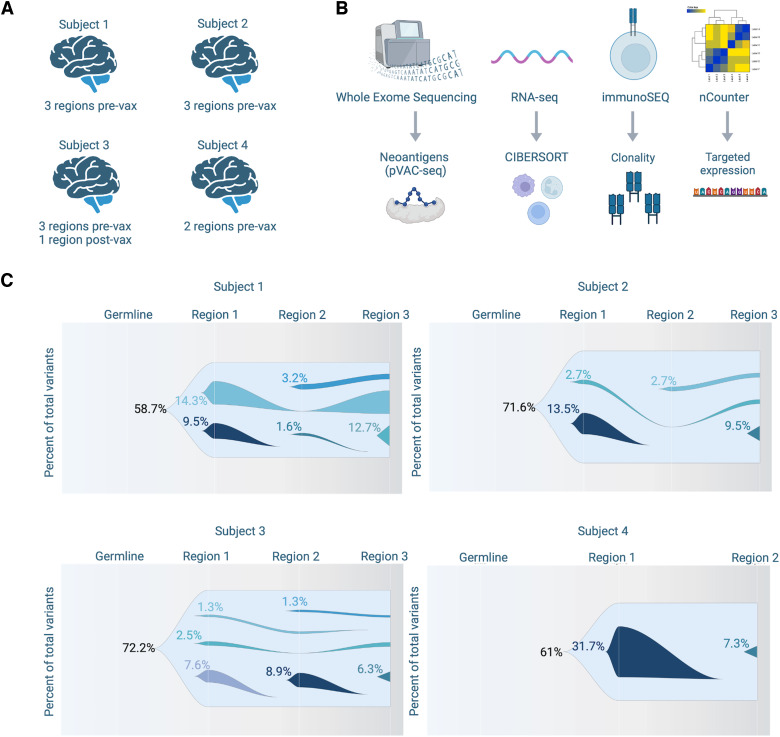
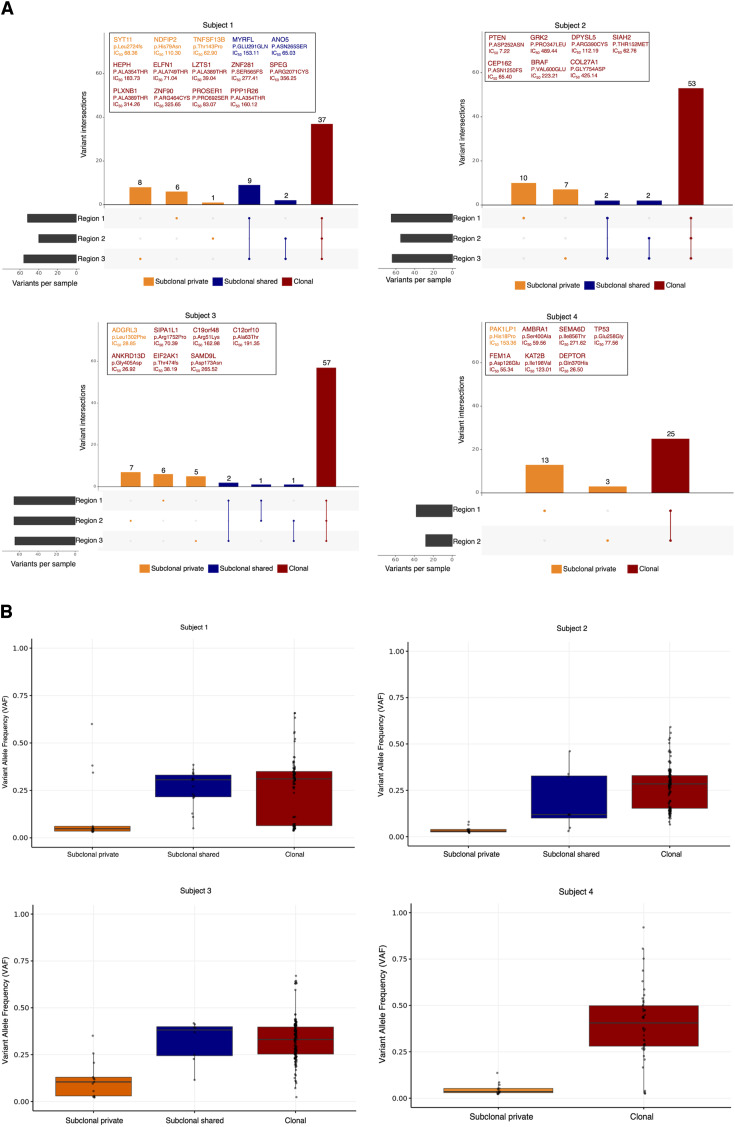
Outcomes for patients with glioblastoma (GBM) remain poor despite multimodality treatment with surgery, radiation, and chemotherapy. There are few immunotherapy options due to the lack of tumor immunogenicity. Several clinical trials have reported promising results with cancer vaccines. To date, studies have used data from a single tumor site to identify targetable antigens, but this approach limits the antigen pool and is antithetical to the heterogeneity of GBM. We have implemented multisector sequencing to increase the pool of neoantigens across the GBM genomic landscape that can be incorporated into personalized peptide vaccines called NeoVax.
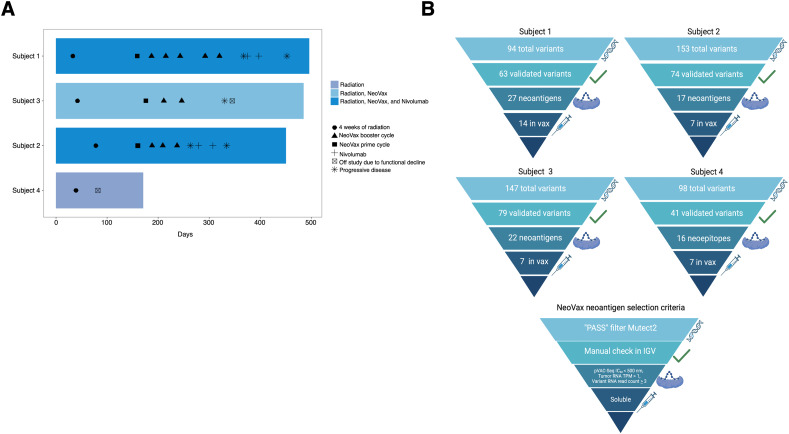
In this study, we report the findings of four patients enrolled onto the NeoVax clinical trial (NCT0342209).
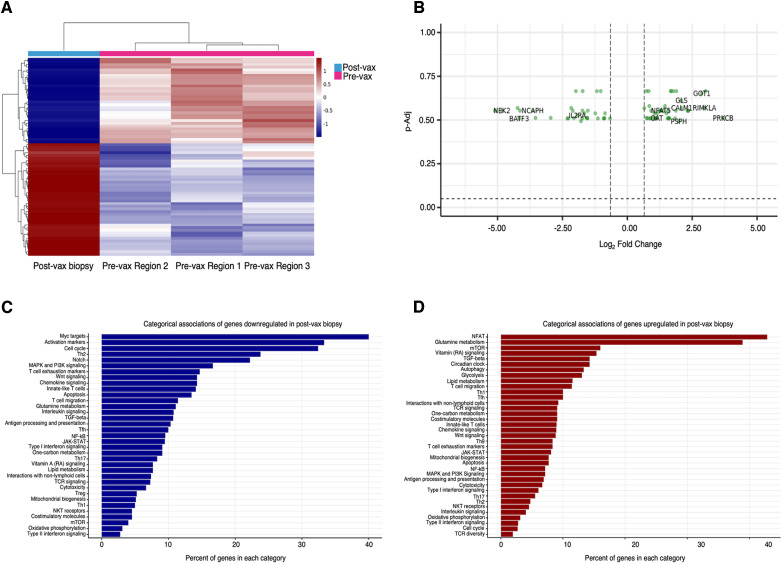
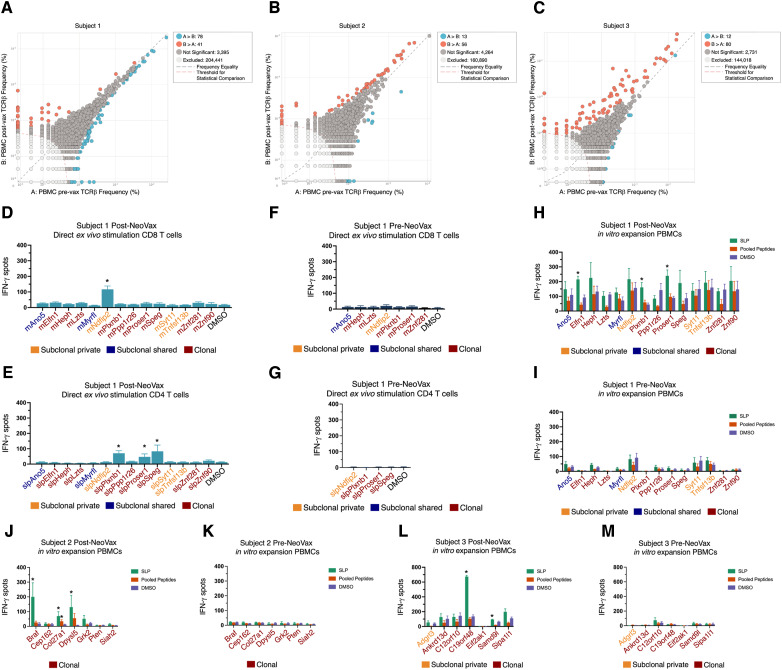
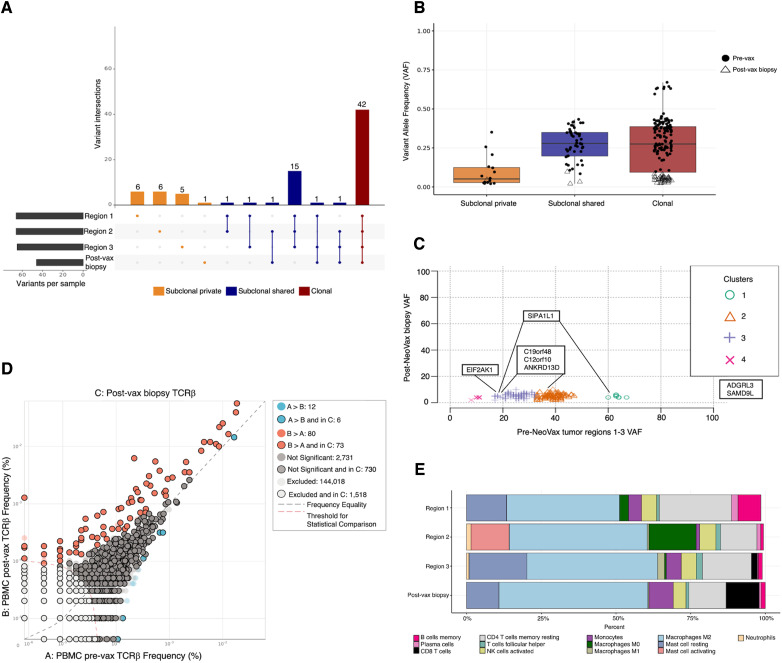
Immune reactivity to NeoVax neoantigens was assessed in peripheral blood mononuclear cells pre- and post-NeoVax for patients 1 to 3 using IFNγ-ELISPOT assay. A statistically significant increase in IFNγ producing T cells at the post-NeoVax time point for several neoantigens was observed. Furthermore, a post-NeoVax tumor biopsy was obtained from patient 3 and, upon evaluation, revealed evidence of infiltrating, clonally expanded T cells.
Collectively, our findings suggest that NeoVax stimulated the expansion of neoantigen-specific effector T cells and provide encouraging results to aid in the development of future neoantigen vaccine-based clinical trials in patients with GBM. Herein, we demonstrate the feasibility of incorporating multisector sampling in cancer vaccine design and provide information on the clinical applicability of clonality, distribution, and immunogenicity of the neoantigen landscape in patients with GBM.
尽管采用了手术、放疗和化疗的多模式治疗,胶质母细胞瘤(GBM)患者的预后仍然很差。由于缺乏肿瘤免疫原性,免疫疗法选择很少。几项临床试验报告了癌症疫苗的有希望的结果。迄今为止,研究使用来自单个肿瘤部位的数据来鉴定可靶向的抗原,但这种方法限制了抗原库,与 GBM 的异质性背道而驰。我们已经实施了多扇区测序,以增加 GBM 基因组景观中可纳入称为 NeoVax 的个性化肽疫苗的新抗原池。
在这项研究中,我们报告了四名入组 NeoVax 临床试验(NCT0342209)的患者的发现。
使用 IFNγ-ELISPOT 测定法评估了患者 1 至 3 的外周血单核细胞在 NeoVax 前后对 NeoVax 新抗原的免疫反应。观察到针对几种新抗原的 IFNγ 产生 T 细胞在 NeoVax 后时间点的统计学显著增加。此外,从患者 3 获得了 NeoVax 后肿瘤活检,并且在评估时,显示出浸润性、克隆性扩增的 T 细胞的证据。
总的来说,我们的发现表明 NeoVax 刺激了新抗原特异性效应 T 细胞的扩增,并提供了令人鼓舞的结果,有助于为 GBM 患者的未来新抗原疫苗临床试验的发展提供帮助。在这里,我们证明了在癌症疫苗设计中纳入多扇区采样的可行性,并提供了关于 GBM 患者新抗原景观的克隆性、分布和免疫原性的临床适用性的信息。