Li Zhixia, Li Yuting, Lin Xiaomei, Cui Yuntao, Wang Ting, Dong Jian, Lu Yuan
Tianjin Industrial Microbiology Key Laboratory, College of Biotechnology, Tianjin University of Science and Technology, Tianjin, 300457, China.
Key Laboratory of Industrial Biocatalysis, Ministry of Education, Department of Chemical Engineering, Tsinghua University, Beijing, 100084, China.
Bioresour Bioprocess. 2022 Mar 21;9(1):28. doi: 10.1186/s40643-022-00520-8.
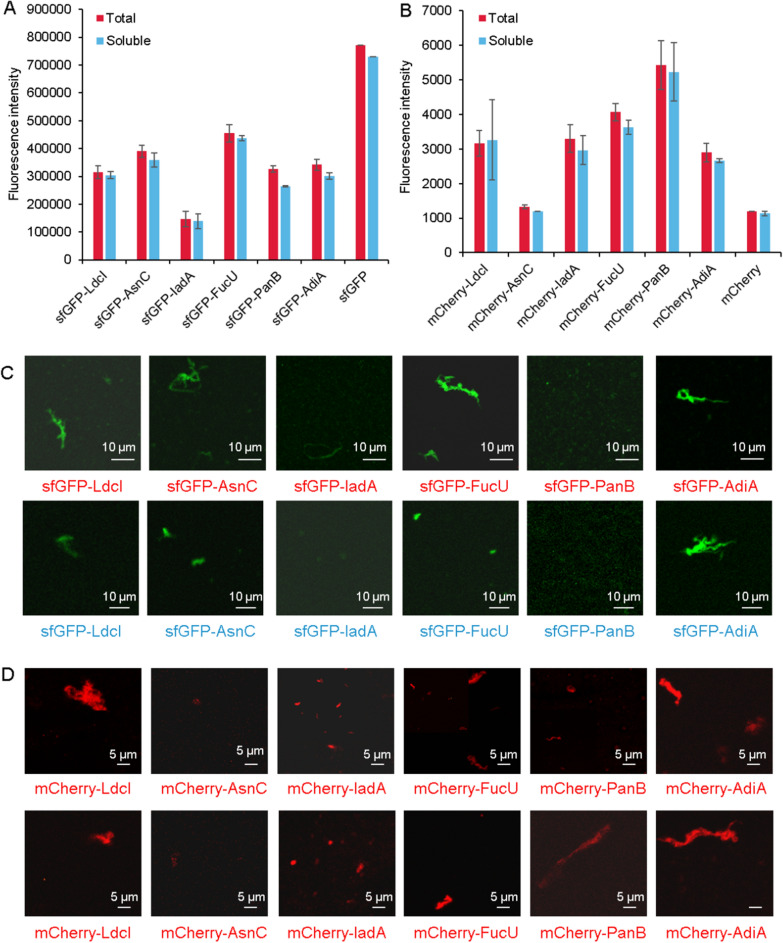
Protein-based biomaterials have the characteristics of stability and biocompatibility. Based on these advantages, various bionic materials have been manufactured and used in different fields. However, current protein-based biomaterials generally need to form monomers in cells and be purified before being assembled in vitro. The preparation process takes a long time, and the complex cellular environment is challenging to be optimized for producing the target protein product. Here this study proposed technology for in situ synthesis and assembly of the target protein, namely the cell-free protein synthesis (CFPS), which allowed to shorten the synthesis time and increase the flexibility of adding or removing natural or synthetic components. In this study, successful expression and self-assembly of the dihedral symmetric proteins proved the applicability of the CFPS system for biomaterials production. Furthermore, the fusion of different functional proteins to these six scaffold proteins could form active polymers in the CFPS system. Given the flexibility, CFPS is expected to become a powerful tool as the prototyping and manufacturing technology for protein-based biomaterials in the future.
基于蛋白质的生物材料具有稳定性和生物相容性的特点。基于这些优势,各种仿生材料已被制造出来并应用于不同领域。然而,目前基于蛋白质的生物材料通常需要在细胞中形成单体并进行纯化,然后才能在体外组装。制备过程耗时较长,而且复杂的细胞环境难以优化以生产目标蛋白质产品。在此,本研究提出了用于目标蛋白质原位合成和组装的技术,即无细胞蛋白质合成(CFPS),它能够缩短合成时间,并增加添加或去除天然或合成成分的灵活性。在本研究中,二面体对称蛋白质的成功表达和自组装证明了CFPS系统在生物材料生产中的适用性。此外,将不同功能蛋白质与这六种支架蛋白质融合,可以在CFPS系统中形成活性聚合物。鉴于其灵活性,CFPS有望在未来成为基于蛋白质的生物材料原型制作和制造技术的强大工具。