Ning Ying, Zhang Li-Yuan, Mai Jing, Su Jia-En, Cai Jie-Yun, Chen Yi, Jiang Yong-Lei, Zhu Ming-Jun, Hu Bin-Bin
Yunnan Academy of Tobacco Agricultural Sciences, Kunming, 650021, People's Republic of China.
School of Biology and Biological Engineering, Guangdong Key Laboratory of Fermentation and Enzyme Engineering, Guangzhou Higher Education Mega Center, South China University of Technology, Panyu, Guangzhou, 510006, People's Republic of China.
Bioresour Bioprocess. 2023 May 2;10(1):32. doi: 10.1186/s40643-023-00651-6.
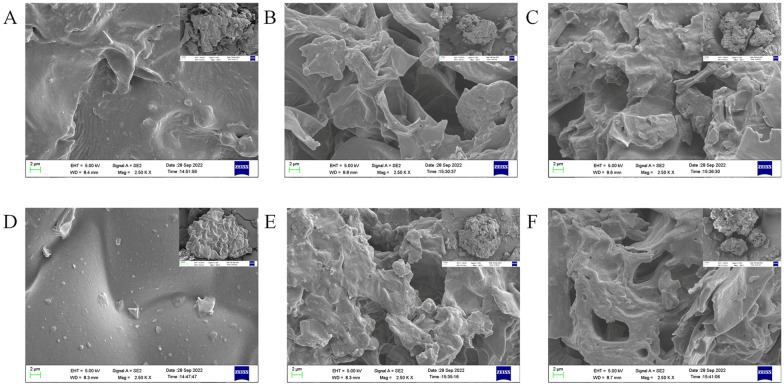
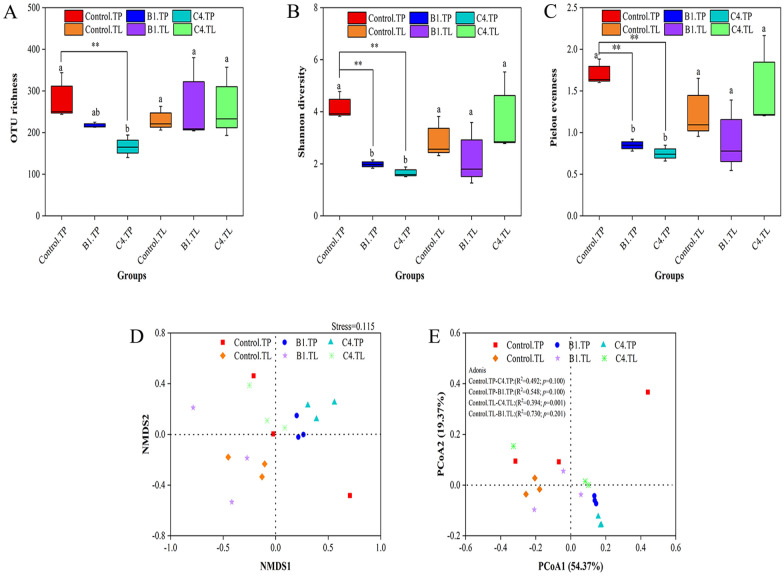
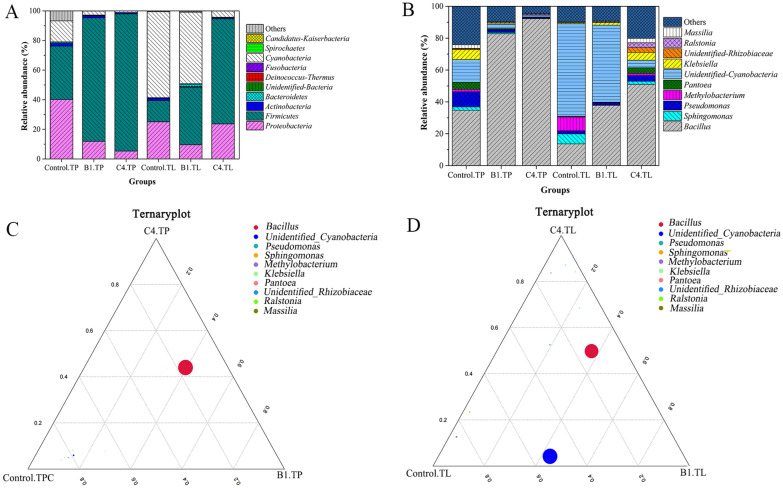
The first-cured tobacco contains macromolecular substances with negative impacts on tobacco products quality, and must be aged and fermented to mitigate their effects on the tobacco products quality. However, the natural fermentation takes a longer cycle with large coverage area and low economic efficiency. Microbial fermentation is a method to improve tobacco quality. The change of chemical composition of tobacco during the fermentation is often correlated with shapes of tobacco. This study aimed to investigate the effects of tobacco microorganisms on the quality of different shapes of tobacco. Specifically, Bacillus subtilis B1 and Cytobacillus oceanisediminis C4 with high protease, amylase, and cellulase were isolated from the first-cured tobacco, followed by using them for solid-state fermentation of tobacco powder (TP) and tobacco leaves (TL). Results showed that strains B1 and C4 could significantly improve the sensory quality of TP, enabling it to outperform TL in overall texture and skeleton of tobacco products during cigarette smoking. Compared with the control, microbial fermentation could increase reducing sugar; regulate protein, starch, and cellulose, reduce nicotine, improve total aroma substances, and enable the surface of fermented TP and TL to be more loose, wrinkled, and porous. Microbial community analysis indicated that strains B1 and C4 could change the native structure of microbial community in TP and TL. LEfSe analysis revealed that the potential key biomarkers in TP and TL were Bacilli, Pseudonocardia, Pantoea, and Jeotgalicoccus, which may have cooperative effects with other microbial taxa in improving tobacco quality. This study provides a theoretical basis for improving tobacco fermentation process for better cigarettes quality.
初烤烟叶含有对烟草制品品质有负面影响的大分子物质,必须经过陈化和发酵以减轻其对烟草制品品质的影响。然而,自然发酵周期长、占地面积大且经济效益低。微生物发酵是一种改善烟草品质的方法。发酵过程中烟草化学成分的变化往往与烟草形态相关。本研究旨在探究烟草微生物对不同形态烟草品质的影响。具体而言,从初烤烟叶中分离出具有高蛋白酶、淀粉酶和纤维素酶活性的枯草芽孢杆菌B1和海洋栖热放线菌C4,然后将它们用于烟草粉末(TP)和烟叶(TL)的固态发酵。结果表明,菌株B1和C4能显著提高TP的感官品质,使其在卷烟抽吸时烟草制品的整体质地和骨架方面优于TL。与对照相比,微生物发酵可增加还原糖含量;调节蛋白质、淀粉和纤维素含量,降低尼古丁含量,提高总香气物质含量,并使发酵后的TP和TL表面更加疏松、起皱且多孔。微生物群落分析表明,菌株B1和C4可改变TP和TL中微生物群落的原生结构。线性判别分析效应大小(LEfSe)分析显示,TP和TL中的潜在关键生物标志物为芽孢杆菌属、诺卡氏菌属、泛菌属和嗜盐球菌属,它们在改善烟草品质方面可能与其他微生物类群具有协同作用。本研究为改进烟草发酵工艺以提高卷烟品质提供了理论依据。