Luo Hongzhen, Gao Lei, Liu Zheng, Shi Yongjiang, Xie Fang, Bilal Muhammad, Yang Rongling, Taherzadeh Mohammad J
School of Life Science and Food Engineering, Huaiyin Institute of Technology, 1 Meicheng East Road, Huaian, 223003, China.
Jiangsu Provincial Engineering Laboratory for Biomass Conversion and Process Integration, Huaiyin Institute of Technology, Huaian, 223003, China.
Bioresour Bioprocess. 2021 Dec 19;8(1):134. doi: 10.1186/s40643-021-00488-x.
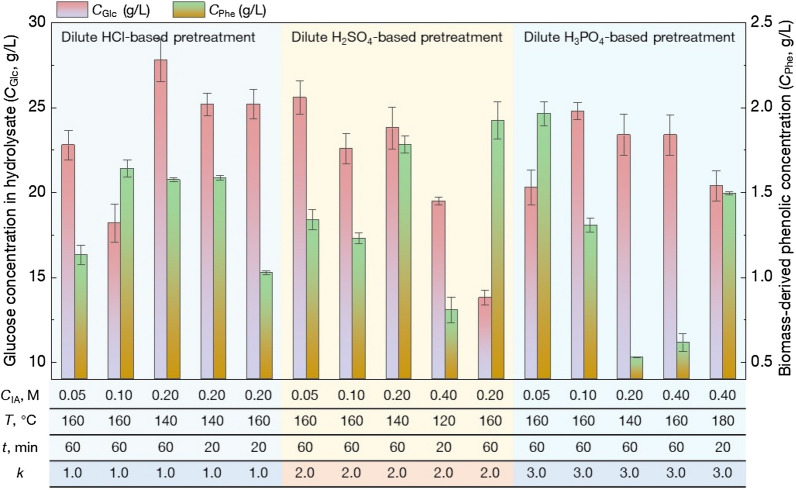
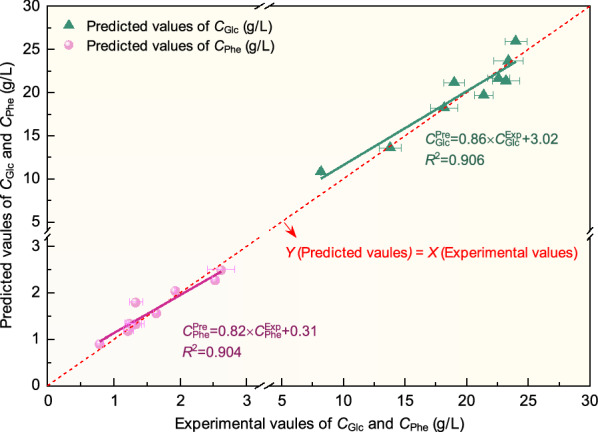
Dilute inorganic acids hydrolysis is one of the most promising pretreatment strategies with high recovery of fermentable sugars and low cost for sustainable production of biofuels and chemicals from lignocellulosic biomass. The diverse phenolics derived from lignin degradation during pretreatment are the main inhibitors for enzymatic hydrolysis and fermentation. However, the content features of derived phenolics and produced glucose under different conditions are still unclear due to the highly non-linear characteristic of biomass pretreatment. Here, an artificial neural network (ANN) model was developed for simultaneous prediction of the derived phenolic contents (C) and glucose yield (C) in corn stover hydrolysate before microbial fermentation by integrating dilute acid pretreatment and enzymatic hydrolysis. Six processing parameters including inorganic acid concentration (C), pretreatment temperature (T), residence time (t), solid-to-liquid ratio (R), kinds of inorganic acids (k), and enzyme loading dosage (E) were used as input variables. The C and C were set as the two output variables. An optimized topology structure of 6-12-2 in the ANN model was determined by comparing root means square errors, which has a better prediction efficiency for C (R = 0.904) and C (R = 0.906). Additionally, the relative importance of six input variables on C and C was firstly calculated by the Garson equation with net weight matrixes. The results indicated that C had strong effects (22%-23%) on C or C, then followed by E and T. In conclusion, the findings provide new insights into the sustainable development and inverse optimization of biorefinery process from ANN modeling perspectives.
稀无机酸水解是最具前景的预处理策略之一,可从木质纤维素生物质中高效回收可发酵糖且成本低廉,以可持续生产生物燃料和化学品。预处理过程中木质素降解产生的多种酚类物质是酶水解和发酵的主要抑制剂。然而,由于生物质预处理具有高度非线性特征,不同条件下衍生酚类物质和产生葡萄糖的含量特征仍不明确。在此,通过整合稀酸预处理和酶水解,开发了一种人工神经网络(ANN)模型,用于同时预测玉米秸秆水解液在微生物发酵前的衍生酚类物质含量(C)和葡萄糖产率(C)。将无机酸浓度(C)、预处理温度(T)、停留时间(t)、固液比(R)、无机酸种类(k)和酶负载量(E)这六个工艺参数用作输入变量。将C和C设置为两个输出变量。通过比较均方根误差确定了ANN模型中优化的6-12-2拓扑结构,该结构对C(R = 0.904)和C(R = 0.906)具有更好的预测效率。此外,首先通过带有净重矩阵的Garson方程计算了六个输入变量对C和C的相对重要性。结果表明,C对C或C有强烈影响(22%-23%),其次是E和T。总之,这些发现从ANN建模角度为生物炼制过程的可持续发展和逆向优化提供了新的见解。