Cary Gregory A, Wiley Jesse C, Gockley Jake, Keegan Stephen, Amirtha Ganesh Sai Sruthi, Heath Laura, Butler Robert R, Mangravite Lara M, Logsdon Benjamin A, Longo Frank M, Levey Allan, Greenwood Anna K, Carter Gregory W
The Jackson Laboratory Bar Harbor Maine USA.
Sage Bionetworks Seattle Washington USA.
Alzheimers Dement (N Y). 2024 Apr 22;10(2):e12461. doi: 10.1002/trc2.12461. eCollection 2024 Apr-Jun.
Alzheimer's disease (AD) is the predominant dementia globally, with heterogeneous presentation and penetrance of clinical symptoms, variable presence of mixed pathologies, potential disease subtypes, and numerous associated endophenotypes. Beyond the difficulty of designing treatments that address the core pathological characteristics of the disease, therapeutic development is challenged by the uncertainty of which endophenotypic areas and specific targets implicated by those endophenotypes to prioritize for further translational research. However, publicly funded consortia driving large-scale open science efforts have produced multiple omic analyses that address both disease risk relevance and biological process involvement of genes across the genome.
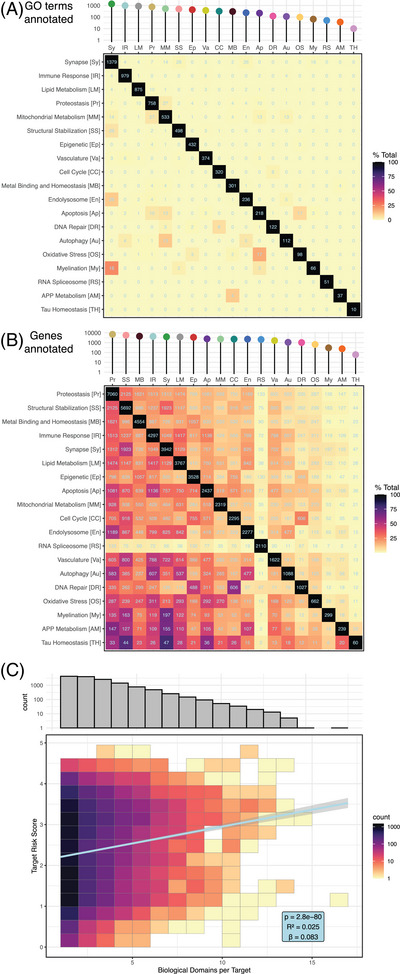
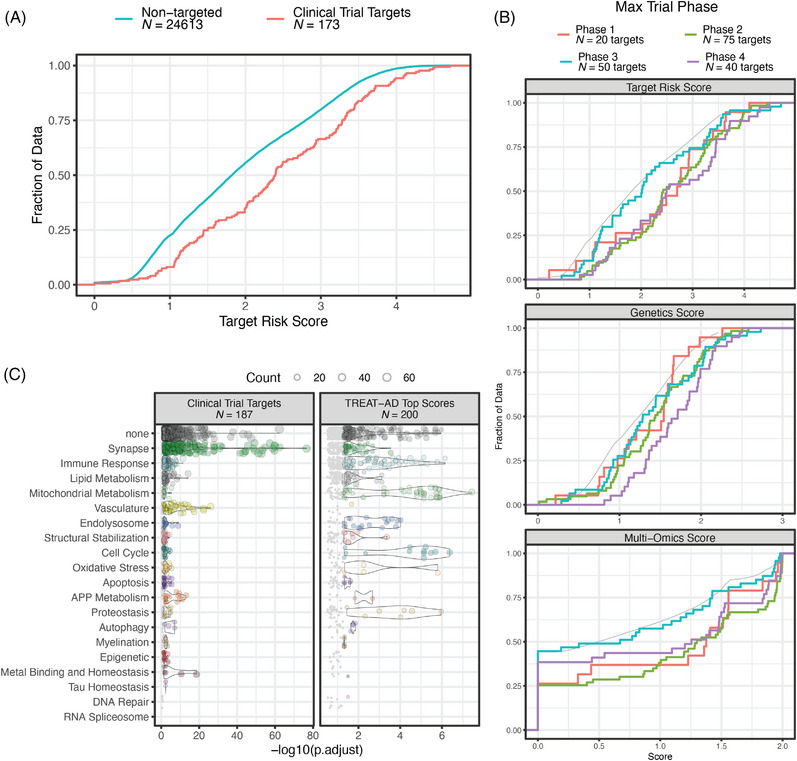
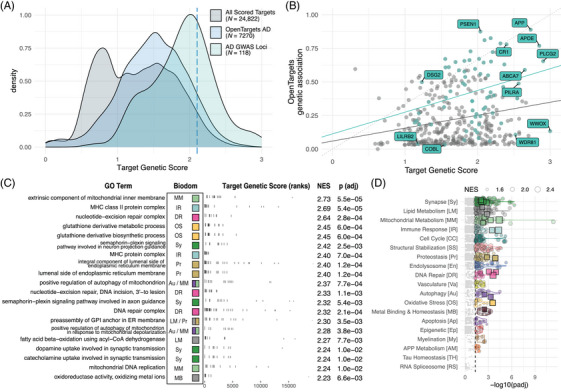
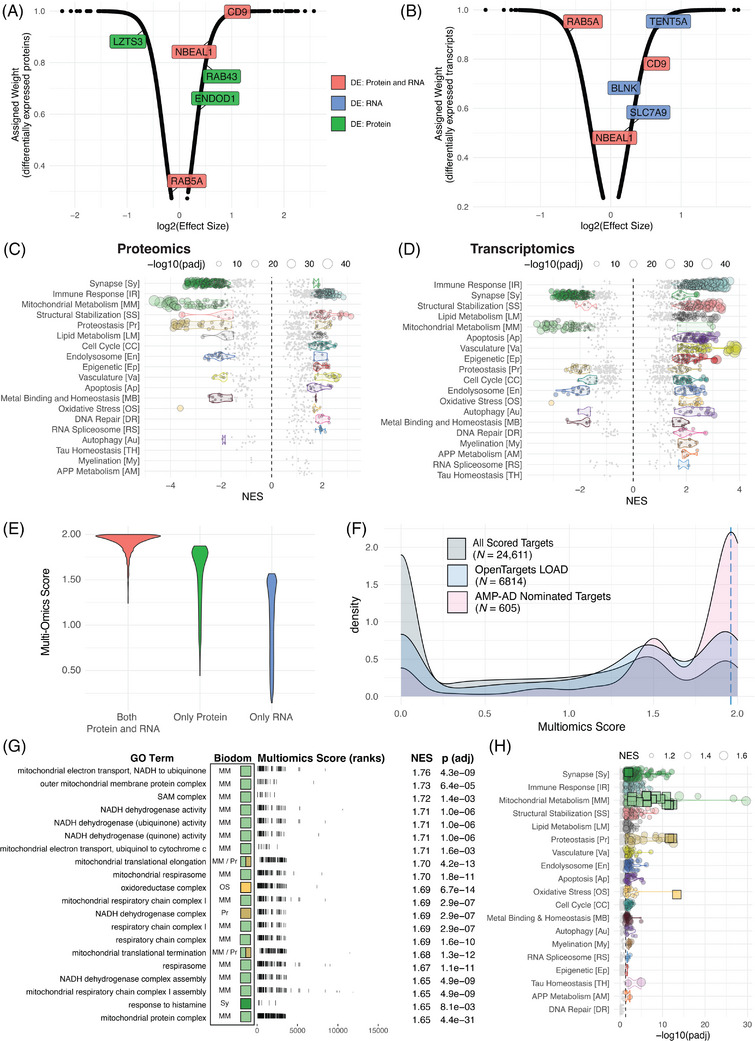
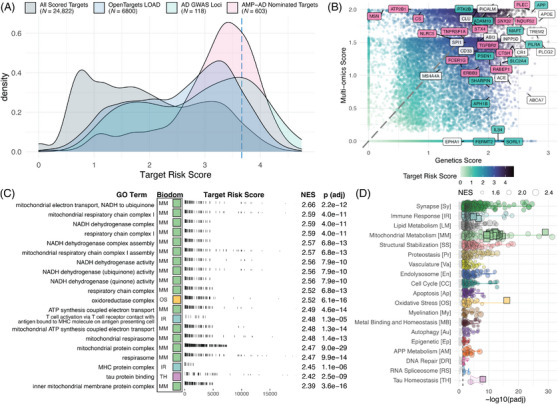
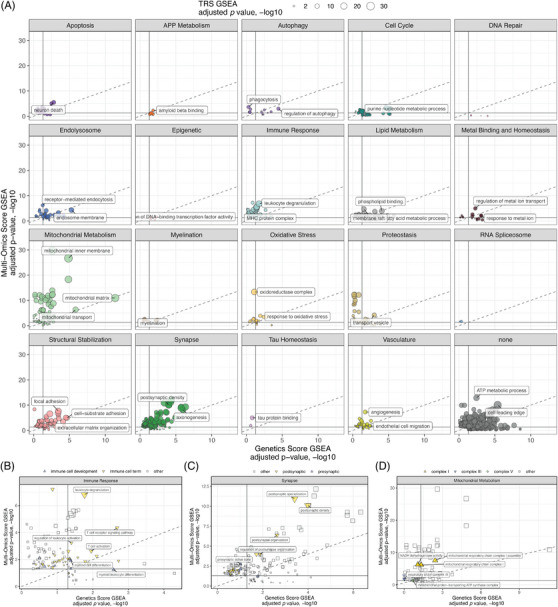
Here we report the development of an informatic pipeline that draws from genetic association studies, predicted variant impact, and linkage with dementia associated phenotypes to create a genetic risk score. This is paired with a multi-omic risk score utilizing extensive sets of both transcriptomic and proteomic studies to identify system-level changes in expression associated with AD. These two elements combined constitute our target risk score that ranks AD risk genome-wide. The ranked genes are organized into endophenotypic space through the development of 19 biological domains associated with AD in the described genetics and genomics studies and accompanying literature. The biological domains are constructed from exhaustive Gene Ontology (GO) term compilations, allowing automated assignment of genes into objectively defined disease-associated biology. This rank-and-organize approach, performed genome-wide, allows the characterization of aggregations of AD risk across biological domains.
The top AD-risk-associated biological domains are Synapse, Immune Response, Lipid Metabolism, Mitochondrial Metabolism, Structural Stabilization, and Proteostasis, with slightly lower levels of risk enrichment present within the other 13 biological domains.
This provides an objective methodology to localize risk within specific biological endophenotypes and drill down into the most significantly associated sets of GO terms and annotated genes for potential therapeutic targets.
阿尔茨海默病(AD)是全球主要的痴呆症类型,其临床症状表现多样且具有不同的外显率,存在多种混合病理状态、潜在的疾病亚型以及众多相关的内表型。除了设计针对该疾病核心病理特征的治疗方法存在困难外,治疗研发还面临着不确定性的挑战,即哪些内表型领域以及这些内表型所涉及的特定靶点应优先用于进一步的转化研究。然而,推动大规模开放科学研究的公共资助联盟已经开展了多项组学分析,这些分析涉及疾病风险相关性以及全基因组范围内基因的生物学过程参与情况。
在此,我们报告了一种信息学流程的开发,该流程借鉴了遗传关联研究、预测的变异影响以及与痴呆相关表型的关联,以创建一个遗传风险评分。这与一个多组学风险评分相结合,该评分利用大量的转录组学和蛋白质组学研究来识别与AD相关的表达水平的系统变化。这两个要素结合构成了我们的目标风险评分,该评分在全基因组范围内对AD风险进行排名。通过在所描述的遗传学和基因组学研究以及相关文献中开发与AD相关的19个生物学领域,将排名的基因组织到内表型空间中。这些生物学领域由详尽的基因本体(GO)术语汇编构建而成,允许将基因自动分配到客观定义的疾病相关生物学中。这种全基因组范围内的排名和组织方法能够对跨生物学领域的AD风险聚集情况进行表征。
与AD风险相关度最高的生物学领域是突触、免疫反应、脂质代谢、线粒体代谢、结构稳定和蛋白质稳态,其他13个生物学领域的风险富集水平略低。
这提供了一种客观的方法,用于在特定的生物学内表型中定位风险,并深入研究与潜在治疗靶点最显著相关的GO术语集和注释基因。