
[此处英文内容不完整,推测可能是某个物质或因素等,暂无法准确翻译完整句子,可补充完整英文后继续提问]在癌症铁死亡和凋亡中的作用
The Role of in Ferroptosis and Apoptosis in Cancer.
作者信息
Chen Xiaoyi, Poetsch Ansgar
机构信息
Queen Mary School, Nanchang University, Nanchang 330047, China.
出版信息
Biomedicines. 2024 Apr 20;12(4):918. doi: 10.3390/biomedicines12040918.
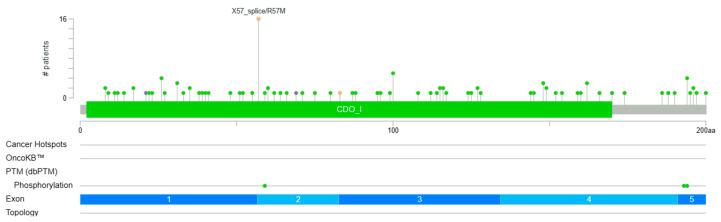
Cysteine dioxygenase type 1 () is a tumor suppressor gene. It regulates the metabolism of cysteine, thereby influencing the cellular antioxidative capacity. This function puts in a prominent position to promote ferroptosis and apoptosis. promotes ferroptosis mainly by decreasing the amounts of antioxidants, leading to autoperoxidation of the cell membrane through Fenton reaction. promotes apoptosis mainly through the product of cysteine metabolism, taurine, and low level of antioxidants. Many cancers exhibit altered function of , underscoring its crucial role in cancer cell survival. Genetic and epigenetic alterations have been found, with methylation of promoter as the most common mutation. The fact that no cancer was found to be caused by altered function alone indicates that the tumor suppressor role of is mild. By compiling the current knowledge about apoptosis, ferroptosis, and the role of , this review suggests possibilities for how the mild anticancer role of could be harnessed in new cancer therapies. Here, developing drugs targeting is considered meaningful in neoadjuvant therapies, for example, helping against the development of anti-cancer drug resistance in tumor cells.
1型半胱氨酸双加氧酶()是一种肿瘤抑制基因。它调节半胱氨酸的代谢,从而影响细胞的抗氧化能力。这一功能使在促进铁死亡和凋亡方面处于突出地位。主要通过减少抗氧化剂的量来促进铁死亡,导致细胞膜通过芬顿反应发生自氧化。主要通过半胱氨酸代谢产物牛磺酸和低水平的抗氧化剂来促进凋亡。许多癌症表现出功能改变,这突出了其在癌细胞存活中的关键作用。已经发现了基因和表观遗传改变,其中启动子甲基化是最常见的突变。未发现仅由功能改变引起癌症这一事实表明的肿瘤抑制作用较弱。通过汇总目前关于凋亡、铁死亡以及的作用的知识,本综述提出了如何在新的癌症治疗中利用的轻度抗癌作用的可能性。在此,开发靶向的药物在新辅助治疗中被认为是有意义的,例如,有助于对抗肿瘤细胞中抗癌药物耐药性的发展。



 Zotero 插件