Fang Xiang-Qian, Wang Jin-Bin, Liu Si-You, Wen Jun-Zhe, Song Hong-Yu, Liu Hai-Tao
State Key Laboratory of Rolling and Automation, School of Materials Science and Engineering, Northeastern University, Shenyang 110819, China.
School of Materials Science and Engineering, Northeastern University, Shenyang 110819, China.
Materials (Basel). 2024 Apr 17;17(8):1847. doi: 10.3390/ma17081847.
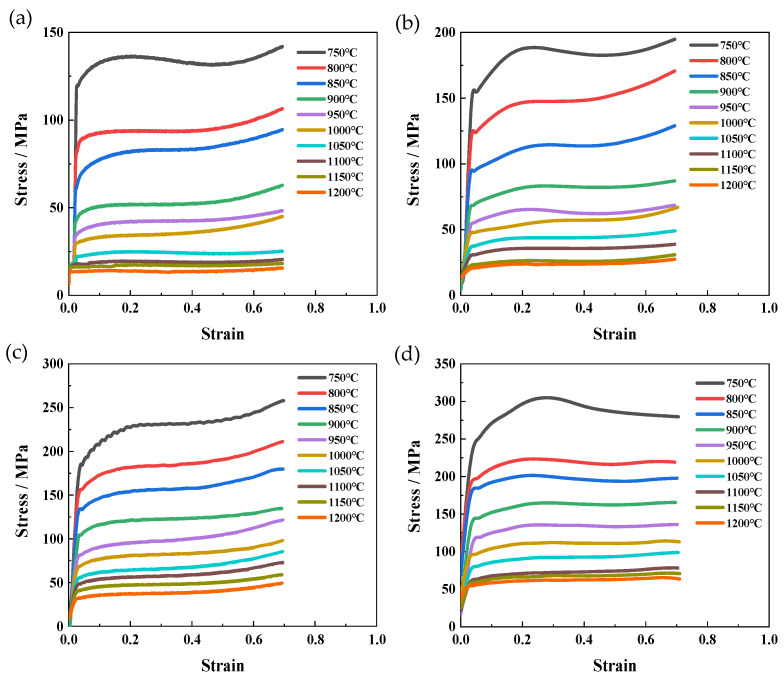
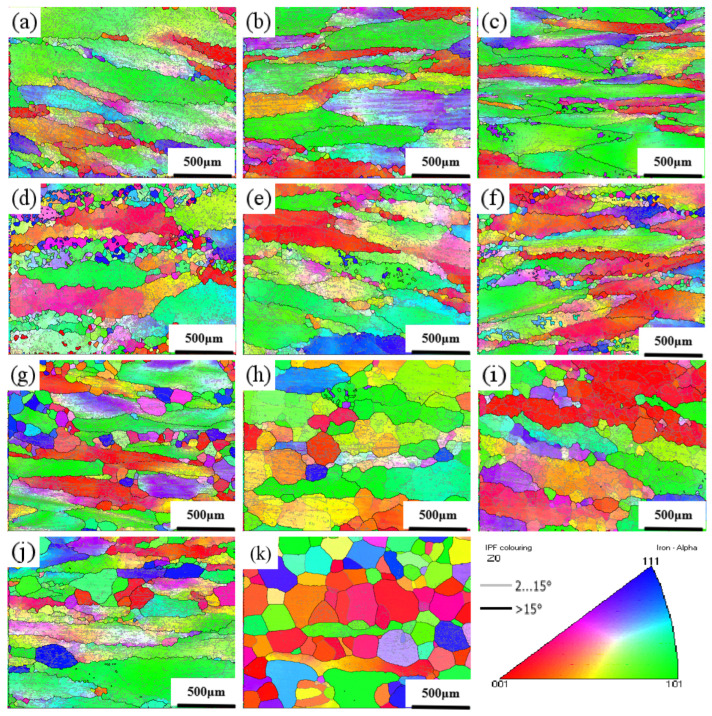
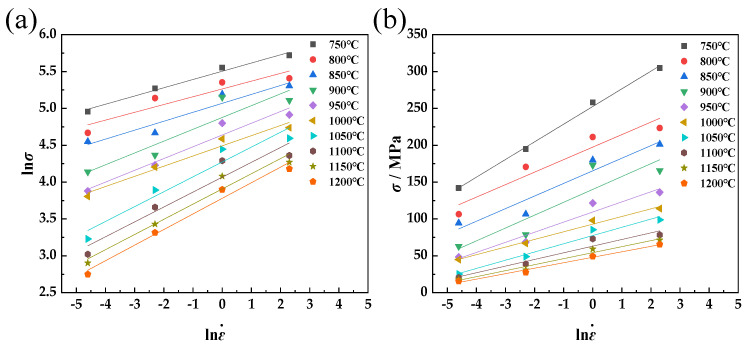
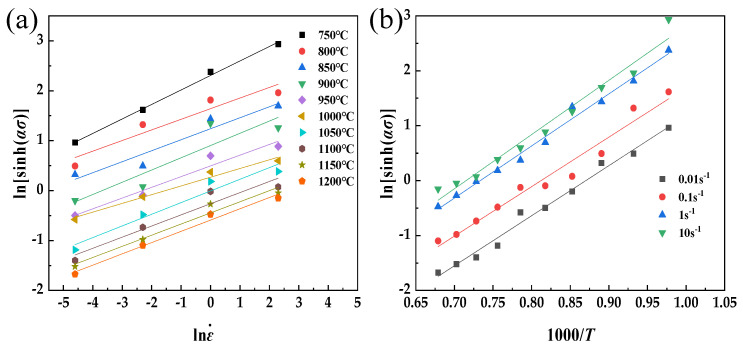
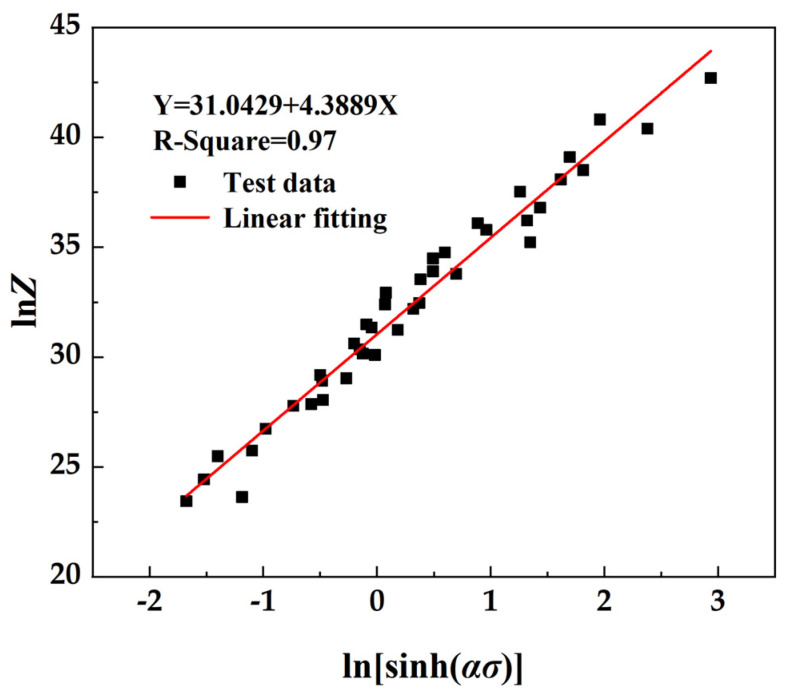
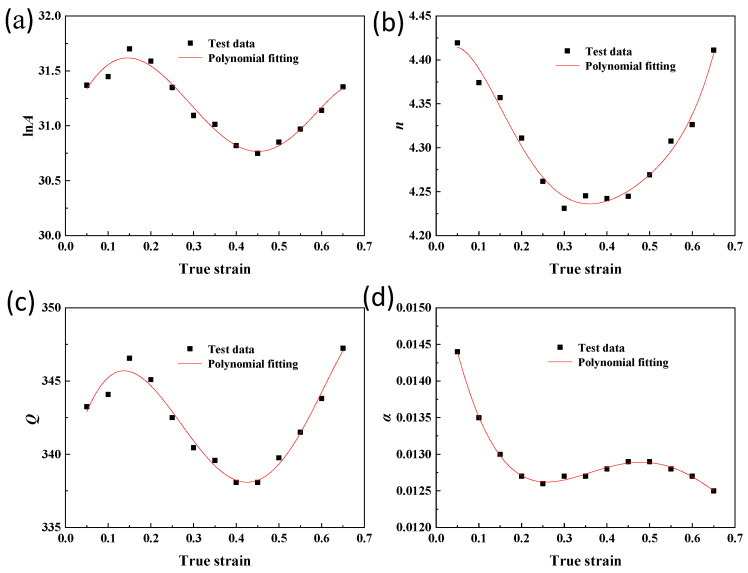
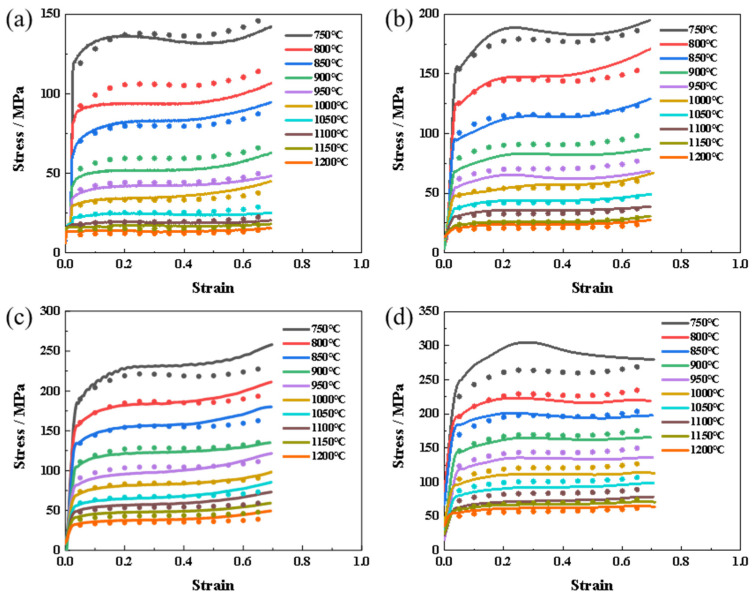
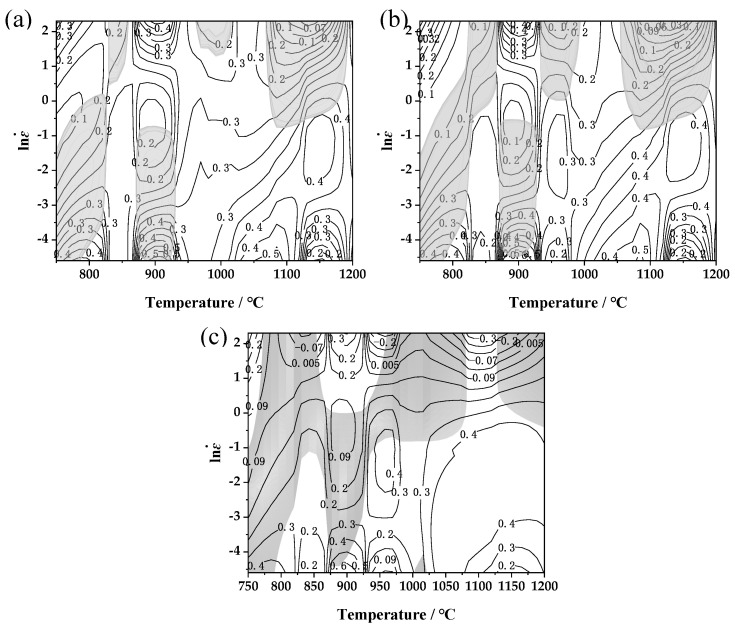
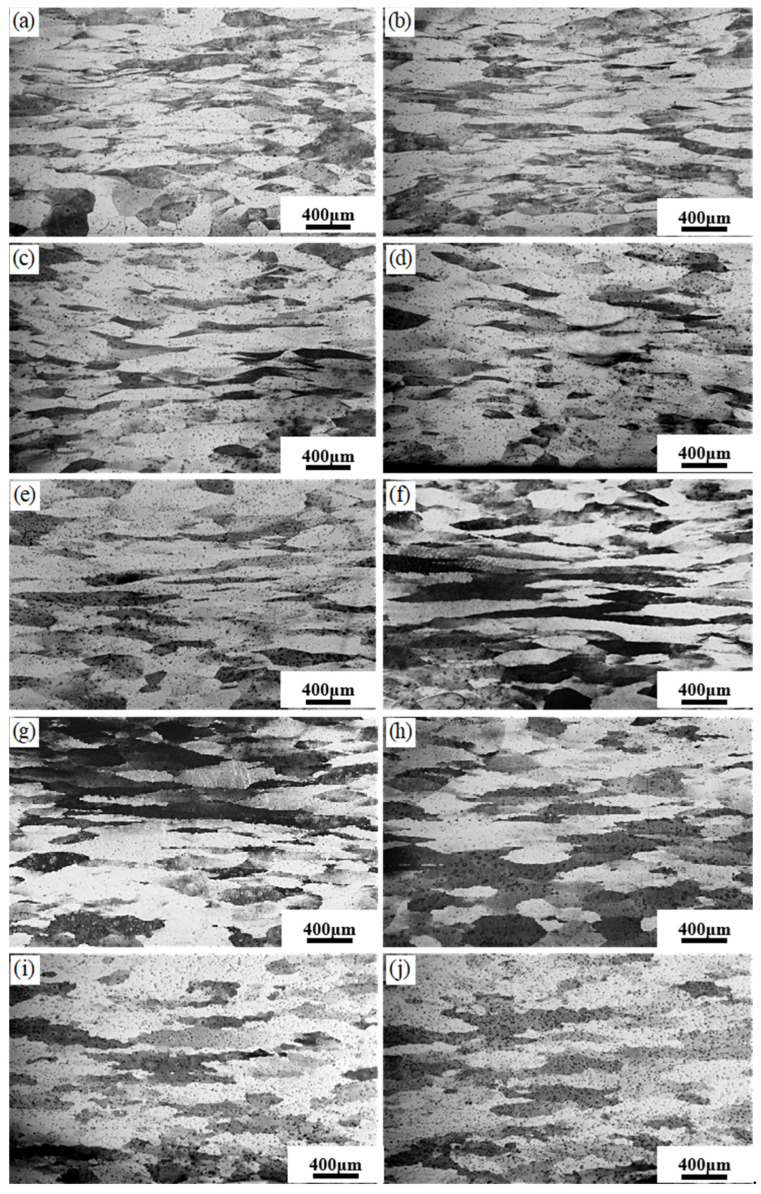
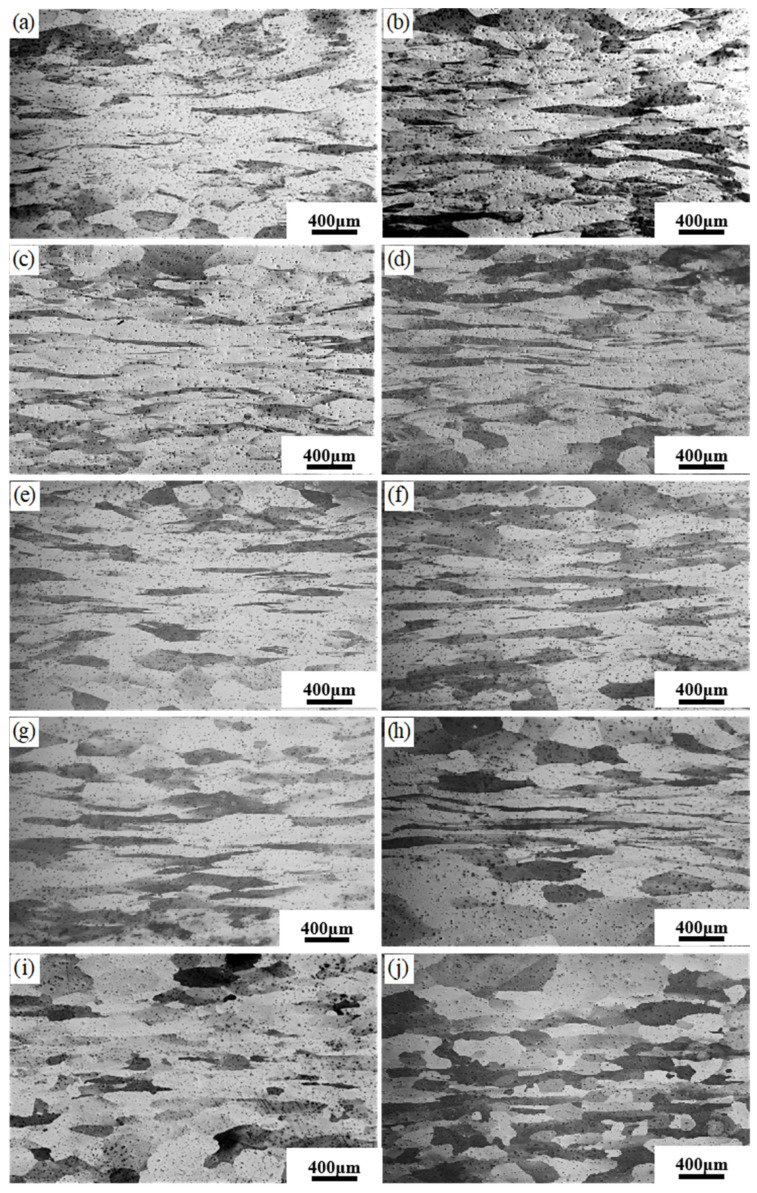
The deteriorated plasticity arising from the insoluble precipitates may lead to cracks during the rolling of FeCrAl alloys. The microstructure evolution and hot deformation behavior of an FeCrAl alloy were investigated in the temperature range of 750-1200 °C and strain rate range of 0.01-10 s. The flow stress of the FeCrAl alloy decreased with an increasing deformation temperature and decreased strain rate during hot working. The thermal deformation activation energy was determined to be 329.49 kJ/mol based on the compression test. Then, the optimal hot working range was given based on the established hot processing maps. The hot processing map revealed four small instability zones. The optimal working range for the material was identified as follows: at a true strain of 0.69, the deformation temperature should be 1050-1200 °C, and the strain rate should be 0.01-0.4 s. The observation of key samples of thermally simulated compression showed that discontinuous dynamic recrystallization started to occur with the temperate above 1000 °C, leading to bended grain boundaries. When the temperature was increased to 1150 °C, the dynamic recrystallization resulted in a microstructure composed of fine and equiaxed grains.
由不溶性析出物导致的塑性恶化可能会在铁铬铝合金轧制过程中引发裂纹。研究了一种铁铬铝合金在750 - 1200 °C温度范围和0.01 - 10 s应变率范围内的微观组织演变和热变形行为。铁铬铝合金的流变应力在热加工过程中随变形温度升高和应变率降低而减小。基于压缩试验确定热变形激活能为329.49 kJ/mol。然后,根据建立的热加工图给出了最佳热加工范围。热加工图显示有四个小的失稳区。确定该材料的最佳工作范围如下:在真应变0.69时,变形温度应为1050 - 1200 °C,应变率应为0.01 - 0.4 s。对热模拟压缩关键试样的观察表明,当温度高于1000 °C时开始发生不连续动态再结晶,导致晶界弯曲。当温度升高到1150 °C时,动态再结晶产生由细小等轴晶粒组成的微观组织。