Berndt Andre, Lee Justin, Nguyen Amanda, Jin Zheyu, Moghadasi Aida, Gibbs Chelsea, Wait Sarah, Evitts Kira, Asencio Anthony, Bremner Samantha, Zuniga Shani, Chavan Vedant, Williams Andy, Smith Annette, Moussavi-Harami Farid, Regnier Michael, Young Jessica, Mack David, Nance Elizabeth, Boyle Patrick
University of Washington.
University of Tokyo.
Res Sq. 2024 Apr 17:rs.3.rs-3974015. doi: 10.21203/rs.3.rs-3974015/v1.
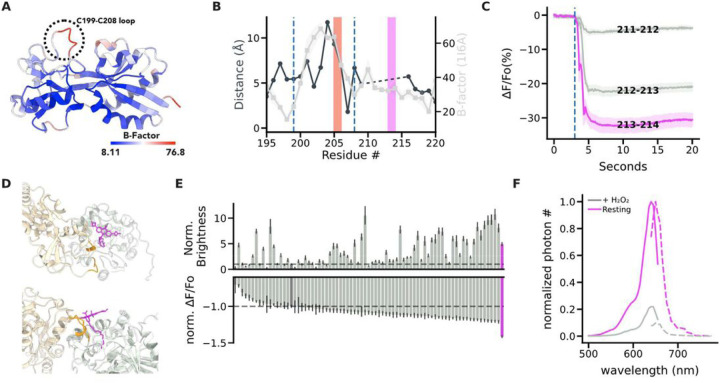
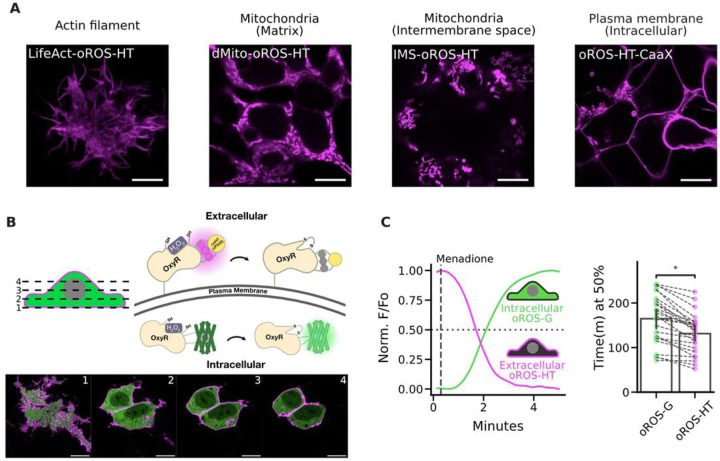
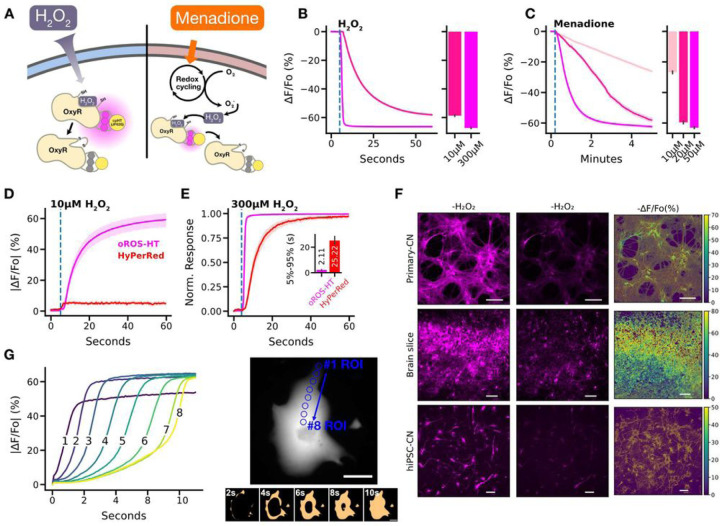
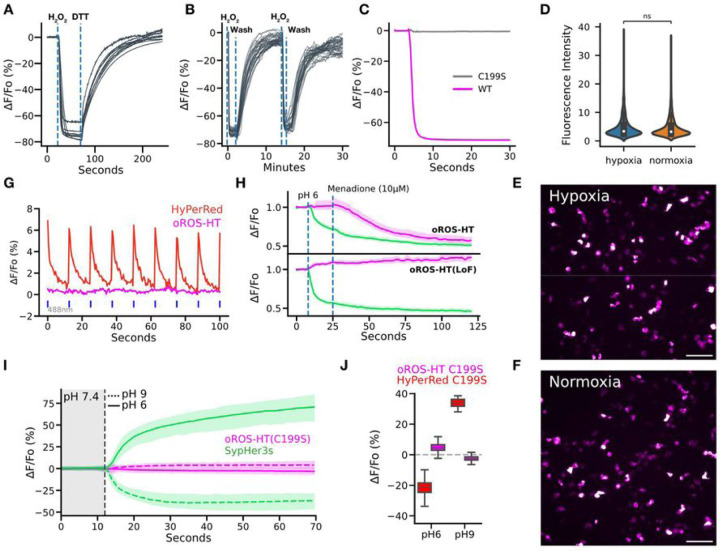
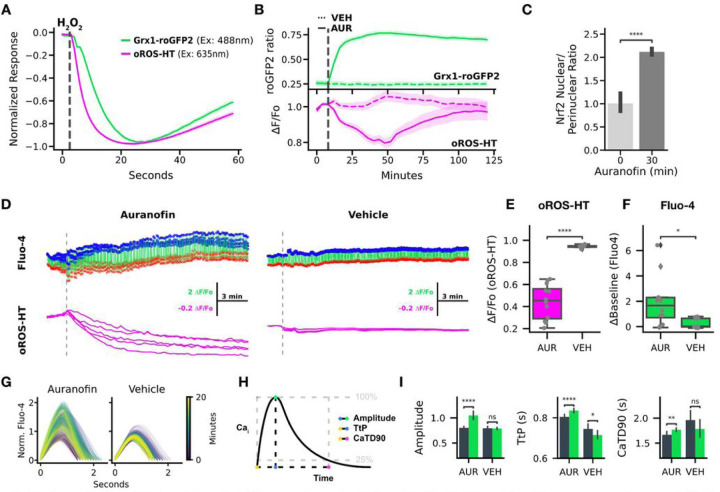
HO is a key oxidant in mammalian biology and a pleiotropic signaling molecule at the physiological level, and its excessive accumulation in conjunction with decreased cellular reduction capacity is often found to be a common pathological marker. Here, we present a red fluorescent Genetically Encoded HO Indicator (GEHI) allowing versatile optogenetic dissection of redox biology. Our new GEHI, oROS-HT, is a chemigenetic sensor utilizing a HaloTag and Janelia Fluor (JF) rhodamine dye as fluorescent reporters. We developed oROS-HT through a structure-guided approach aided by classic protein structures and recent protein structure prediction tools. Optimized with JF, oROS-HT is a sensor with 635 nm excitation and 650 nm emission peaks, allowing it to retain its brightness while monitoring intracellular HO dynamics. Furthermore, it enables multi-color imaging in combination with blue-green fluorescent sensors for orthogonal analytes and low auto-fluorescence interference in biological tissues. Other advantages of oROS-HT over alternative GEHIs are its fast kinetics, oxygen-independent maturation, low pH sensitivity, lack of photo-artifact, and lack of intracellular aggregation. Here, we demonstrated efficient subcellular targeting and how oROS-HT can map inter and intracellular HO diffusion at subcellular resolution. Lastly, we used oROS-HT with other green fluorescence reporters to investigate the transient effect of the anti-inflammatory agent auranofin on cellular redox physiology and calcium levels via multi-parametric, dual-color imaging.
血红素加氧酶(HO)是哺乳动物生物学中的关键氧化剂,在生理水平上是一种多效性信号分子,其过度积累并伴有细胞还原能力下降常被视为常见的病理标志。在此,我们展示了一种红色荧光基因编码的HO指示剂(GEHI),可对氧化还原生物学进行多用途光遗传学剖析。我们新的GEHI,oROS-HT,是一种化学遗传传感器,利用卤代标签和Janelia Fluor(JF)罗丹明染料作为荧光报告基团。我们通过经典蛋白质结构和最新蛋白质结构预测工具辅助的结构导向方法开发了oROS-HT。用JF进行优化后,oROS-HT是一种激发峰为635 nm、发射峰为650 nm的传感器,使其在监测细胞内HO动态时能保持亮度。此外,它能与用于正交分析物的蓝绿色荧光传感器结合进行多色成像,且在生物组织中的自发荧光干扰较低。oROS-HT相对于其他GEHI的其他优势在于其快速动力学、与氧无关的成熟过程、低pH敏感性、无光伪影以及细胞内无聚集现象。在此,我们展示了其有效的亚细胞靶向作用以及oROS-HT如何以亚细胞分辨率绘制细胞间和细胞内HO的扩散情况。最后,我们将oROS-HT与其他绿色荧光报告基团一起使用,通过多参数双色成像研究抗炎剂金诺芬对细胞氧化还原生理学和钙水平的瞬时影响。