Dept of Conservative Dentistry and Endodontics, National Dental College, Baba Farid University of HEALth Sciences, Faridkot, India.
Department of Conservative Dentistry and Endodontics, Faculty of Dentistry, Manipal University College Malaysia, Jalan Batu Hampar, Bukit Baru, Melaka, Malaysia.
BMC Oral Health. 2024 May 4;24(1):532. doi: 10.1186/s12903-024-04259-w.
Successful endodontic treatment needs accurate determination of working length (WL). Electronic apex locators (EALs) were presented as an alternative to radiographic methods; and since then, they have evolved and gained popularity in the determination of WL. However, there is insufficient evidence on the post-operative pain, adequacy, and accuracy of EALs in determining WL.
The systematic review and meta-analysis aims to gather evidence regarding the effectiveness of EALs for WL determination when compared to different imaging techniques along with postoperative pain associated with WL determination, the number of radiographs taken during the procedure, the time taken, and the adverse effects.
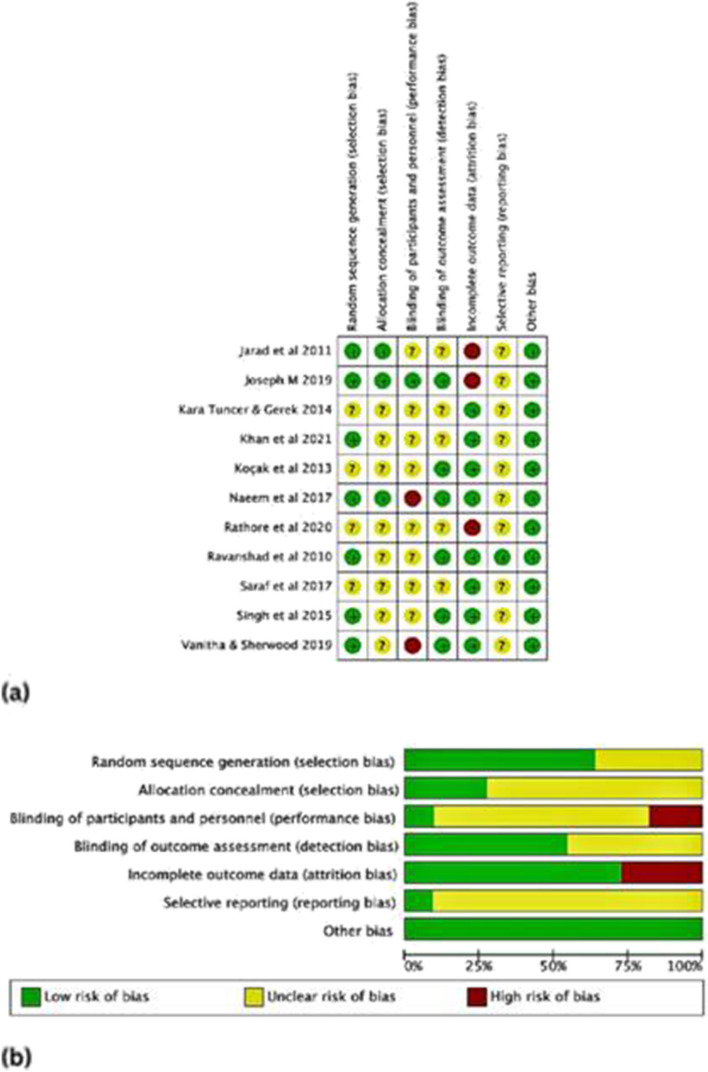
For the review, clinical studies with cross-over and parallel-arm randomized controlled trials (RCTs) were searched in seven electronic databases, followed by cross-referencing of the selected studies and related research synthesis. Risk of bias (RoB) assessment was carried out with Cochrane's RoB tool and a random-effects model was used. The meta-analysis was performed with the RevMan software 5.4.1.
Eleven eligible RCTs were incorporated into the review and eight RCTs into the meta-analysis, of which five had high RoB and the remaining six had unclear RoB. Following meta-analysis, no significant difference in postoperative pain was found among the EAL and radiograph groups (SMD 0.00, CI .29 to .28, 354 participants; P value = 0.98). Radiograph group showed better WL accuracy (SMD 0.55, CI .11 to .99, 254 participants; P value = 0.02), while the EAL group had 10% better WL adequacy (RR 1.10, CI 1.03-1.18, 573 participants; P value = 0.006).
We found very low-certainty evidence to support the efficacy of different types of EAL compared to radiography for the outcomes tested. We were unable to reach any conclusions about the superiority of any type of EAL. Well-planned RCTs need to be conducted by standardizing the outcomes and outcome measurement methods.
成功的根管治疗需要准确确定工作长度(WL)。电子根尖定位仪(EAL)作为放射学方法的替代方法被提出;此后,它们在确定 WL 方面得到了发展和普及。然而,关于 EAL 在确定 WL 方面的术后疼痛、充分性和准确性,证据不足。
系统评价和荟萃分析旨在收集有关 EAL 与不同影像学技术相比确定 WL 的有效性的证据,以及与 WL 确定相关的术后疼痛、在手术过程中拍摄的 X 光片数量、所需时间和不良影响。
为了进行综述,在七个电子数据库中搜索了交叉和平行臂随机对照试验(RCT)的临床研究,并对选定研究和相关研究进行了交叉引用和综合。使用 Cochrane 的 RoB 工具进行了风险偏倚(RoB)评估,并使用随机效应模型进行了荟萃分析。使用 RevMan 软件 5.4.1 进行了荟萃分析。
纳入了 11 项符合条件的 RCT 进行综述,8 项 RCT 进行荟萃分析,其中 5 项 RoB 较高,其余 6 项 RoB 不明确。荟萃分析后,EAL 组和 X 光组的术后疼痛无显著差异(SMD 0.00,CI.29 至.28,354 名参与者;P 值=0.98)。X 光组显示出更好的 WL 准确性(SMD 0.55,CI.11 至.99,254 名参与者;P 值=0.02),而 EAL 组的 WL 充分性提高了 10%(RR 1.10,CI 1.03-1.18,573 名参与者;P 值=0.006)。
我们发现,与放射学相比,不同类型的 EAL 治疗的疗效证据质量非常低。我们无法得出任何关于任何类型的 EAL 优越性的结论。需要通过标准化结果和结果测量方法来进行精心设计的 RCT。