Department of Conservative Dentistry and Endodontics, Mamata Institute of Dental Sciences, Bachupally, Hyderabad 500090, Telangana, India.
Department of Conservative Dentistry and Endodontics, SRM Institute of Science and Technology, SRM Dental College, Chennai 600089, Tamil Nadu, India.
Int J Environ Res Public Health. 2022 Jun 3;19(11):6870. doi: 10.3390/ijerph19116870.
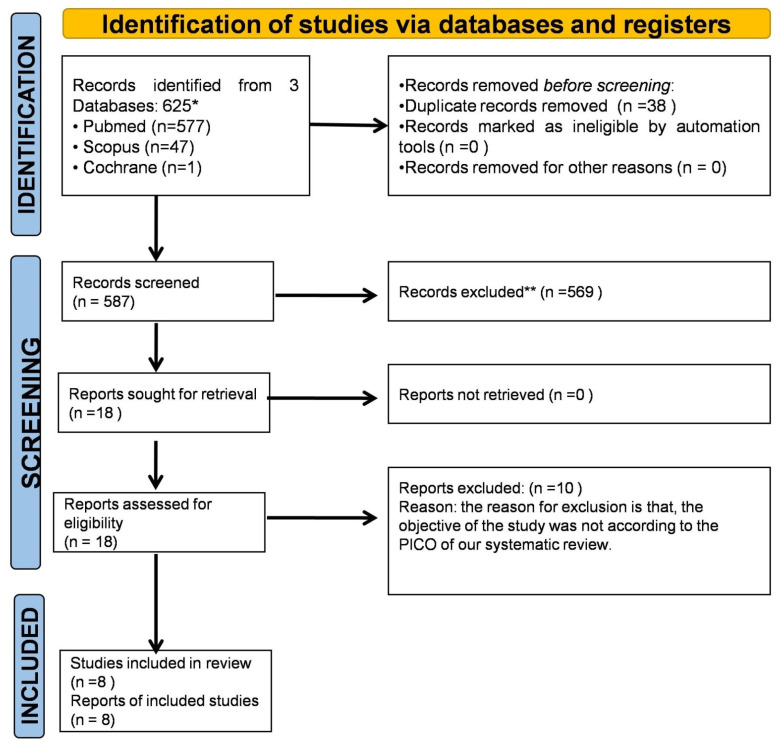
This systematic review aimed to compare the efficacy of herbal agents with ethylene diamine tetraacetic acid (EDTA) in removing the smear layer during root canal instrumentation. The research question in the present study was to assess: "Is there a significant difference in reducing smear layer comparing EDTA and herbal agents?" Electronic databases (PubMed, Scopus, and Web of Science) were searched from their start dates to April 2022 using strict inclusion and exclusion criteria, and reviewed following PRISMA (Preferred Reporting Items for Systematic Reviews and Meta-Analyses) 2020 guidelines. Only in vitro studies comparing herbal agents with EDTA were included in the current systematic review. Two reviewers independently assessed the included articles. A total of 625 articles were obtained from an electronic database. Eighteen papers were included for review of the full text, out of which, ten papers were excluded because they did not meet the inclusion criteria. Finally, eight articles were included in the systematic review. The present systematic review considered only in vitro studies; hence, the result cannot be completely translated to strict clinical conditions. The results of the present systematic review have shown that extract, and neem show better smear layer removal compared to other herbal agents, whereas they showed reduced smear layer removal when compared with EDTA. Although, it was seen that most of the included studies did not report a high quality of evidence. Hence, the present systematic review concludes that herbal agents have reported to show inferior smear layer removal when compared to EDTA. Thus, as far as herbal based alternatives are concerned, there is no highest level of evidence to state its real benefit when used as a chelating root canal irrigant.
本系统评价旨在比较草本制剂与乙二胺四乙酸(EDTA)在根管器械预备过程中去除玷污层的效果。本研究的问题是评估:“比较 EDTA 和草本制剂,在减少玷污层方面是否有显著差异?”从数据库(PubMed、Scopus 和 Web of Science)的建立日期到 2022 年 4 月,使用严格的纳入和排除标准进行了电子检索,并按照 PRISMA(系统评价和荟萃分析的首选报告项目)2020 指南进行了综述。本系统评价仅纳入了比较草本制剂与 EDTA 的体外研究。两名评审员独立评估了纳入的文章。从电子数据库中获得了 625 篇文章。有 18 篇全文纳入审查,其中 10 篇因不符合纳入标准而被排除。最终有 8 篇文章纳入系统评价。本系统评价仅考虑了体外研究;因此,结果不能完全转化为严格的临床条件。本系统评价的结果表明,与其他草本制剂相比,extract 和 neem 能更好地去除玷污层,而与 EDTA 相比,它们去除玷污层的效果较差。尽管如此,研究发现大多数纳入的研究并没有报告高质量的证据。因此,本系统评价得出结论,与 EDTA 相比,草本制剂在去除玷污层方面的效果较差。因此,就草本替代物而言,没有最高级别的证据表明其作为螯合根管冲洗剂的实际益处。