Center for Regenerative Sports Medicine, Steadman Philippon Research Institute, Vail, Colorado, USA.
Department of Physiology and Biomedical Engineering, Mayo Clinic, Rochester, Minnesota, USA.
Aging Cell. 2024 May;23(5):e14113. doi: 10.1111/acel.14113. Epub 2024 May 6.
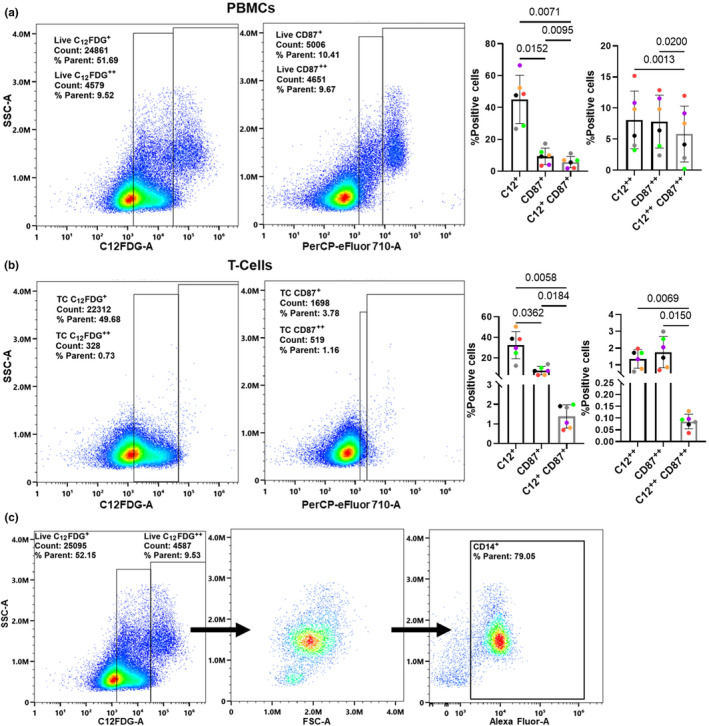
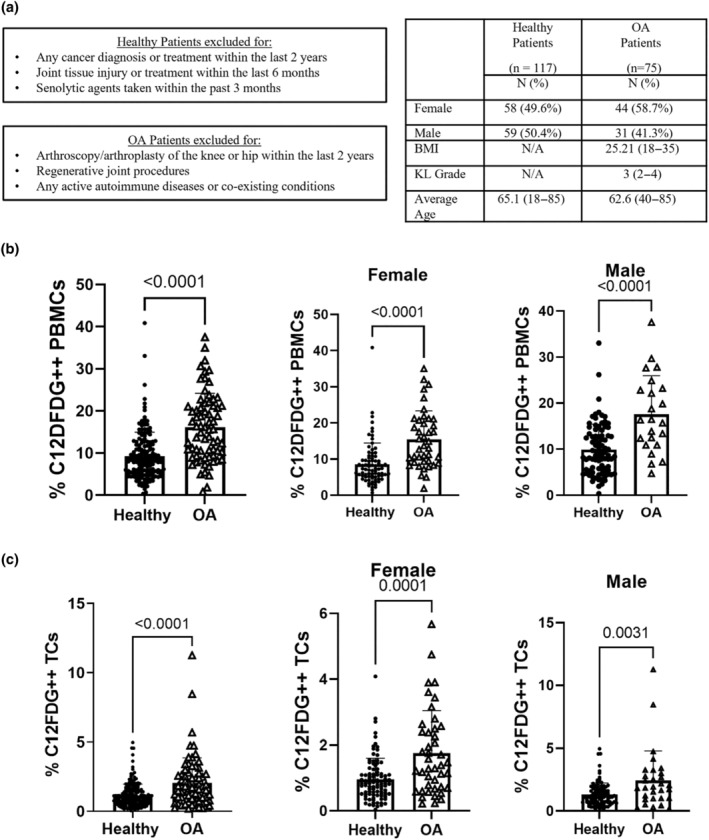
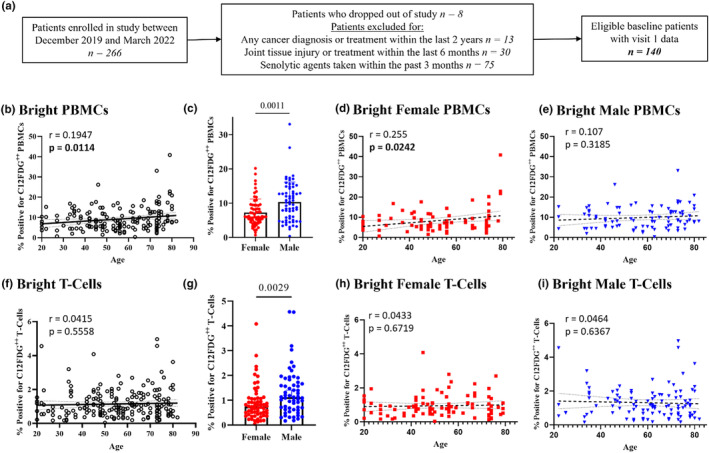
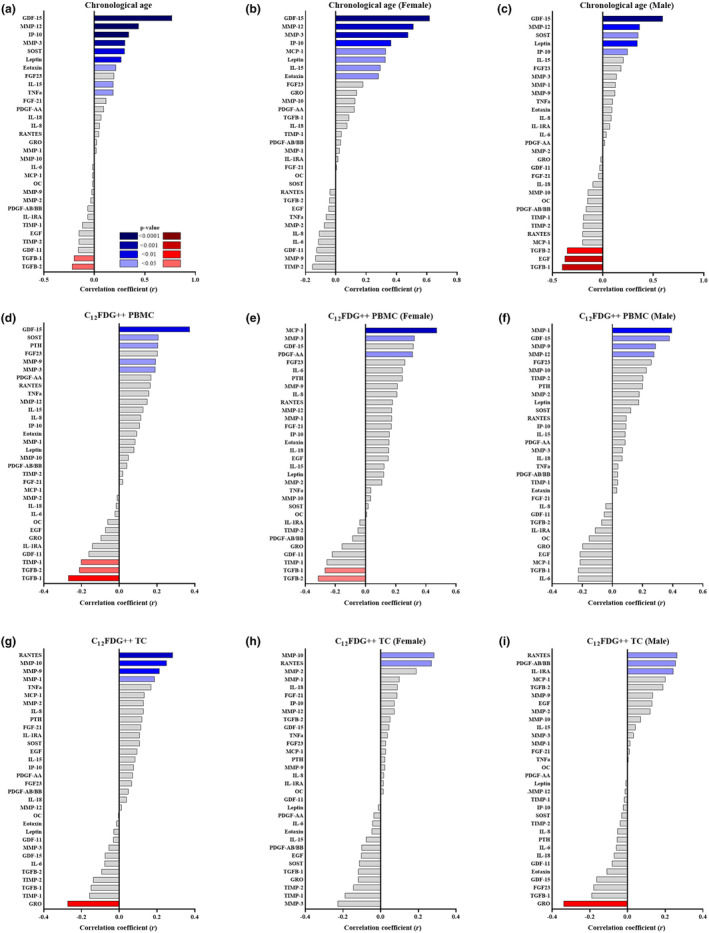
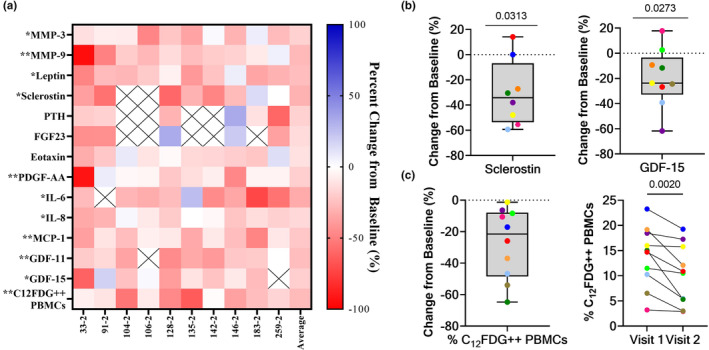
Chronic conditions associated with aging have proven difficult to prevent or treat. Senescence is a cell fate defined by loss of proliferative capacity and the development of a pro-inflammatory senescence-associated secretory phenotype comprised of cytokines/chemokines, proteases, and other factors that promotes age-related diseases. Specifically, an increase in senescent peripheral blood mononuclear cells (PBMCs), including T cells, is associated with conditions like frailty, rheumatoid arthritis, and bone loss. However, it is unknown if the percentage of senescent PBMCs associated with age-associated orthopedic decline could be used for potential diagnostic or prognostic use in orthopedics. Here, we report senescent cell detection using the fluorescent compound CFDG to quantify PBMCs senescence across a large cohort of healthy and osteoarthritic patients. There is an increase in the percent of circulating CFDG PBMCs that is commensurate with increases in age and senescence-related serum biomarkers. Interestingly, CFDG PBMCs and T cells also were found to be elevated in patients with mild to moderate osteoarthritis, a progressive joint disease that is strongly associated with inflammation. The percent of CFDG PBMCs and age-related serum biomarkers were decreased in a small subgroup of study participants taking the senolytic drug fisetin. These results demonstrate quantifiable measurements in a large group of participants that could create a composite score of healthy aging sensitive enough to detect changes following senolytic therapy and may predict age-related orthopedic decline. Detection of peripheral senescence in PBMCs and subsets using CFDG may be clinically useful for quantifying cellular senescence and determining how and if it plays a pathological role in osteoarthritic progression.
与衰老相关的慢性疾病已被证明难以预防或治疗。衰老(senescence)是一种细胞命运,其特征是增殖能力丧失和产生促炎的衰老相关分泌表型(senescence-associated secretory phenotype),包括细胞因子/趋化因子、蛋白酶和其他促进与年龄相关疾病的因素。具体来说,衰老的外周血单核细胞(peripheral blood mononuclear cells,PBMCs),包括 T 细胞,数量的增加与虚弱、类风湿关节炎和骨质流失等情况有关。然而,尚不清楚与骨关节炎相关的骨科衰退相关的衰老 PBMCs 百分比是否可用于骨科的潜在诊断或预后。在这里,我们报告了使用荧光化合物 CFDG 检测衰老细胞,以定量健康和骨关节炎患者大队列中的 PBMC 衰老。循环 CF-DG PBMCs 的百分比随着年龄的增长和衰老相关的血清生物标志物的增加而增加。有趣的是,在轻度至中度骨关节炎患者中也发现了 CF-DG PBMCs 和 T 细胞的升高,骨关节炎是一种与炎症密切相关的进行性关节疾病。在一小部分服用衰老细胞溶解剂 fisetin 的研究参与者中,CF-DG PBMCs 和与年龄相关的血清生物标志物的百分比降低。这些结果表明,在一大组参与者中进行了可量化的测量,可以创建一个对衰老敏感的健康老化综合评分,足以检测衰老细胞溶解治疗后的变化,并可能预测与年龄相关的骨科衰退。使用 CF-DG 在外周血单核细胞和亚群中检测衰老可能对量化细胞衰老和确定其在骨关节炎进展中的作用方式和作用具有临床意义。