Department of Cardiology, Sun Yat-sen Memorial Hospital of Sun Yat-sen University, Guangzhou, 510120, China; Guangzhou Key Laboratory of Molecular Mechanisms of Major Cardiovascular Disease, Sun Yat-sen Memorial Hospital of Sun Yat-sen University, Guangzhou, 510120, China; Guangdong Provincial Key Laboratory of Arrhythmia and Electrophysiology, Sun Yat-sen Memorial Hospital of Sun Yat-sen University, Guangzhou, 510120, China.
Laboratory Animal Center and Department of Biochemistry, Institute of Guangdong Engineering and Technology Research Center for Disease-Model Animals, Zhongshan School of Medicine, Sun Yat-sen University, Guangzhou, 510080, China.
Redox Biol. 2024 Jul;73:103184. doi: 10.1016/j.redox.2024.103184. Epub 2024 May 5.
The disruption of the balance between fatty acid (FA) uptake and oxidation (FAO) leads to cardiac lipotoxicity, serving as the driving force behind diabetic cardiomyopathy (DbCM). Sirtuin 5 (Sirt5), a lysine de-succinylase, could impact diverse metabolic pathways, including FA metabolism. Nevertheless, the precise roles of Sirt5 in cardiac lipotoxicity and DbCM remain unknown.
This study aims to elucidate the role and underlying mechanism of Sirt5 in the context of cardiac lipotoxicity and DbCM.
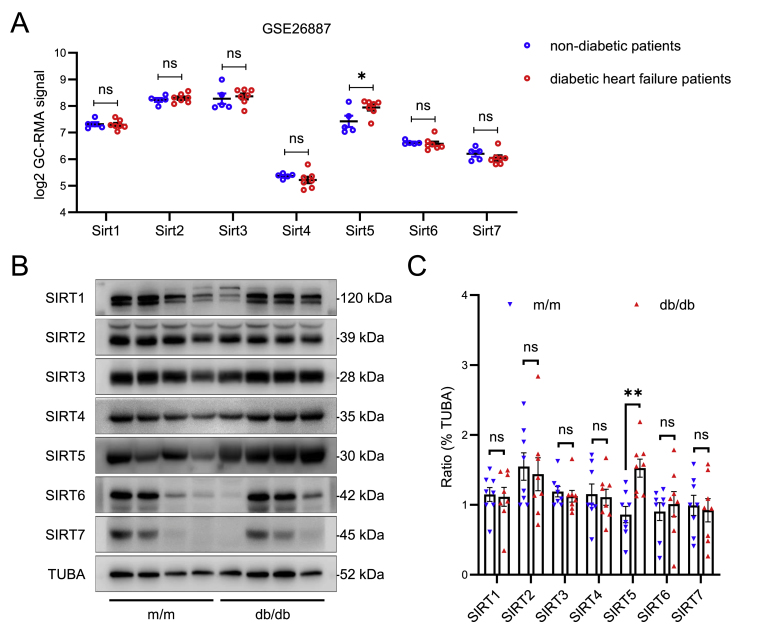
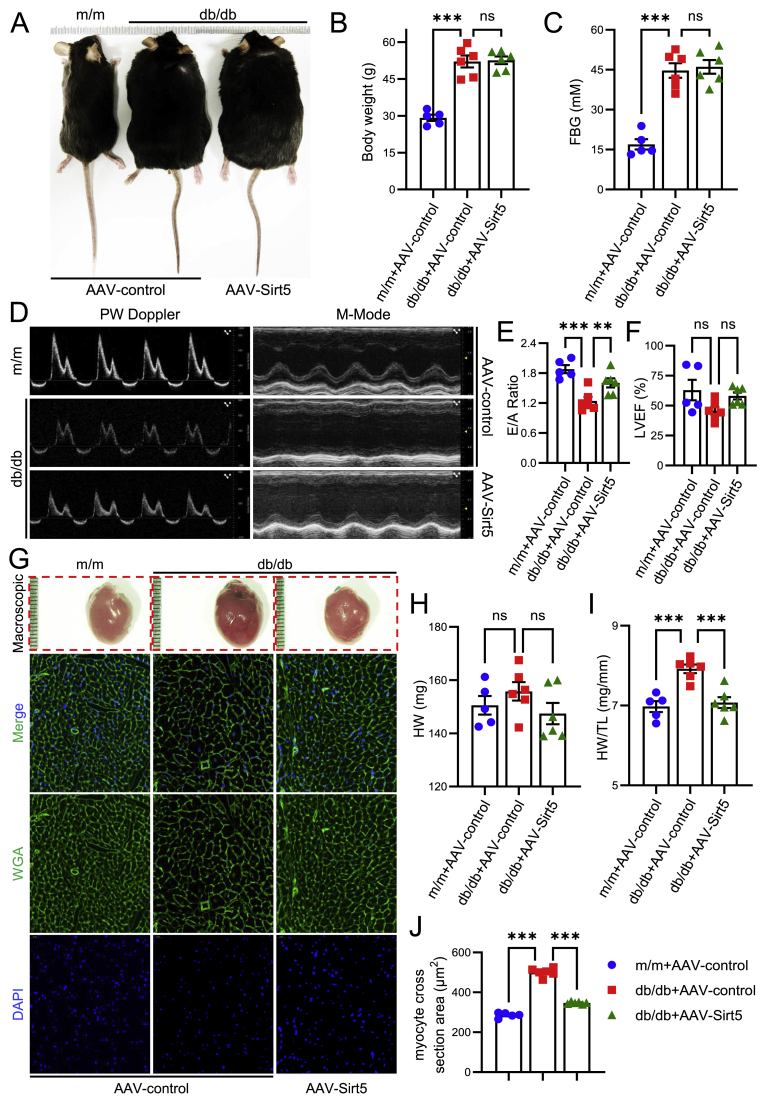
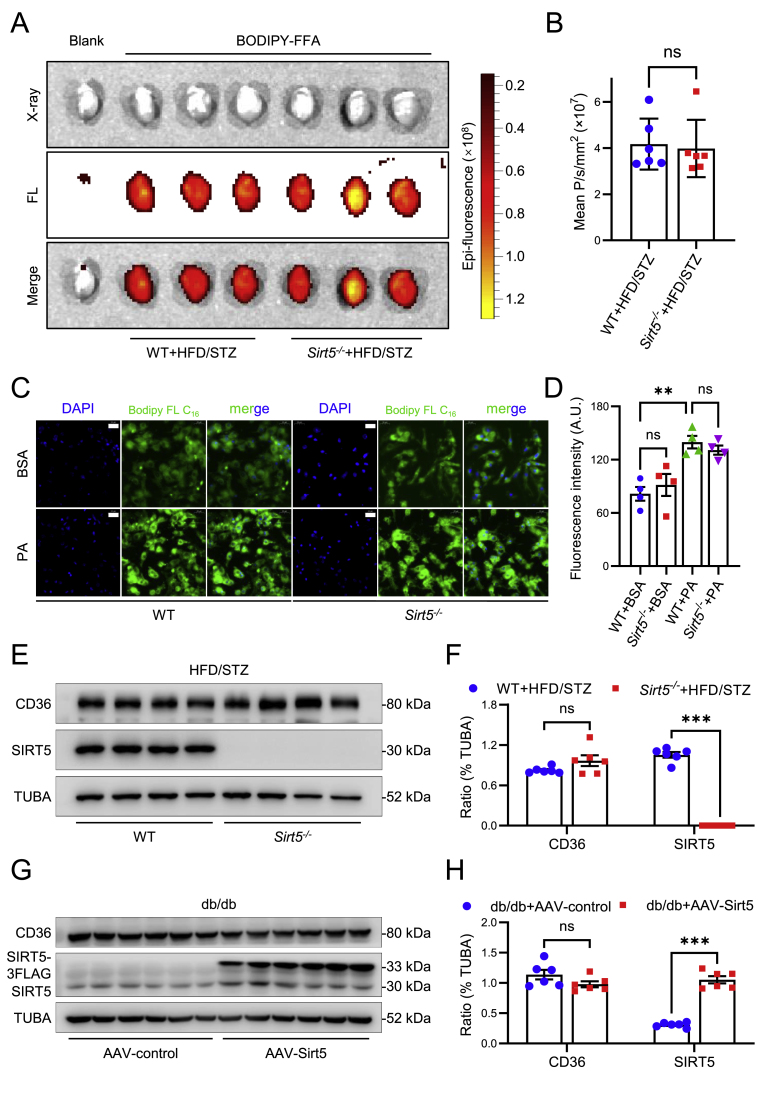
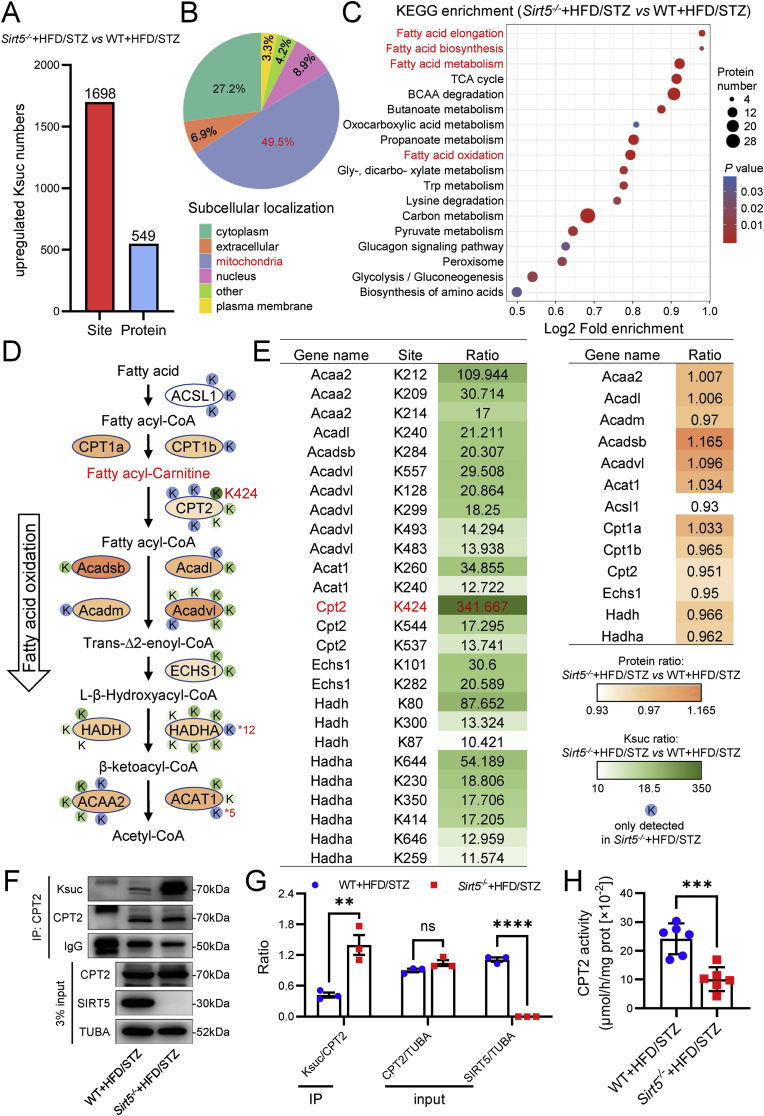
The expression of myocardial Sirt5 was found to be modestly elevated in diabetic heart failure patients and mice. Cardiac dysfunction, hypertrophy and lipotoxicity were exacerbated by ablation of Sirt5 but improved by forced expression of Sirt5 in diabetic mice. Notably, Sirt5 deficiency impaired FAO without affecting the capacity of FA uptake in the diabetic heart, leading to accumulation of FA intermediate metabolites, which mainly included medium- and long-chain fatty acyl-carnitines. Mechanistically, succinylomics analyses identified carnitine palmitoyltransferase 2 (CPT2), a crucial enzyme involved in the reconversion of fatty acyl-carnitines to fatty acyl-CoA and facilitating FAO, as the functional succinylated substrate mediator of Sirt5. Succinylation of Lys424 in CPT2 was significantly increased by Sirt5 deficiency, leading to the inactivation of its enzymatic activity and the subsequent accumulation of fatty acyl-carnitines. CPT2 K424R mutation, which mitigated succinylation modification, counteracted the reduction of enzymatic activity in CPT2 mediated by Sirt5 deficiency, thereby attenuating Sirt5 knockout-induced FAO impairment and lipid deposition.
Sirt5 deficiency impairs FAO, leading to cardiac lipotoxicity in the diabetic heart through the succinylation of Lys424 in CPT2. This underscores the potential roles of Sirt5 and CPT2 as therapeutic targets for addressing DbCM.
脂肪酸(FA)摄取和氧化(FAO)之间的平衡被打破会导致心脏脂肪毒性,成为糖尿病心肌病(DbCM)的驱动力。组蛋白去琥珀酰基酶 Sirtuin 5(Sirt5)是一种赖氨酸去琥珀酰基酶,可以影响多种代谢途径,包括 FA 代谢。然而,Sirt5 在心脏脂肪毒性和 DbCM 中的确切作用尚不清楚。
本研究旨在阐明 Sirt5 在心脏脂肪毒性和 DbCM 中的作用及其潜在机制。
在糖尿病心力衰竭患者和小鼠中,心肌 Sirt5 的表达略有升高。在糖尿病小鼠中,Sirt5 缺失会加剧心脏功能障碍、肥大和脂肪毒性,而过表达 Sirt5 则会改善这些症状。值得注意的是,Sirt5 缺失会损害 FAO,而不会影响糖尿病心脏中的 FA 摄取能力,导致 FA 中间代谢物的积累,主要包括中链和长链脂肪酸酰基辅酶 A。机制上,琥珀酰基组学分析鉴定出肉碱棕榈酰基转移酶 2(CPT2),作为将脂肪酸酰基辅酶 A 重新转化为脂肪酸酰基辅酶 A 并促进 FAO 的关键酶,是 Sirt5 的功能性琥珀酰化底物介质。Sirt5 缺失会显著增加 CPT2 中 Lys424 的琥珀酰化,导致其酶活性失活,随后脂肪酸酰基辅酶 A 积累。CPT2 K424R 突变减轻了琥珀酰化修饰,抵消了 Sirt5 缺失介导的 CPT2 酶活性降低,从而减轻 Sirt5 敲除引起的 FAO 损伤和脂质沉积。
Sirt5 缺失会损害 FAO,通过 CPT2 中 Lys424 的琥珀酰化导致糖尿病心脏中的心脏脂肪毒性。这凸显了 Sirt5 和 CPT2 作为治疗 DbCM 的潜在靶点的作用。