Department of Anesthesiology, Mindong Hospital Affiliated to Fujian Medical University, Fuan, China.
Department of Orthopaedic Surgery, the First Affiliated Hospital of Nanchang University, Nanchang, China.
BMC Surg. 2024 May 9;24(1):142. doi: 10.1186/s12893-024-02427-x.
The aim of this study was to develop and validate a machine learning (ML) model for predicting the risk of new osteoporotic vertebral compression fracture (OVCF) in patients who underwent percutaneous vertebroplasty (PVP) and to create a user-friendly web-based calculator for clinical use.
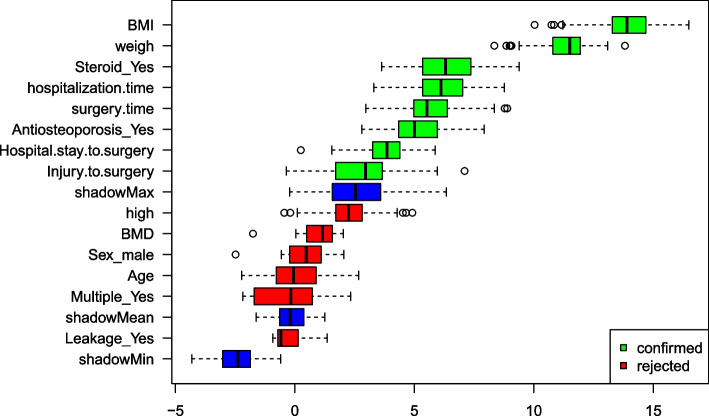
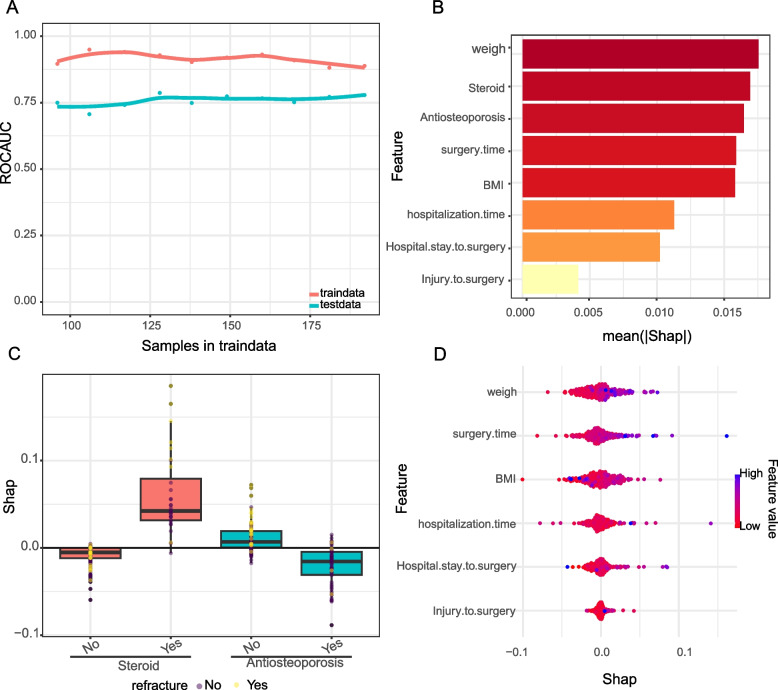
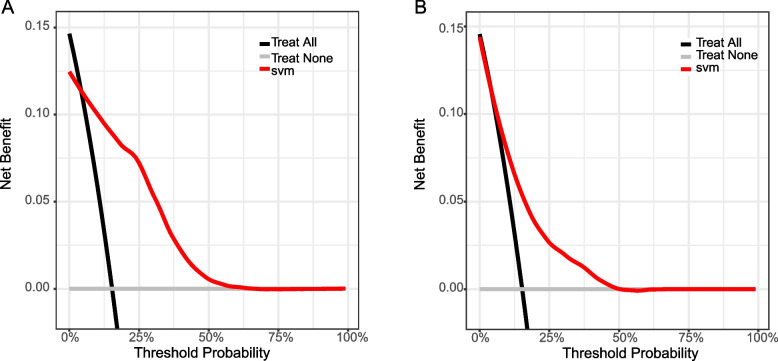
A retrospective analysis of patients undergoing percutaneous vertebroplasty: A retrospective analysis of patients treated with PVP between June 2016 and June 2018 at Liuzhou People's Hospital was performed. The independent variables of the model were screened using Boruta and modelled using 9 algorithms. Model performance was assessed using the area under the receiver operating characteristic curve (ROC_AUC), and clinical utility was assessed by clinical decision curve analysis (DCA). The best models were analysed for interpretability using SHapley Additive exPlanations (SHAP) and the models were deployed visually using a web calculator.
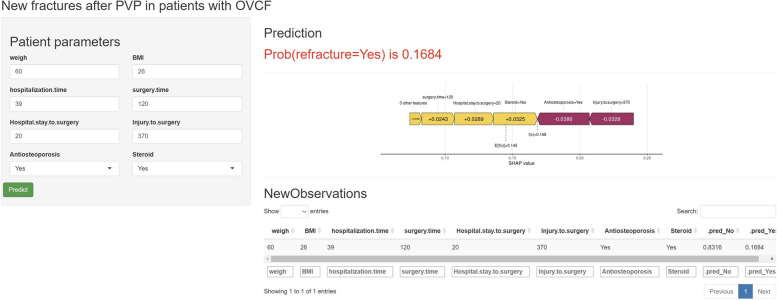
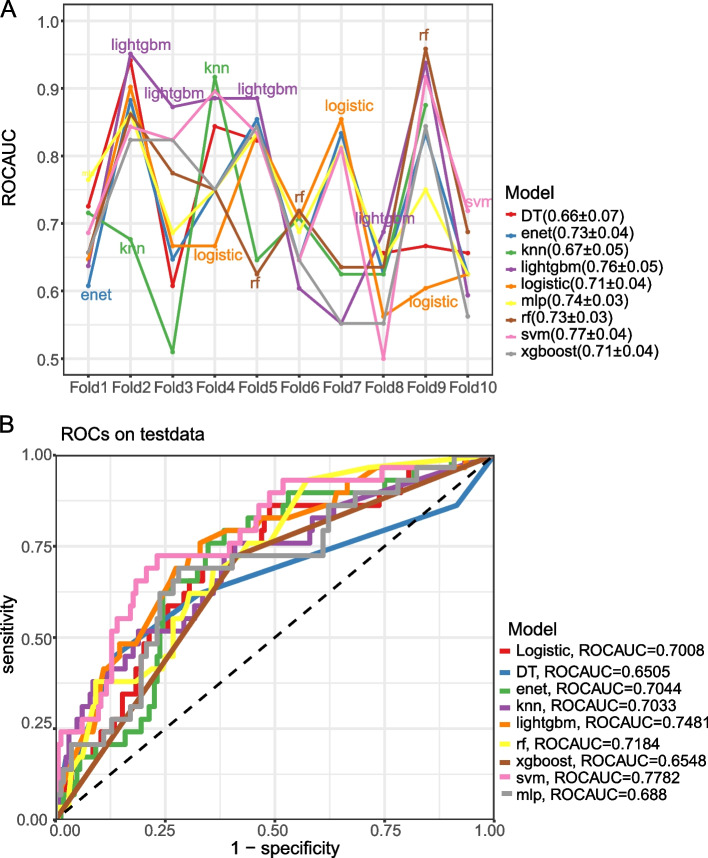
Training and test groups were split using time. The SVM model performed best in both the training group tenfold cross-validation (CV) and validation group AUC, with an AUC of 0.77. DCA showed that the model was beneficial to patients in both the training and test sets. A network calculator developed based on the SHAP-based SVM model can be used for clinical risk assessment ( https://nicolazhang.shinyapps.io/refracture_shap/ ).
The SVM-based ML model was effective in predicting the risk of new-onset OVCF after PVP, and the network calculator provides a practical tool for clinical decision-making. This study contributes to personalised care in spinal surgery.
本研究旨在开发和验证一种用于预测接受经皮椎体成形术(PVP)治疗的患者新发骨质疏松性椎体压缩性骨折(OVCF)风险的机器学习(ML)模型,并创建一个便于临床使用的基于网络的计算器。
对接受经皮椎体成形术治疗的患者进行回顾性分析:对 2016 年 6 月至 2018 年 6 月在柳州市人民医院接受 PVP 治疗的患者进行回顾性分析。使用 Boruta 筛选模型的自变量,并使用 9 种算法进行建模。使用接受者操作特征曲线下面积(ROC_AUC)评估模型性能,并通过临床决策曲线分析(DCA)评估临床实用性。使用 SHapley Additive exPlanations(SHAP)对最佳模型进行可解释性分析,并使用网络计算器直观地展示模型。
使用时间分割训练组和测试组。在训练组的 10 倍交叉验证(CV)和验证组 AUC 中,SVM 模型的性能最佳,AUC 为 0.77。DCA 表明,该模型对训练组和测试组的患者均有益。基于基于 SHAP 的 SVM 模型开发的网络计算器可用于临床风险评估(https://nicolazhang.shinyapps.io/refracture_shap/)。
基于 SVM 的 ML 模型在预测 PVP 后新发 OVCF 风险方面具有有效性,网络计算器为临床决策提供了实用工具。本研究为脊柱手术的个性化治疗做出了贡献。