Key Laboratory of Biology and Genetic Resources of Rubber Tree, Ministry of Agriculture and Rural Affairs/State Key Laboratory Incubation Base for Cultivation & Physiology of Tropical Crops, Rubber Research Institute, Chinese Academy of Tropical Agricultural Sciences, Haikou 571101, China.
Int J Mol Sci. 2024 May 6;25(9):5052. doi: 10.3390/ijms25095052.
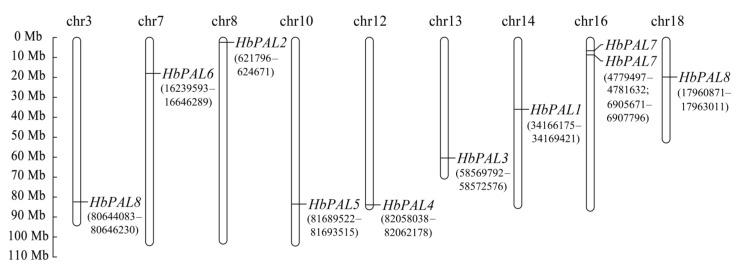
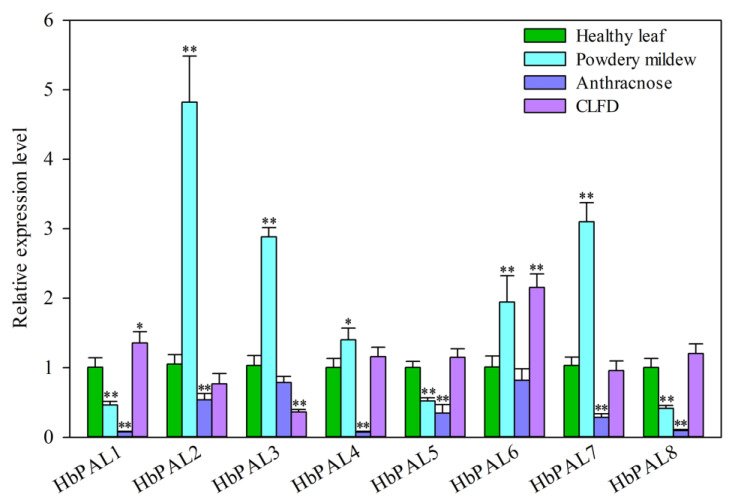
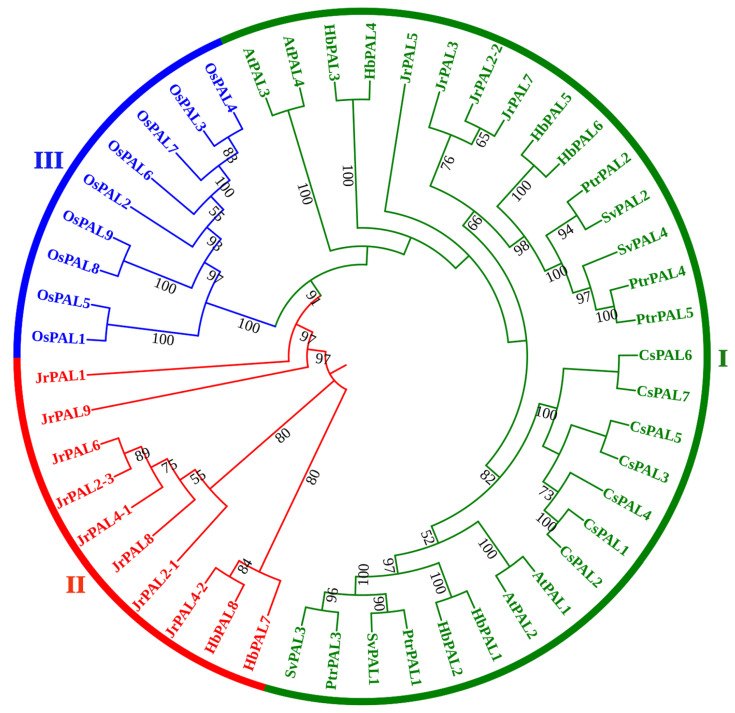
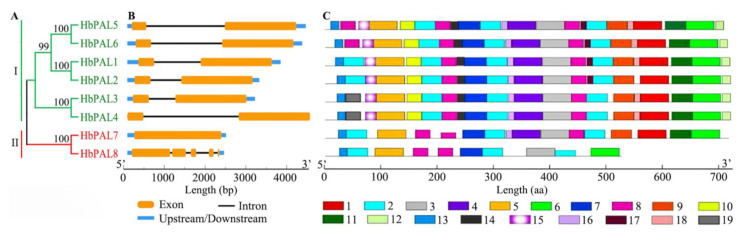
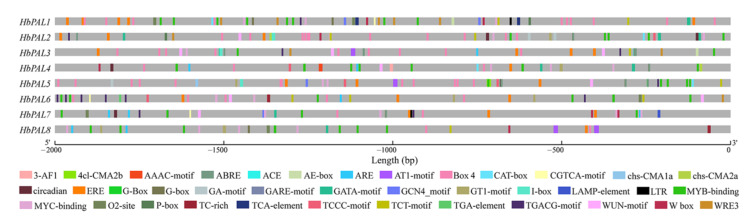
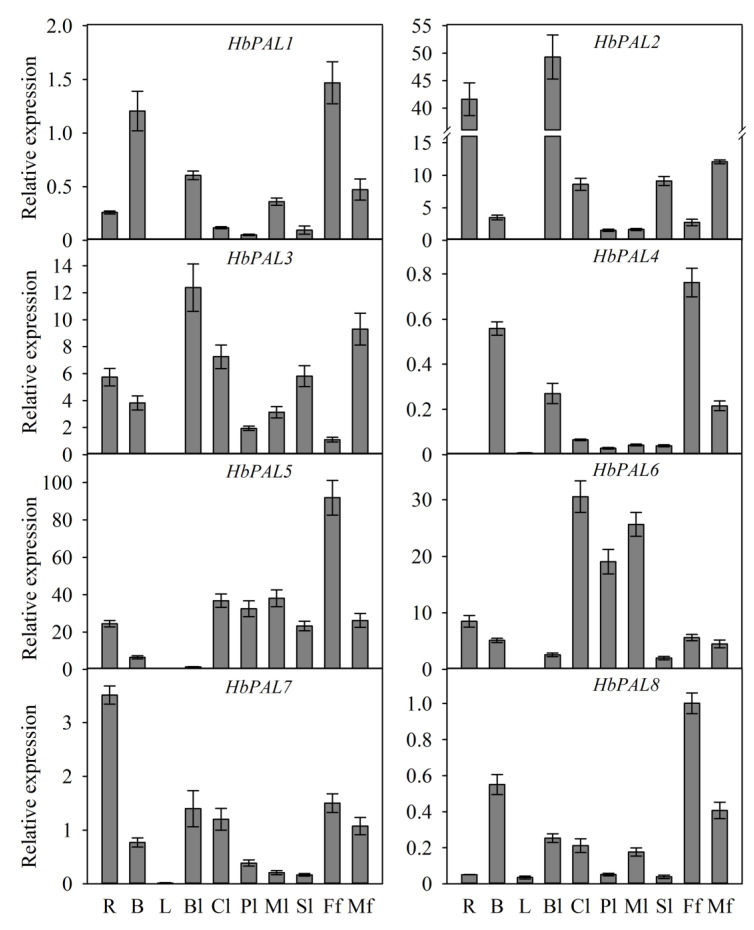
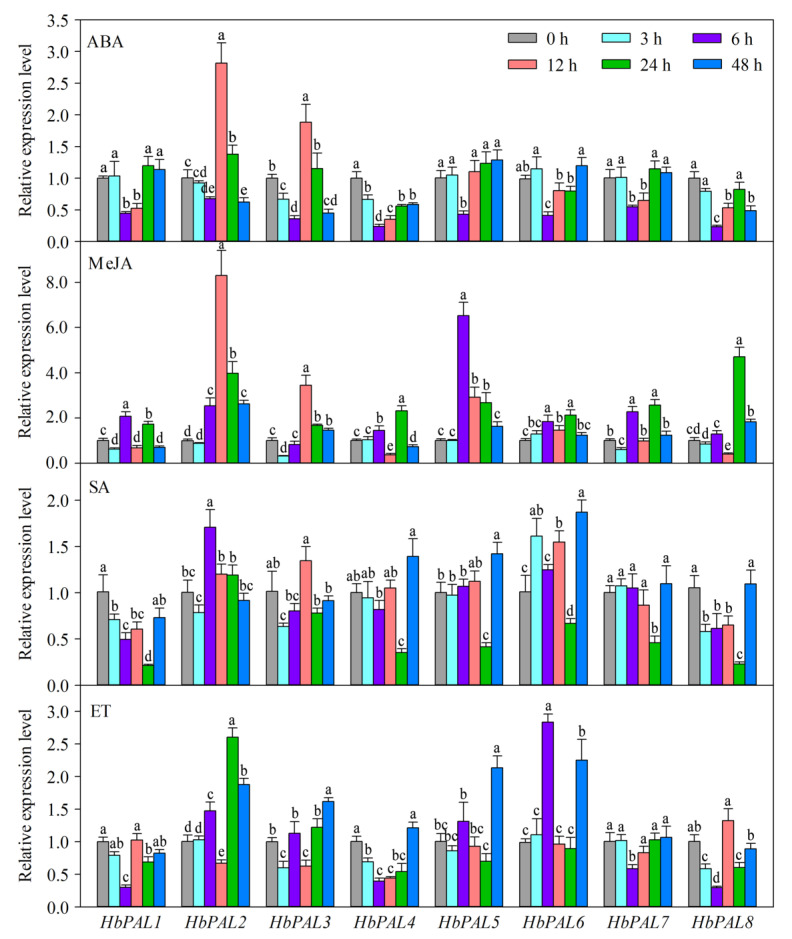
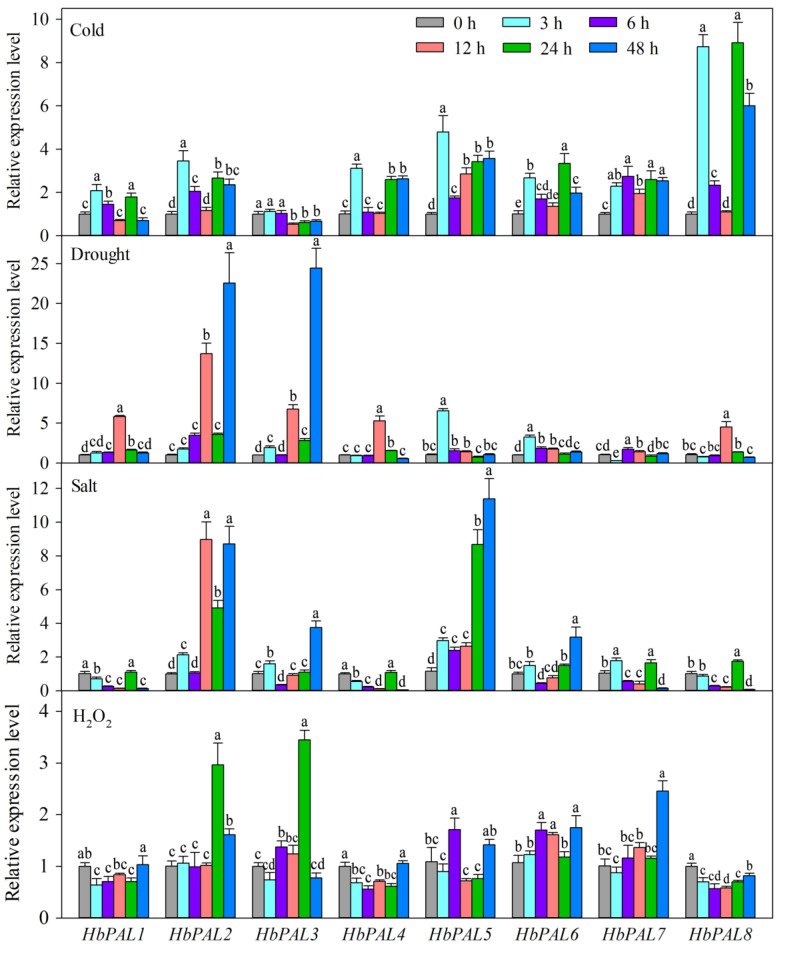
The majority of the world's natural rubber comes from the rubber tree (). As a key enzyme for synthesizing phenylpropanoid compounds, phenylalanine ammonia-lyase (PAL) has a critical role in plant satisfactory growth and environmental adaptation. To clarify the characteristics of rubber tree PAL family genes, a genome-wide characterization of rubber tree was conducted in this study. Eight genes (-), which spread over chromosomes 3, 7, 8, 10, 12, 13, 14, 16, and 18, were found to be present in the genome of . Phylogenetic analysis classified HbPALs into groups I and II, and the group I HbPALs (HbPAL1-HbPAL6) displayed similar conserved motif compositions and gene architectures. Tissue expression patterns of quantified by quantitative real-time PCR (qPCR) proved that distinct exhibited varying tissue expression patterns. The promoters contained a plethora of -acting elements that responded to hormones and stress, and the qPCR analysis demonstrated that abiotic stressors like cold, drought, salt, and HO-induced oxidative stress, as well as hormones like salicylic acid, abscisic acid, ethylene, and methyl jasmonate, controlled the expression of . The majority of were also regulated by powdery mildew, anthracnose, and leaf fall disease infection. In addition, , , and were significantly up-regulated in the bark of tapping panel dryness rubber trees relative to that of healthy trees. Our results provide a thorough comprehension of the characteristics of genes and set the groundwork for further investigation of the biological functions of in rubber trees.
世界上大多数天然橡胶来自橡胶树(Hevea brasiliensis)。苯丙氨酸解氨酶(PAL)作为合成苯丙烷类化合物的关键酶,在植物的正常生长和环境适应中起着至关重要的作用。为了阐明橡胶树 PAL 家族基因的特征,本研究对橡胶树进行了全基因组特征分析。在橡胶树基因组中发现了 8 个 PAL 基因(HbPAL1-HbPAL8),它们分布在第 3、7、8、10、12、13、14、16 和 18 号染色体上。系统发育分析将 HbPALs 分为 I 组和 II 组,I 组 HbPALs(HbPAL1-HbPAL6)显示出相似的保守基序组成和基因结构。通过定量实时 PCR(qPCR)对 进行的组织表达模式分析表明,不同的 表现出不同的组织表达模式。启动子包含大量的激素和应激响应的顺式作用元件,qPCR 分析表明,冷、干旱、盐和 HO 诱导的氧化应激等非生物胁迫,以及水杨酸、脱落酸、乙烯和茉莉酸甲酯等激素,控制着 的表达。大多数 也受到白粉病、炭疽病和叶枯病感染的调控。此外,在割胶树干枯病橡胶树的树皮中, 、 和 相对于健康树的表达显著上调。我们的研究结果提供了对 基因特征的全面理解,并为进一步研究 基因在橡胶树中的生物学功能奠定了基础。