Berlin Institute of Health at Charité -Universitätsmedizin Berlin, Berlin, Germany.
Institute of Biometry and Clinical Epidemiology, Charité - Universitätsmedizin Berlin, Berlin, Germany.
Support Care Cancer. 2024 May 14;32(6):344. doi: 10.1007/s00520-024-08547-7.
Electronic patient-reported outcomes (ePROs) assess patients' health status and quality of life, improving patient care and treatment effects, yet little is known about their use and adherence in routine patient care.
We evaluated the adherence of invasive breast cancer and ductal carcinoma in situ (DCIS) patients to ePROs follow-up and whether specific patient characteristics are related to longitudinal non-adherence.
Since November 2016, the Breast Center at Charité - Universitätsmedizin Berlin has implemented an ongoing prospective PRO routine program, requiring patients to complete ePROs assessments and consent to email-based follow-up in the first 12 months after therapy starts. Frequencies and summary statistics are presented. Multiple logistic regression models were performed to determine an association between patient characteristics and non-adherence.
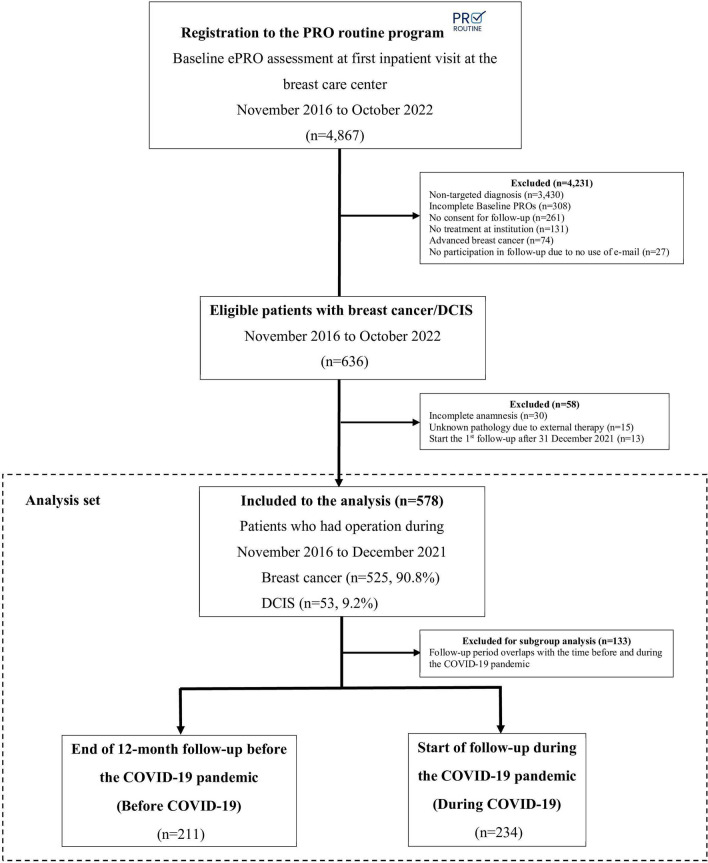
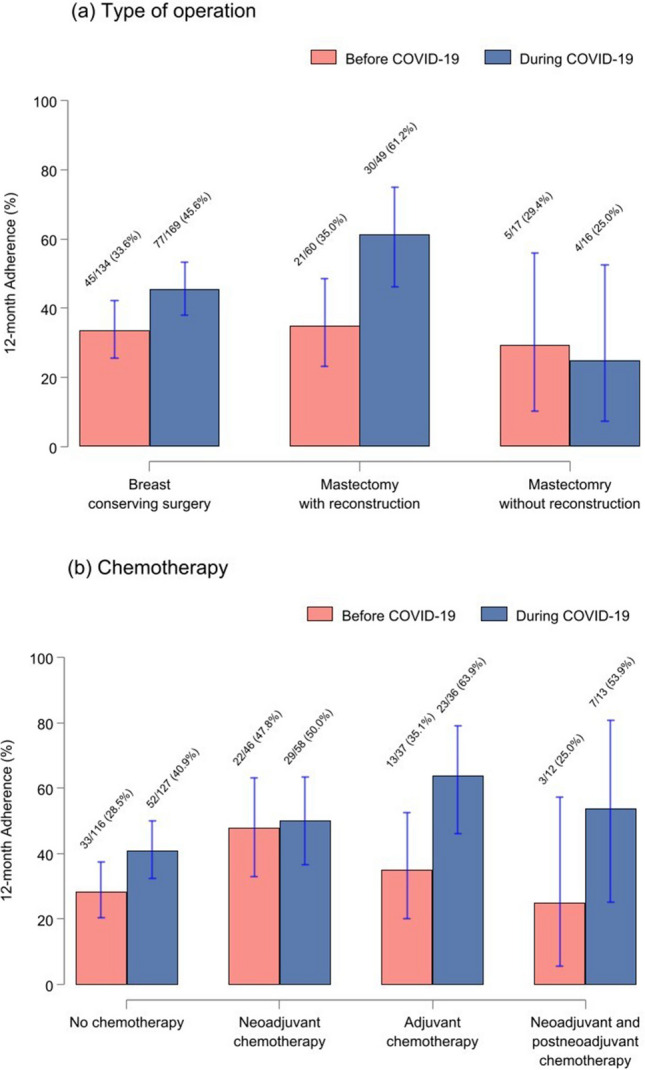
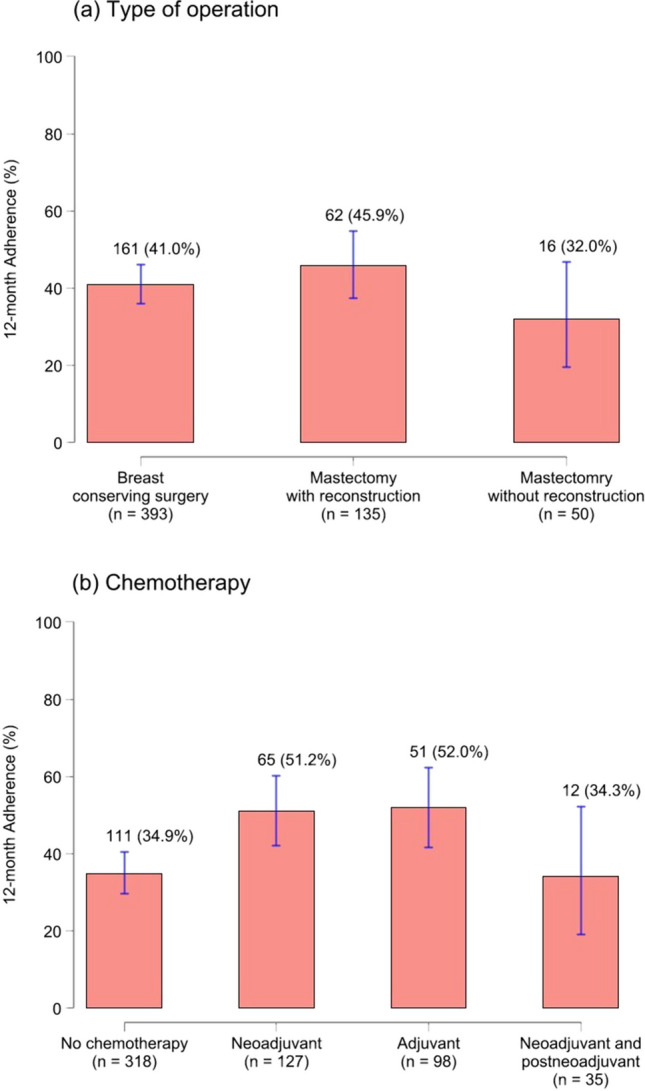
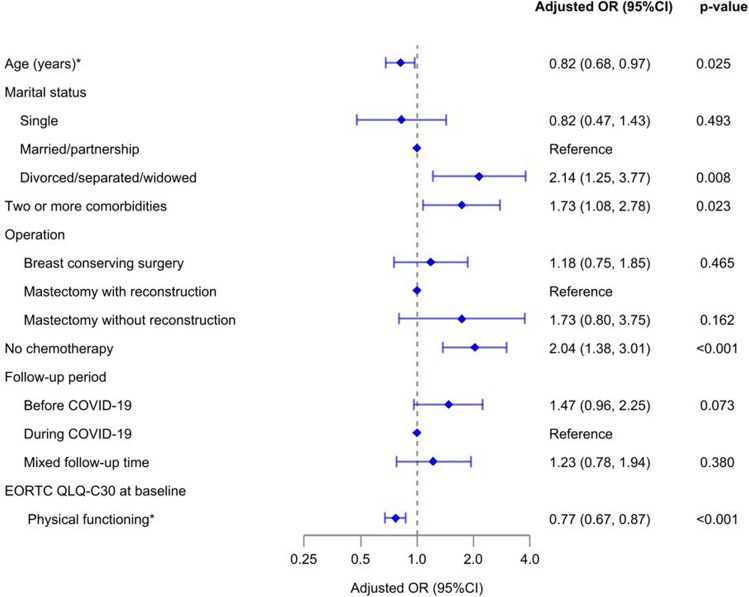
Out of 578 patients, 239 patients (41.3%, 95%CI: 37.3-45.5%) completed baseline assessment and all five ePROs follow-up during the first 12 months after therapy. On average, above 70% of those patients responded to the ePROs follow-up assessment. Adherence to the ePROs follow-up was higher during the COVID-19 pandemic than in the time periods before (47.4% (111/234) vs. 33.6% (71/211)). Factors associated with longitudinal non-adherence were younger age, a higher number of comorbidities, no chemotherapy, and a low physical functioning score in the EORTC QLQ-C30 at baseline.
The study reveals moderate adherence to 12-month ePROs follow-up assessments in invasive early breast cancer and DCIS patients, with response rates ranging from 60 to 80%. Emphasizing the benefits for young patients and those with high disease burdens might further increase adherence.
电子患者报告结局(ePROs)评估患者的健康状况和生活质量,改善患者护理和治疗效果,但对于其在常规患者护理中的使用和依从性知之甚少。
我们评估了浸润性乳腺癌和导管原位癌(DCIS)患者对 ePRO 随访的依从性,以及特定的患者特征是否与纵向不依从相关。
自 2016 年 11 月以来,柏林夏洛蒂医科大学乳腺中心实施了一项正在进行的前瞻性 PRO 常规计划,要求患者在治疗开始后的 12 个月内完成 ePROs 评估并同意通过电子邮件进行随访。呈现了频率和汇总统计数据。进行了多项逻辑回归模型,以确定患者特征与不依从之间的关联。
在 578 名患者中,有 239 名患者(41.3%,95%CI:37.3-45.5%)完成了基线评估和治疗开始后 12 个月内的所有五次 ePRO 随访。平均而言,超过 70%的患者对 ePRO 随访评估做出了回应。在 COVID-19 大流行期间,对 ePRO 随访的依从性高于之前的时间段(47.4%(111/234)比 33.6%(71/211))。与纵向不依从相关的因素是年龄较小、合并症较多、未接受化疗以及 EORTC QLQ-C30 基线时身体功能评分较低。
该研究揭示了浸润性早期乳腺癌和 DCIS 患者对 12 个月 ePRO 随访评估的中等依从性,响应率在 60%至 80%之间。强调对年轻患者和疾病负担较高患者的益处可能会进一步提高依从性。