Kim Justin, Threadcraft Marcus A, Xue Wei, Yue Sijie, Wenzel Richard P, Southwick Frederick S
Department of Medicine, University of Florida College of Medicine, Gainesville, FL 32610.
Department of Biostatistics, University of Florida, Gainesville, FL 32610.
J Biotechnol Biomed. 2023;6(3):392-400. doi: 10.26502/jbb.2642-91280101. Epub 2023 Sep 27.
The COVID-19 pandemic surge has exceeded testing capacities in many parts of the world. We investigated the effectiveness of home temperature monitoring for early identification of COVID-19 patients.
STUDY DESIGN –: We compared home temperature measurements from a convenience sample of 1180 individuals who reported being test positive for SARS-CoV-2 to an age, sex, and location matched control group of 1249 individuals who had not tested positive.
METHODS –: All individuals monitored their temperature at home using an electronic smartphone thermometer that relayed temperature measurements and symptoms to a centralized cloud based, de-identified data bank.
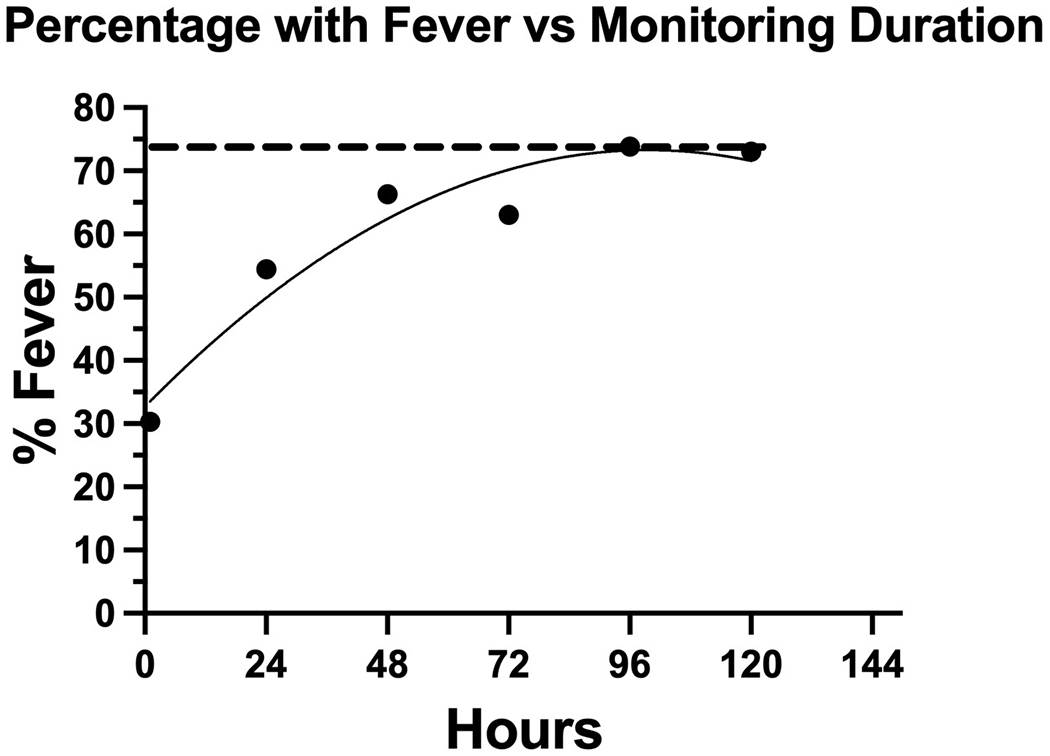
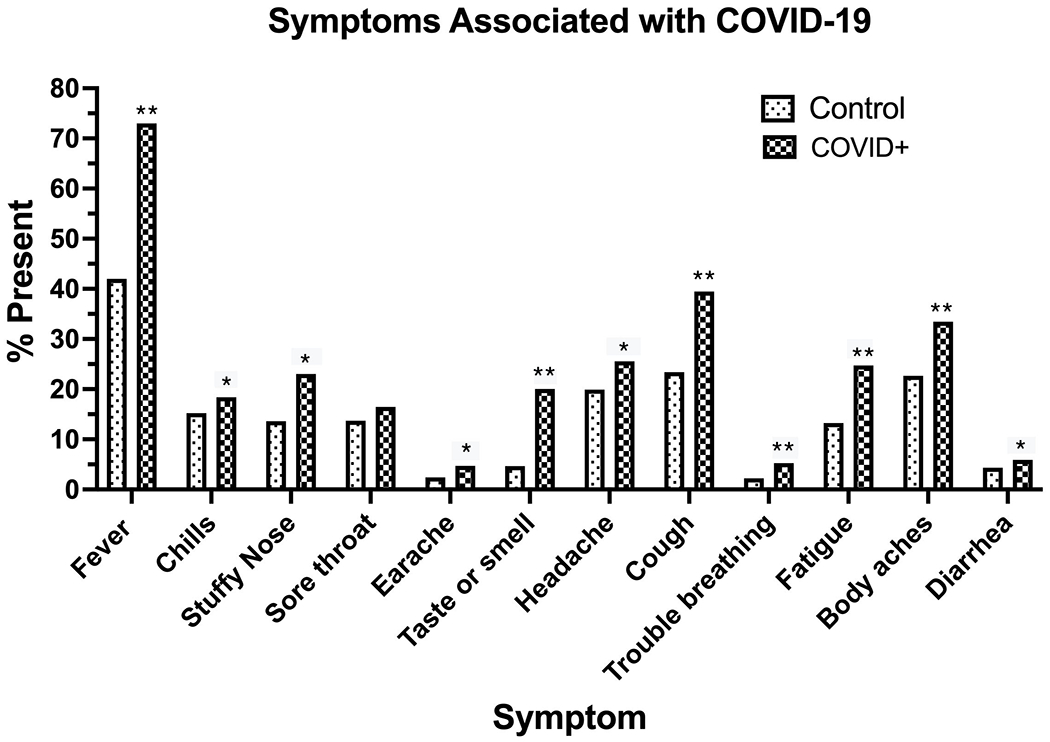
RESULTS -: Individuals varied in the number of times they monitored their temperature. When temperature was monitored for over 72 hours fever (≥ 37.6°C or 99.7°F or a change in temperature of ≥ 1°C or 1.8°F) was detected in 73% of test positive individuals, a sensitivity comparable to rapid SARS-CoV-2 antigen tests. When compared to our control group the specificity of fever for COVID-19 was 0.70. However, when fever was combined with complaints of loss of taste and smell, difficulty breathing, fatigue, chills, diarrhea, or stuffy nose the odds ratio of having COVID-19 was sufficiently high as to obviate the need to employ RTPCR or antigen testing to screen for and isolate coronavirus infected cases.
CONCLUSIONS -: Our findings suggest that home temperature monitoring could serve as an inexpensive convenient screen for the onset of COVID-19, encourage earlier isolation of potentially infected individuals, and more effectively reduce the spread of infection in closed spaces.
新冠疫情的激增已超出世界许多地区的检测能力。我们调查了家庭体温监测对早期识别新冠患者的有效性。
我们将1180名报告新冠病毒检测呈阳性的个体(便利样本)的家庭体温测量数据,与1249名未检测呈阳性的年龄、性别和地点匹配的对照组个体进行了比较。
所有个体使用电子智能手机温度计在家监测体温,该温度计将体温测量值和症状传输到一个基于云的、去识别化的中央数据库。
个体监测体温的次数各不相同。当监测体温超过72小时时,73%的检测呈阳性个体检测到发烧(≥37.6°C或99.7°F或体温变化≥1°C或1.8°F),其敏感性与快速新冠病毒抗原检测相当。与我们的对照组相比,发烧对新冠的特异性为0.70。然而,当发烧与味觉和嗅觉丧失、呼吸困难、疲劳、寒战、腹泻或鼻塞等症状同时出现时,感染新冠的优势比足够高,从而无需采用逆转录聚合酶链反应(RTPCR)或抗原检测来筛查和隔离冠状病毒感染病例。
我们的研究结果表明,家庭体温监测可作为一种廉价便捷的新冠发病筛查方法,鼓励尽早隔离潜在感染个体,并更有效地减少封闭空间内的感染传播。