Li Xin, Liu Chaozhong, Li Wenbo, Dai Yanwan, Gu Chaohao, Zhou Wenjun, Ciliberto Veronica C, Liang Jing, Udhaya Kumar S, Guan Dongyin, Hu Zhaoyong, Zheng Hui, Chen Hu, Liu Zhandong, Wan Ying-Wooi, Sun Zheng
Department of Medicine - Endocrinology, Diabetes, and Metabolism, Baylor College of Medicine, Houston, Texas 77030, USA.
Department of Pediatrics, Jan and Dan Duncan Neurological Research Institute, Baylor College of Medicine, Houston, Texas 77030, USA.
bioRxiv. 2024 May 5:2024.05.02.592289. doi: 10.1101/2024.05.02.592289.
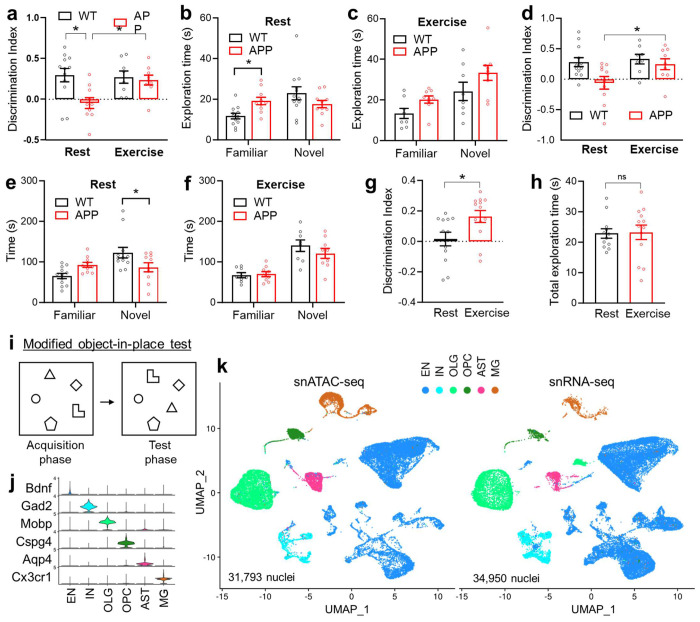
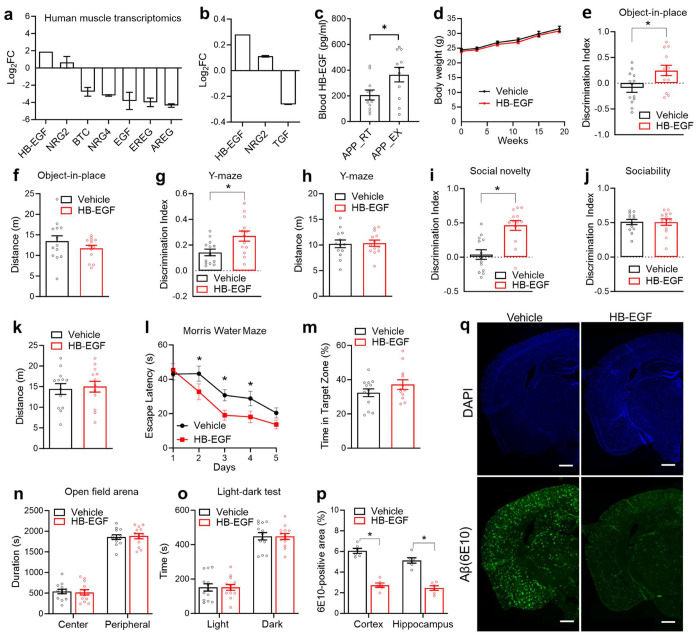
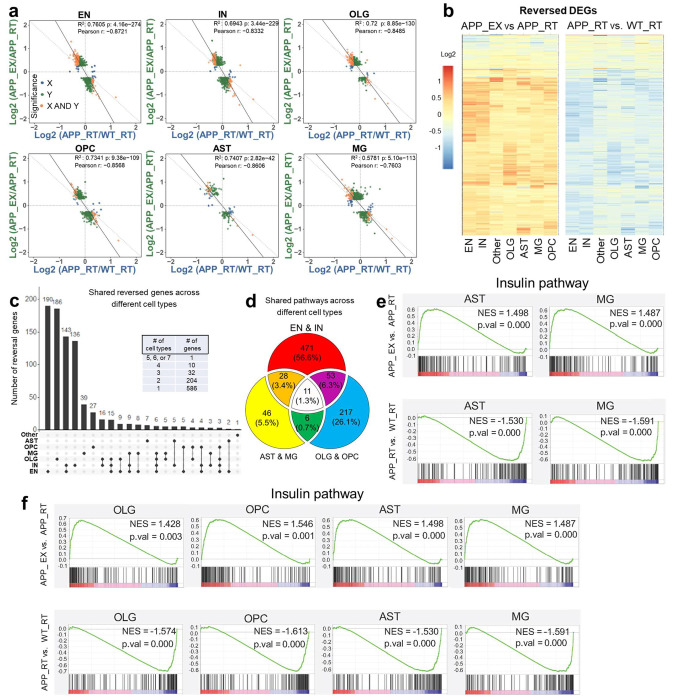
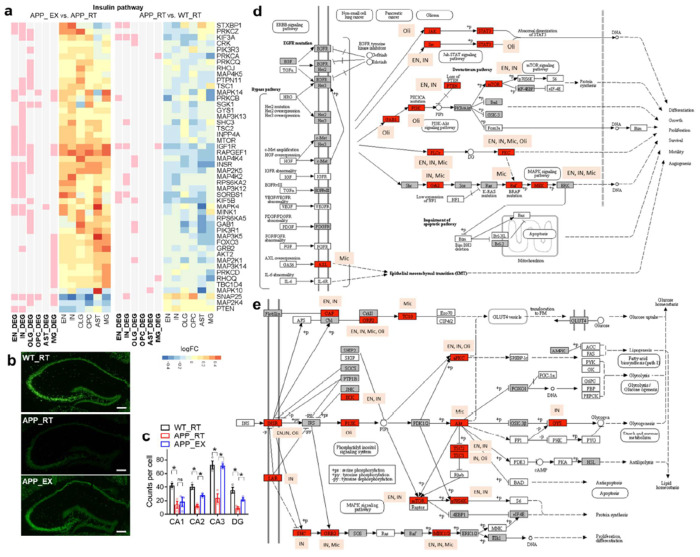
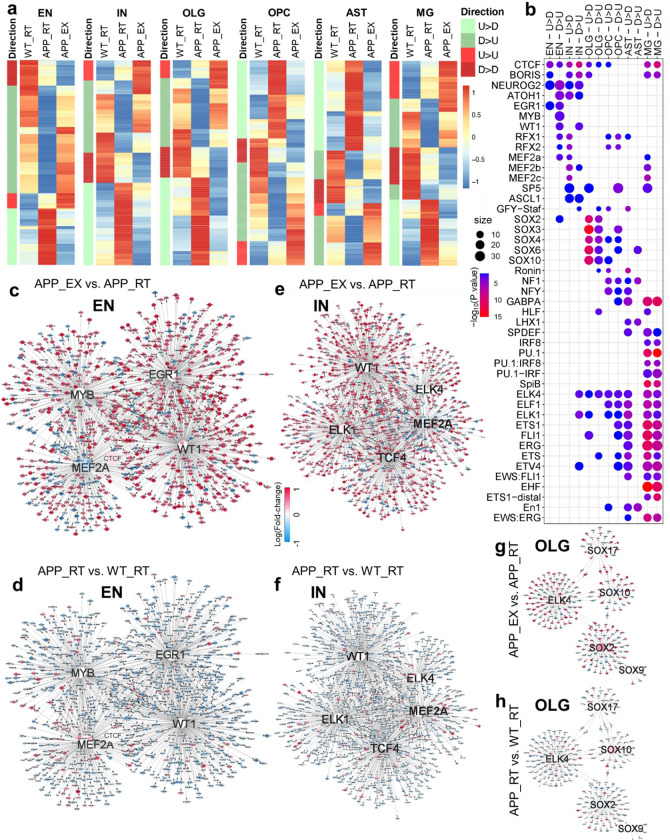
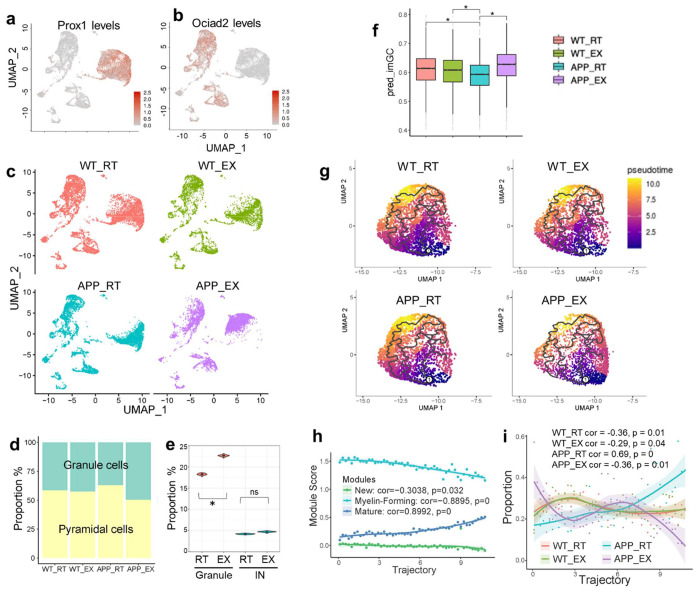
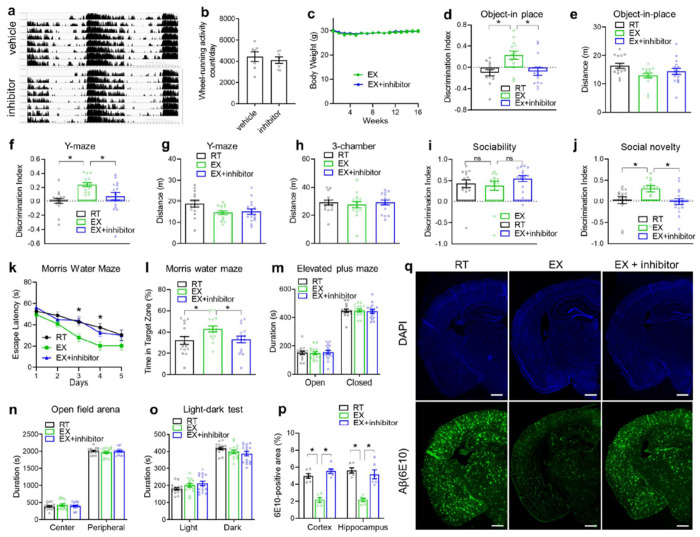
Physical exercise represents a primary defense against age-related cognitive decline and neurodegenerative disorders like Alzheimer's disease (AD). To impartially investigate the underlying mechanisms, we conducted single-nucleus transcriptomic and chromatin accessibility analyses (snRNA-seq and ATAC-seq) on the hippocampus of mice carrying AD-linked NL-G-F mutations in the amyloid precursor protein gene (APP) following prolonged voluntary wheel-running exercise. Our study reveals that exercise mitigates amyloid-induced changes in both transcriptomic expression and chromatin accessibility through cell type-specific transcriptional regulatory networks. These networks converge on the activation of growth factor signaling pathways, particularly the epidermal growth factor receptor (EGFR) and insulin signaling, correlating with an increased proportion of immature dentate granule cells and oligodendrocytes. Notably, the beneficial effects of exercise on neurocognitive functions can be blocked by pharmacological inhibition of EGFR and the downstream phosphoinositide 3-kinases (PI3K). Furthermore, exercise leads to elevated levels of heparin-binding EGF (HB-EGF) in the blood, and intranasal administration of HB-EGF enhances memory function in sedentary APP mice. These findings offer a panoramic delineation of cell type-specific hippocampal transcriptional networks activated by exercise and suggest EGF-related growth factor signaling as a druggable contributor to exercise-induced memory enhancement, thereby suggesting therapeutic avenues for combatting AD-related cognitive decline.
体育锻炼是抵御与年龄相关的认知衰退和神经退行性疾病(如阿尔茨海默病,AD)的主要防线。为了公正地研究其潜在机制,我们对在淀粉样前体蛋白基因(APP)中携带与AD相关的NL-G-F突变的小鼠海马体进行了单核转录组和染色质可及性分析(snRNA-seq和ATAC-seq),这些小鼠经过了长期的自愿转轮运动。我们的研究表明,运动通过细胞类型特异性转录调控网络减轻了淀粉样蛋白诱导的转录组表达和染色质可及性变化。这些网络集中在生长因子信号通路的激活上,特别是表皮生长因子受体(EGFR)和胰岛素信号通路,这与未成熟齿状颗粒细胞和少突胶质细胞比例的增加相关。值得注意的是,运动对神经认知功能的有益作用可被EGFR和下游磷酸肌醇3激酶(PI3K)的药理学抑制所阻断。此外,运动导致血液中肝素结合表皮生长因子(HB-EGF)水平升高,鼻内给予HB-EGF可增强久坐不动的APP小鼠的记忆功能。这些发现全面描绘了运动激活的细胞类型特异性海马转录网络,并表明EGF相关生长因子信号通路是运动诱导记忆增强的一个可药物干预的因素,从而为对抗AD相关认知衰退提供了治疗途径。