Yahoo Masoud, Mohd Salleh Norlida Hanim, Chatri Fatemeh, Huixin Li
Center for Sustainable and Inclusive Development Studies, Faculty of Economics and Management, National University of Malaysia, 43600, Bangi, Malaysia.
Faculty of Economics and Management, National University of Malaysia, 43600, Bangi, Malaysia.
Heliyon. 2024 Apr 30;10(9):e30157. doi: 10.1016/j.heliyon.2024.e30157. eCollection 2024 May 15.
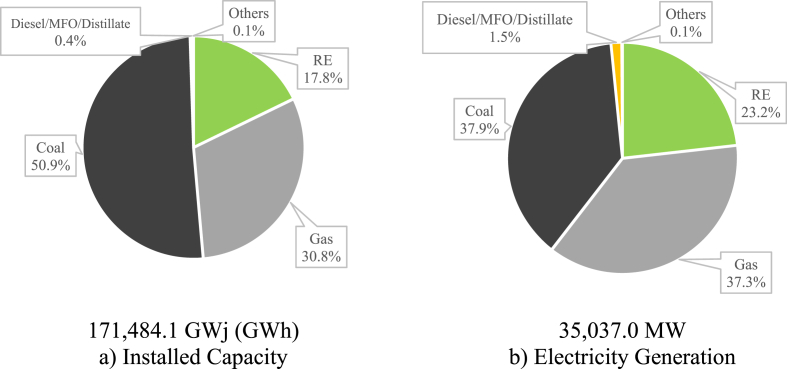
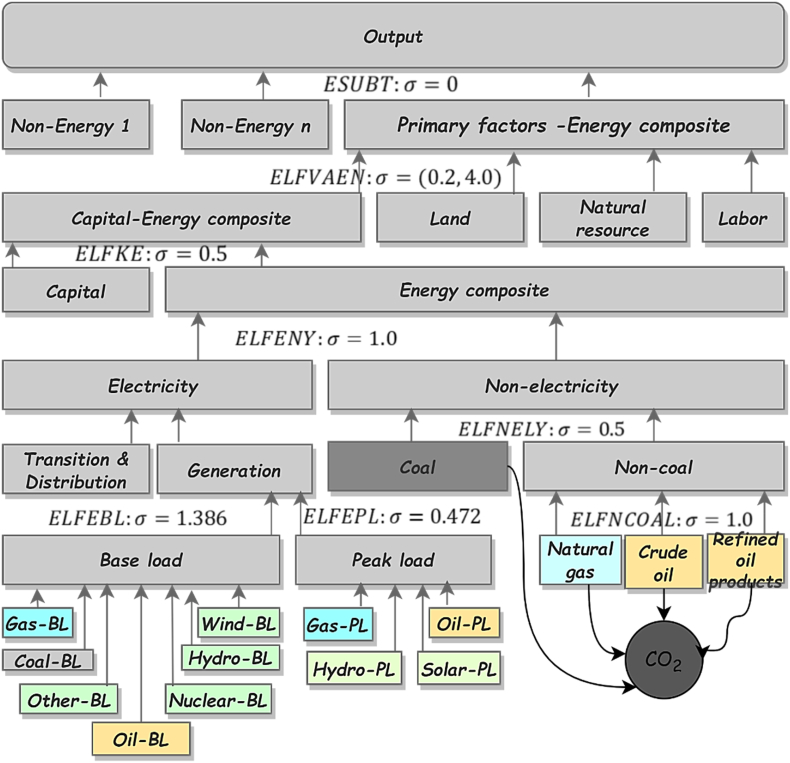
In pursuing the goals of sustainable development and transiting from fossil fuel-dependent electricity generation to renewable and sustainable alternatives as endorsed by COP28, Malaysia set a 31 % target for renewable-energy in the power generation mix by 2025. This underlines Malaysia's commitment to combat climate change, mainly by reducing its economy-wide GDP carbon intensity by 45 % from the 2005 levels by 2030. To better understand the effects of renewable energy expansion on the economy, environment, electricity output and input-mix, a computable general equilibrium model is applied using an updated benchmark. The simulation results show that increasing the share of coal and gas in the power generation mix compromises emission reduction targets. Further, there is a trade-off between subsidized natural gas supplies and power generation and exports. The results also show that a larger proportion of renewable energy leads to improved welfare. As the share of gas and coal in renewable energy generation is not very high, its impact on carbon emissions is limited. However, if renewable energy expansion is complemented by subsidy rationalizations, the positive impacts are more pronounced. In terms of policy implications, the findings suggest that Malaysia must step up its emission reduction efforts by augmenting the generation of renewable rather than non-renewable resources. Complementary initiatives such as emission abatement policies and consumption subsidies for refined oil products and fossil-fuel power generation should be rationalized to expand renewable resources, improve energy security, and attain emission reductions.
在追求可持续发展目标以及按照第28届联合国气候变化大会(COP28)的要求从依赖化石燃料发电向可再生和可持续替代能源转型的过程中,马来西亚设定了到2025年可再生能源在发电结构中的占比达到31%的目标。这凸显了马来西亚应对气候变化的决心,主要措施是到2030年将其全经济范围内的GDP碳强度在2005年的基础上降低45%。为了更好地理解可再生能源扩张对经济、环境、电力产出和投入结构的影响,我们使用更新后的基准数据应用了一个可计算一般均衡模型。模拟结果表明,增加煤炭和天然气在发电结构中的占比会影响减排目标。此外,在补贴的天然气供应与发电及出口之间存在权衡。结果还表明,更大比例的可再生能源会带来福利改善。由于天然气和煤炭在可再生能源发电中的占比不是很高,其对碳排放的影响有限。然而,如果可再生能源扩张辅之以补贴合理化措施,积极影响会更加显著。在政策影响方面,研究结果表明马来西亚必须通过增加可再生而非不可再生资源的发电量来加大减排力度。应合理化诸如减排政策以及对成品油和化石燃料发电的消费补贴等配套举措,以扩大可再生资源、提高能源安全并实现减排。