State Key Laboratory of Green Pesticide, School of Life Sciences, Central China Normal University, Wuhan, PR China.
Nat Commun. 2024 May 18;15(1):4238. doi: 10.1038/s41467-024-48591-9.
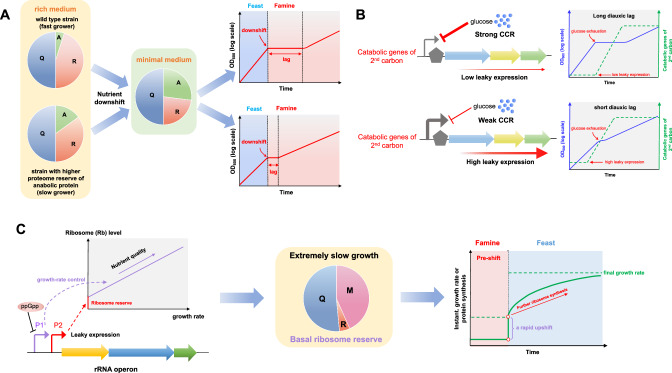
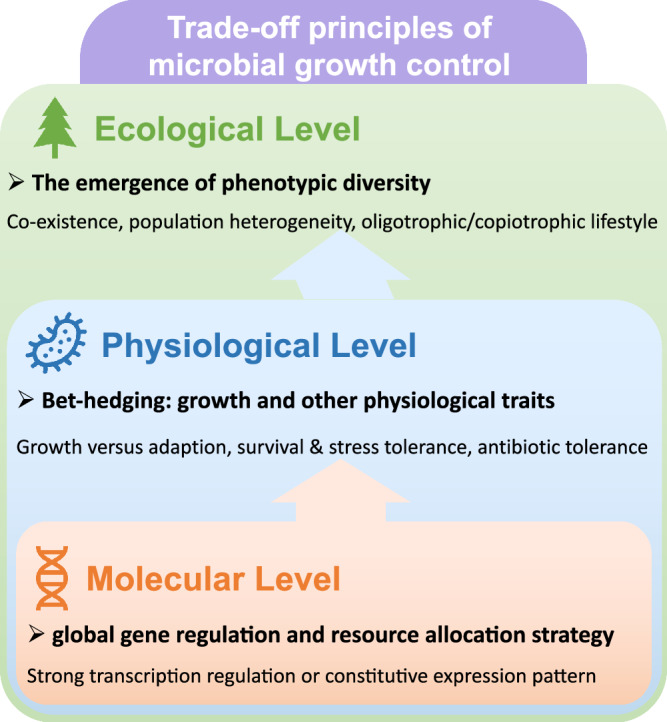
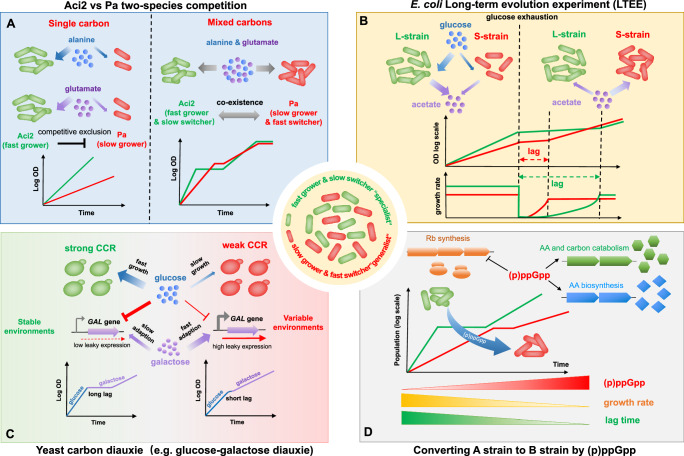
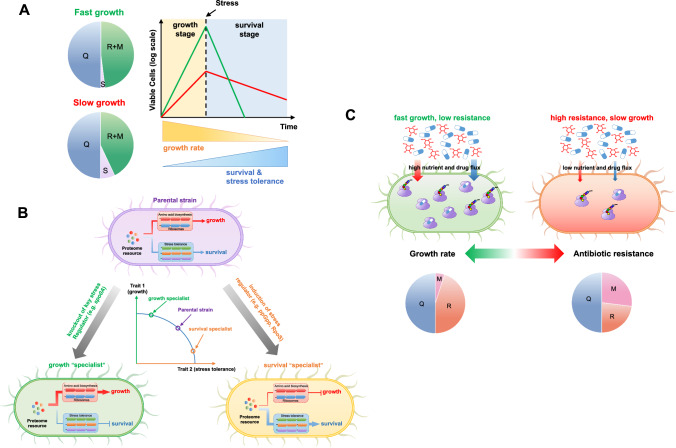
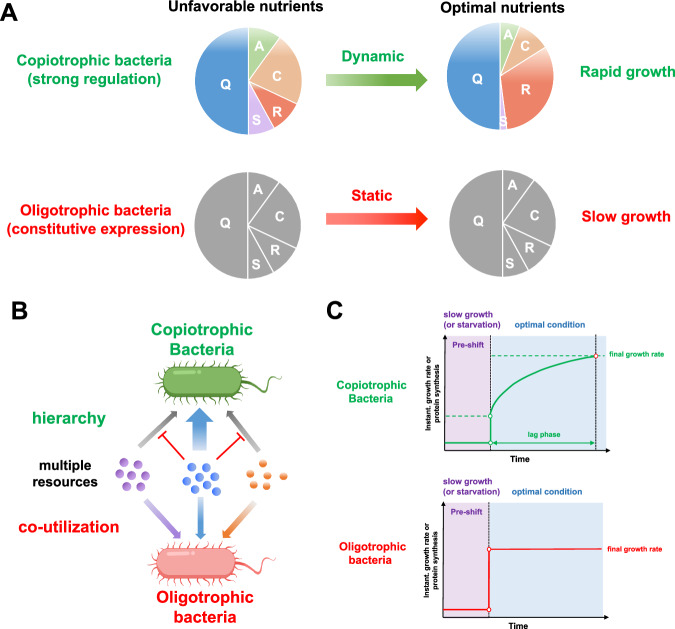
Growth rate maximization is an important fitness strategy for microbes. However, the wide distribution of slow-growing oligotrophic microbes in ecosystems suggests that rapid growth is often not favored across ecological environments. In many circumstances, there exist trade-offs between growth and other important traits (e.g., adaptability and survival) due to physiological and proteome constraints. Investments on alternative traits could compromise growth rate and microbes need to adopt bet-hedging strategies to improve fitness in fluctuating environments. Here we review the mechanistic role of trade-offs in controlling bacterial growth and further highlight its ecological implications in driving the emergences of many important ecological phenomena such as co-existence, population heterogeneity and oligotrophic/copiotrophic lifestyles.
生长速率最大化是微生物的一种重要适应策略。然而,在生态系统中广泛分布的生长缓慢的贫营养微生物表明,在生态环境中,快速生长并不总是受到青睐。在许多情况下,由于生理和蛋白质组的限制,生长和其他重要特征(如适应性和生存能力)之间存在权衡。对替代特征的投资可能会降低生长速率,微生物需要采用风险分散策略来提高在波动环境中的适应能力。在这里,我们回顾了权衡在控制细菌生长中的机制作用,并进一步强调了其在驱动许多重要生态现象(如共存、种群异质性和贫营养/富营养生活方式)出现方面的生态意义。