• 文献检索
  • 文档翻译
  • 深度研究
  • 学术资讯
  • Suppr Zotero 插件Zotero 插件
  • 邀请有礼
  • 套餐&价格
  • 历史记录
应用&插件
Suppr Zotero 插件Zotero 插件浏览器插件Mac 客户端Windows 客户端微信小程序
定价
高级版会员购买积分包购买API积分包
服务
文献检索文档翻译深度研究API 文档MCP 服务
关于我们
关于 Suppr公司介绍联系我们用户协议隐私条款
关注我们

Suppr 超能文献

核心技术专利:CN118964589B侵权必究
粤ICP备2023148730 号-1Suppr @ 2026

文献检索

告别复杂PubMed语法,用中文像聊天一样搜索,搜遍4000万医学文献。AI智能推荐,让科研检索更轻松。

立即免费搜索

文件翻译

保留排版,准确专业,支持PDF/Word/PPT等文件格式,支持 12+语言互译。

免费翻译文档

深度研究

AI帮你快速写综述,25分钟生成高质量综述,智能提取关键信息,辅助科研写作。

立即免费体验

使用紫外线发光二极管对医院感染相关细菌进行灭活的动力学研究

Kinetics of inactivation of bacteria responsible for infections in hospitals using UV-LED.

作者信息

Rito Beatriz, Matos Leonor, Proença Diogo N, Morais Paula V

机构信息

University of Coimbra, Centre for Mechanical Engineering, Materials and Processes, ARISE, Department of Life Sciences, Calcada Martim de Freitas, 3000-456, Coimbra, Portugal.

出版信息

Heliyon. 2024 May 4;10(10):e30738. doi: 10.1016/j.heliyon.2024.e30738. eCollection 2024 May 30.

DOI:10.1016/j.heliyon.2024.e30738
PMID:38765034
原文链接:https://pmc.ncbi.nlm.nih.gov/articles/PMC11096922/
Abstract

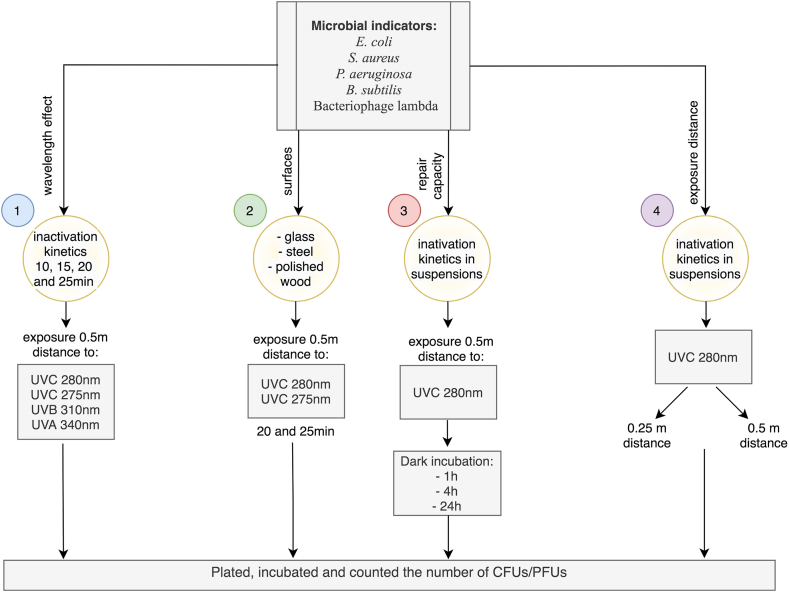
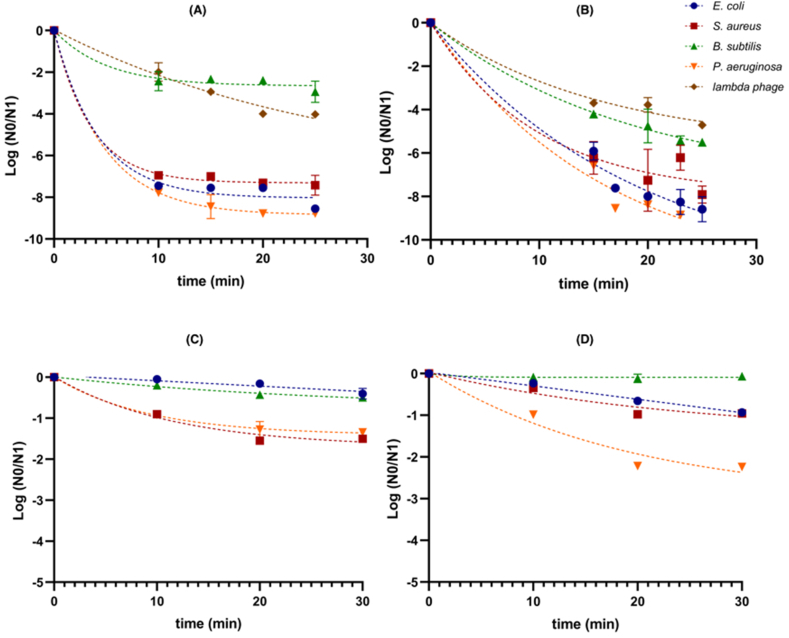
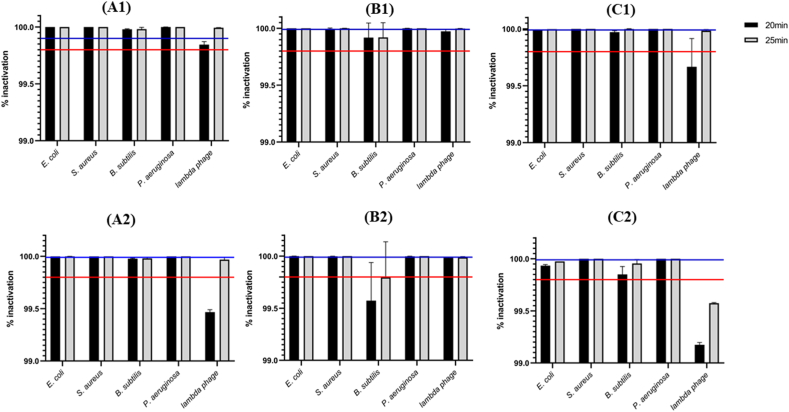
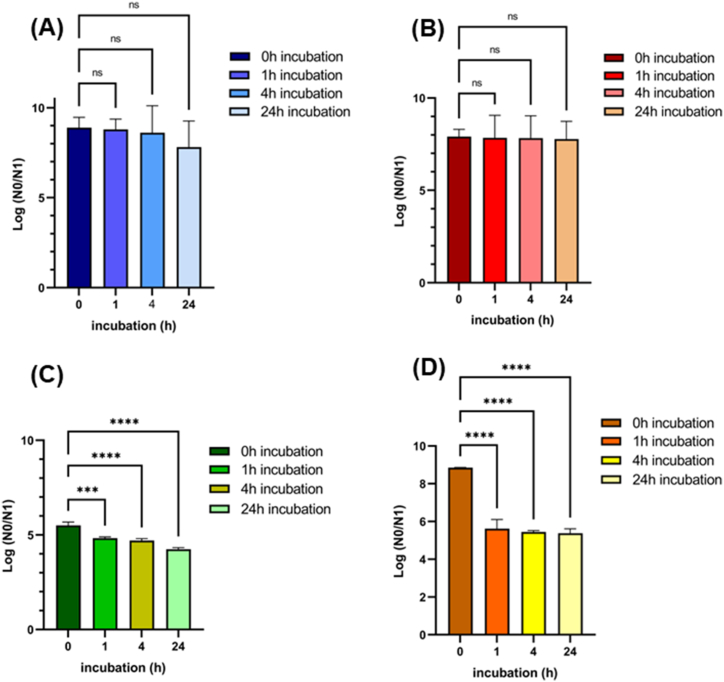
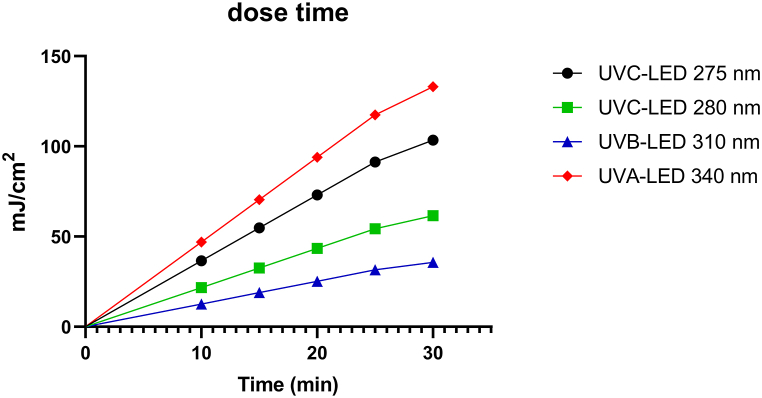
Controlling the microbial load in the environment is crucial to prevent the spread of organisms. The continuous spread of nosocomial infections in hospital facilities and the emergence of the coronavirus (COVID-19) highlighted the importance of disinfection processes in health safety. This work aimed to evaluate the effectiveness of LED-based disinfection lamps on bacteria from the ESKAPEE group and virus phage in vitro inactivation to be applied in hospital environments and health facilities disinfection. This study evaluated the effect of different UV wavelengths (275 nm, 280 nm (UVC), 310 nm (UVB) and 340 nm (UVA)) on the disinfection process of various microbial indicators including , , , and Bacteriophage lambda DSM 4499. Exposure time (5 min-30 min), exposure distance (0.25 m and 0.5 m) and surface materials (glass, steel, and polished wood) were evaluated on the disinfection efficiency. Furthermore, the study determined the recovery capacity of each species after UV damage. UVC-LED lamps could inactivate 99.99 % of microbial indicators after 20 min exposures at a 0.5 m distance. The exposure time needed to completely inactivate , , , and Bacteriophage lambda DSM 4499 can be decreased by reducing the exposure distance. UVB-LED and UVA-LED lamps were not able to promote a log reduction of 4 and were not effective on or bacteriophage lambda DSM 4499 inactivation. Thus, only UVC-LED lamps were tested on the decontamination of different surface materials, which was successful. showed the ability to recover from UV damage, but its inactivation rate remains 99.99 %, and spores from were not completely inactivated. Nevertheless, the inactivation rate of these indicators remained at 99.99 % with 24 h incubation after UVC irradiation. UVC-LED lamps emitting 280 nm were the most indicated to disinfect surfaces from microorganisms usually found in hospital environments.

摘要

控制环境中的微生物负荷对于防止生物体传播至关重要。医院设施中医院感染的持续传播以及冠状病毒(COVID-19)的出现凸显了消毒过程在健康安全方面的重要性。这项工作旨在评估基于LED的消毒灯对ESKAPEE组细菌和病毒噬菌体的体外灭活效果,以应用于医院环境和卫生设施消毒。本研究评估了不同紫外线波长(275nm、280nm(UVC)、310nm(UVB)和340nm(UVA))对包括、、、和噬菌体λ DSM 4499在内的各种微生物指标消毒过程的影响。评估了暴露时间(5分钟 - 30分钟)、暴露距离(0.25米和0.5米)和表面材料(玻璃、钢铁和抛光木材)对消毒效率的影响。此外,该研究还确定了紫外线损伤后各物种的恢复能力。UVC-LED灯在0.5米距离照射20分钟后可使99.99%的微生物指标失活。通过缩短暴露距离,可以减少完全灭活、、、和噬菌体λ DSM 4499所需的暴露时间。UVB-LED灯和UVA-LED灯无法实现4个对数级的减少,对或噬菌体λ DSM 4499的灭活无效。因此,仅对UVC-LED灯进行了不同表面材料的去污测试,测试成功。显示出从紫外线损伤中恢复的能力,但其失活率仍为99.99%,并且的孢子未被完全灭活。然而,在UVC照射后24小时孵育后,这些指标的失活率仍保持在99.99%。发射280nm的UVC-LED灯最适合对医院环境中常见的微生物进行表面消毒。
https://cdn.ncbi.nlm.nih.gov/pmc/blobs/74d5/11096922/10b81cacf3c4/gr6.jpg
https://cdn.ncbi.nlm.nih.gov/pmc/blobs/74d5/11096922/63149b7a808a/gr1.jpg
https://cdn.ncbi.nlm.nih.gov/pmc/blobs/74d5/11096922/ee017cbc19a6/gr2.jpg
https://cdn.ncbi.nlm.nih.gov/pmc/blobs/74d5/11096922/c76c712ff0e4/gr3.jpg
https://cdn.ncbi.nlm.nih.gov/pmc/blobs/74d5/11096922/76b13f09315a/gr4.jpg
https://cdn.ncbi.nlm.nih.gov/pmc/blobs/74d5/11096922/4f5b7f91816b/gr5.jpg
https://cdn.ncbi.nlm.nih.gov/pmc/blobs/74d5/11096922/10b81cacf3c4/gr6.jpg
https://cdn.ncbi.nlm.nih.gov/pmc/blobs/74d5/11096922/63149b7a808a/gr1.jpg
https://cdn.ncbi.nlm.nih.gov/pmc/blobs/74d5/11096922/ee017cbc19a6/gr2.jpg
https://cdn.ncbi.nlm.nih.gov/pmc/blobs/74d5/11096922/c76c712ff0e4/gr3.jpg
https://cdn.ncbi.nlm.nih.gov/pmc/blobs/74d5/11096922/76b13f09315a/gr4.jpg
https://cdn.ncbi.nlm.nih.gov/pmc/blobs/74d5/11096922/4f5b7f91816b/gr5.jpg
https://cdn.ncbi.nlm.nih.gov/pmc/blobs/74d5/11096922/10b81cacf3c4/gr6.jpg

相似文献

1
Kinetics of inactivation of bacteria responsible for infections in hospitals using UV-LED.使用紫外线发光二极管对医院感染相关细菌进行灭活的动力学研究
Heliyon. 2024 May 4;10(10):e30738. doi: 10.1016/j.heliyon.2024.e30738. eCollection 2024 May 30.
2
Microorganisms inactivation by wavelength combinations of ultraviolet light-emitting diodes (UV-LEDs).微生物的紫外线发光二极管(UV-LEDs)波长组合灭活。
Sci Total Environ. 2019 May 15;665:1103-1110. doi: 10.1016/j.scitotenv.2019.02.041. Epub 2019 Feb 8.
3
Inactivation of biofilm-bound Pseudomonas aeruginosa bacteria using UVC light emitting diodes (UVC LEDs).使用 UVC 发光二极管(UVC LEDs)灭活生物膜结合的铜绿假单胞菌。
Water Res. 2019 Mar 15;151:193-202. doi: 10.1016/j.watres.2018.12.021. Epub 2018 Dec 20.
4
UVC LED Irradiation Effectively Inactivates Aerosolized Viruses, Bacteria, and Fungi in a Chamber-Type Air Disinfection System.UVC LED 辐射在腔体型空气消毒系统中有效灭活气溶胶化的病毒、细菌和真菌。
Appl Environ Microbiol. 2018 Aug 17;84(17). doi: 10.1128/AEM.00944-18. Print 2018 Sep 1.
5
UV Inactivation of SARS-CoV-2 across the UVC Spectrum: KrCl* Excimer, Mercury-Vapor, and Light-Emitting-Diode (LED) Sources.UVC 光谱范围内 SARS-CoV-2 的紫外线灭活:KrCl*准分子、汞蒸气和发光二极管 (LED) 光源。
Appl Environ Microbiol. 2021 Oct 28;87(22):e0153221. doi: 10.1128/AEM.01532-21. Epub 2021 Sep 8.
6
Mathematical Modeling for Evaluating Inherent Parameters Affecting UVC Decontamination of Indicator Bacteria.评估影响指示菌 UVC 消毒固有参数的数学模型。
Appl Environ Microbiol. 2022 Apr 12;88(7):e0214821. doi: 10.1128/aem.02148-21. Epub 2022 Mar 15.
7
Elevated Inactivation Efficacy of a Pulsed UVC Light-Emitting Diode System for Foodborne Pathogens on Selective Media and Food Surfaces.脉冲紫外线发光二极管系统对选择性培养基和食品表面食源性致病菌的高效灭活作用。
Appl Environ Microbiol. 2018 Oct 1;84(20). doi: 10.1128/AEM.01340-18. Print 2018 Oct 15.
8
Comparison of the performance of pulsed and continuous UVC-LED irradiation in the inactivation of bacteria.脉冲与连续式 UVC-LED 照射杀菌效果比较。
Water Res. 2019 Jun 15;157:218-227. doi: 10.1016/j.watres.2019.03.080. Epub 2019 Mar 29.
9
The efficacy of vacuum-ultraviolet light disinfection of some common environmental pathogens.真空紫外线消毒对一些常见环境病原体的效果。
BMC Infect Dis. 2020 Feb 11;20(1):127. doi: 10.1186/s12879-020-4847-9.
10
Inactivation kinetics and efficiencies of UV-LEDs against Pseudomonas aeruginosa, Legionella pneumophila, and surrogate microorganisms.针对铜绿假单胞菌、嗜肺军团菌和替代微生物的 UV-LED 灭活动力学和效率。
Water Res. 2018 Mar 1;130:31-37. doi: 10.1016/j.watres.2017.11.047. Epub 2017 Nov 23.

引用本文的文献

1
Does Extreme Wettability Matter: The Effect of Copper Wettability on Infection Spread through Hospital Surfaces.超亲水性重要吗:铜的亲水性对医院表面感染传播的影响
ACS Omega. 2025 May 5;10(18):19129-19138. doi: 10.1021/acsomega.5c01931. eCollection 2025 May 13.

本文引用的文献

1
A review on LED technology in water photodisinfection.LED 技术在水光解消毒中的应用综述。
Sci Total Environ. 2023 Aug 10;885:163963. doi: 10.1016/j.scitotenv.2023.163963. Epub 2023 May 4.
2
Implementation of an Environmental Cleaning Protocol in Hospital Critical Areas Using a UV-C Disinfection Robot.使用紫外线消毒机器人在医院关键区域实施环境清洁方案。
Int J Environ Res Public Health. 2023 Feb 28;20(5):4284. doi: 10.3390/ijerph20054284.
3
Near dissolved organic matter microfiltration (NDOM MF) coupled with UVC LED disinfection to maximize the efficiency of water treatment for the removal of Giardia and Cryptosporidium.
Water Res. 2023 Apr 15;233:119731. doi: 10.1016/j.watres.2023.119731. Epub 2023 Feb 12.
4
Inactivation of the waterborne marine pathogen Vibrio alginolyticus by photo-chemical processes driven by UV-A, UV-B, or UV-C LED combined with HO or HSO.由UV-A、UV-B或UV-C发光二极管结合HO或HSO驱动的光化学过程对水传播海洋病原体溶藻弧菌的灭活作用
Water Res. 2023 Apr 1;232:119686. doi: 10.1016/j.watres.2023.119686. Epub 2023 Jan 31.
5
Global prevalence of nosocomial infection: A systematic review and meta-analysis.全球医院感染的患病率:系统评价和荟萃分析。
PLoS One. 2023 Jan 27;18(1):e0274248. doi: 10.1371/journal.pone.0274248. eCollection 2023.
6
An excimer lamp to provide far-ultraviolet C irradiation for dining-table disinfection.用于餐桌消毒的准分子灯提供远紫外 C 照射。
Sci Rep. 2023 Jan 7;13(1):381. doi: 10.1038/s41598-023-27380-2.
7
A novel exposure mode based on UVA-LEDs for bacterial inactivation.一种基于紫外A发光二极管的用于细菌灭活的新型照射模式。
J Photochem Photobiol B. 2023 Feb;239:112641. doi: 10.1016/j.jphotobiol.2022.112641. Epub 2022 Dec 25.
8
Usefulness of a new DUV-LED device for the control of infection by , mycobacteria and spore-forming bacteria.新型 DUV-LED 装置在控制 、 分枝杆菌和芽孢形成菌感染方面的作用。
Front Public Health. 2022 Dec 5;10:1053729. doi: 10.3389/fpubh.2022.1053729. eCollection 2022.
9
Application of an Ultrasonic Nebulizer Closet in the Disinfection of Textiles and Footwear.超声雾化器柜在纺织品和鞋类消毒中的应用。
Int J Environ Res Public Health. 2022 Aug 23;19(17):10472. doi: 10.3390/ijerph191710472.
10
Characterization of a robot-assisted UV-C disinfection for the inactivation of surface-associated microorganisms and viruses.用于灭活表面相关微生物和病毒的机器人辅助紫外线-C消毒的特性研究
J Photochem Photobiol. 2022 Sep;11:100123. doi: 10.1016/j.jpap.2022.100123. Epub 2022 May 1.