Layman Donald K
Department of Food Science and Human Nutrition, University of Illinois at Urbana-Champaign, Urbana, IL, United States.
Front Nutr. 2024 May 3;11:1388986. doi: 10.3389/fnut.2024.1388986. eCollection 2024.
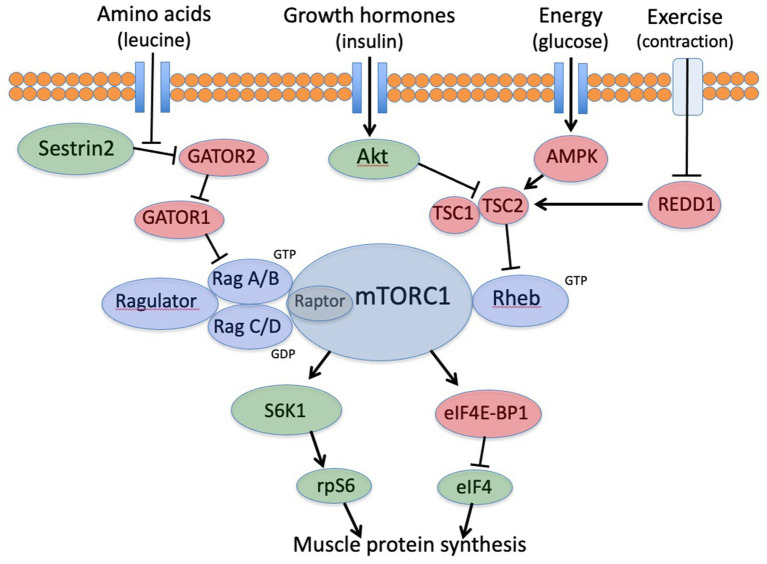
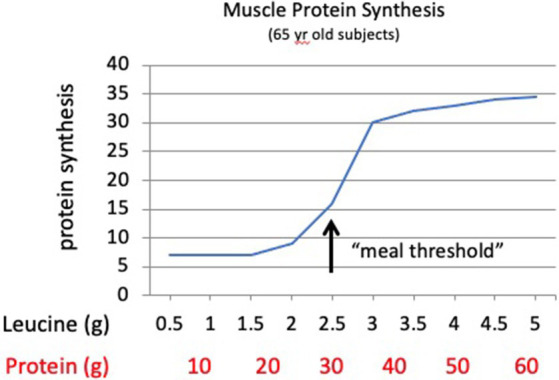
The importance of meal distribution of dietary protein to optimize muscle mass and body remains unclear, and the findings are intertwined with age, physical activity, and the total quantity and quality of protein consumed. The concept of meal distribution evolved from multiple discoveries about regulating protein synthesis in skeletal muscle. The most significant was the discovery of the role of the branched-chain amino acid leucine as a metabolic signal to initiate a post-meal anabolic period of muscle protein synthesis (MPS) in older adults. Aging is often characterized by loss of muscle mass and function associated with a decline in protein synthesis. The age-related changes in protein synthesis and subsequent muscle atrophy were generally considered inevitable until the discovery of the unique role of leucine for the activation of the mTOR signal complex for the initiation of MPS. Clinical studies demonstrated that older adults (>60 years) require meals with at least 2.8 g of leucine (~30 g of protein) to stimulate MPS. This meal requirement for leucine is not observed in younger adults (<30 years), who produce a nearly linear response of MPS in proportion to the protein content of a meal. These findings suggest that while the efficiency of dietary protein to stimulate MPS declines with aging, the capacity for MPS to respond is maintained if a meal provides adequate protein. While the meal response of MPS to total protein and leucine is established, the long-term impact on muscle mass and body composition remains less clear, at least in part, because the rate of change in muscle mass with aging is small. Because direct diet studies for meal distribution during aging are impractical, research groups have applied meal distribution and the leucine threshold to protein-sparing concepts during acute catabolic conditions such as weight loss. These studies demonstrate enhanced MPS at the first meal after an overnight fast and net sparing of lean body mass during weight loss. While the anabolic benefits of increased protein at the first meal to stimulate MPS are clear, the benefits to long-term changes in muscle mass and body composition in aging adults remain speculative.
膳食蛋白质的进餐分配对优化肌肉质量和身体状况的重要性尚不清楚,其研究结果与年龄、身体活动以及蛋白质摄入的总量和质量相互交织。进餐分配的概念源于关于调节骨骼肌蛋白质合成的多项发现。其中最重要的是发现支链氨基酸亮氨酸作为一种代谢信号,可启动老年人餐后肌肉蛋白质合成(MPS)的合成代谢期。衰老通常表现为肌肉质量和功能的丧失以及蛋白质合成的下降。在发现亮氨酸对激活mTOR信号复合物以启动MPS的独特作用之前,蛋白质合成和随后的肌肉萎缩与年龄相关的变化通常被认为是不可避免的。临床研究表明,老年人(>60岁)需要摄入至少含2.8克亮氨酸(约30克蛋白质)的餐食来刺激MPS。在年轻人(<30岁)中未观察到这种对亮氨酸的餐食需求,他们的MPS与餐食中的蛋白质含量呈近似线性反应。这些发现表明,虽然膳食蛋白质刺激MPS的效率会随着年龄增长而下降,但如果一餐提供足够的蛋白质,MPS的反应能力仍可维持。虽然已确定MPS对总蛋白质和亮氨酸的餐食反应,但对肌肉质量和身体成分的长期影响仍不太明确,至少部分原因是随着年龄增长肌肉质量的变化率较小。由于在衰老过程中进行直接饮食研究以探讨进餐分配是不切实际的,研究小组已将进餐分配和亮氨酸阈值应用于急性分解代谢状况(如体重减轻)下的蛋白质节省概念。这些研究表明,在禁食一夜后的第一餐中MPS增强,并且在体重减轻期间瘦体重得到净节省。虽然第一餐增加蛋白质以刺激MPS的合成代谢益处是明确的,但对老年人肌肉质量和身体成分长期变化的益处仍具有推测性。