Shen Cheng, Luo Zhen, Ma Sheng, Yu Chengbing, Lai Ting, Tang Shangshang, Zhang Hongcai, Zhang Jing, Xu Weina, Xu Jianxiong
Shanghai Key Laboratory of Veterinary Biotechnology/Shanghai Collaborative Innovation Center of Agri-Seeds, School of Agriculture and Biology, Shanghai Jiao Tong University, Shanghai 200240, China.
Antioxidants (Basel). 2024 Apr 27;13(5):533. doi: 10.3390/antiox13050533.
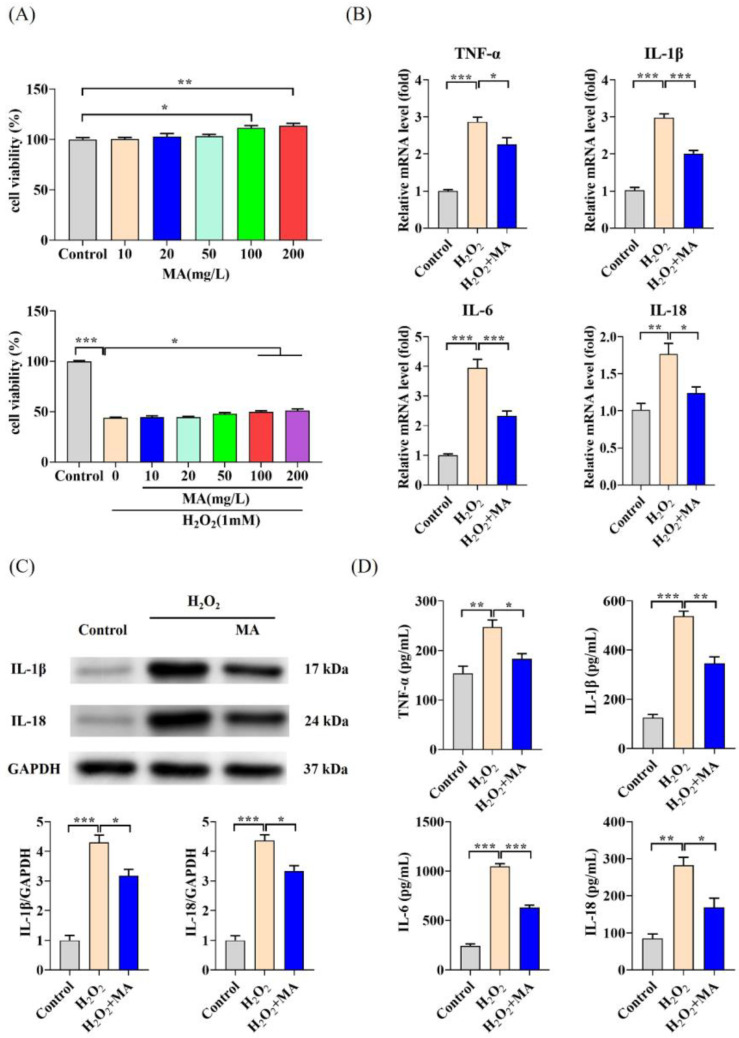
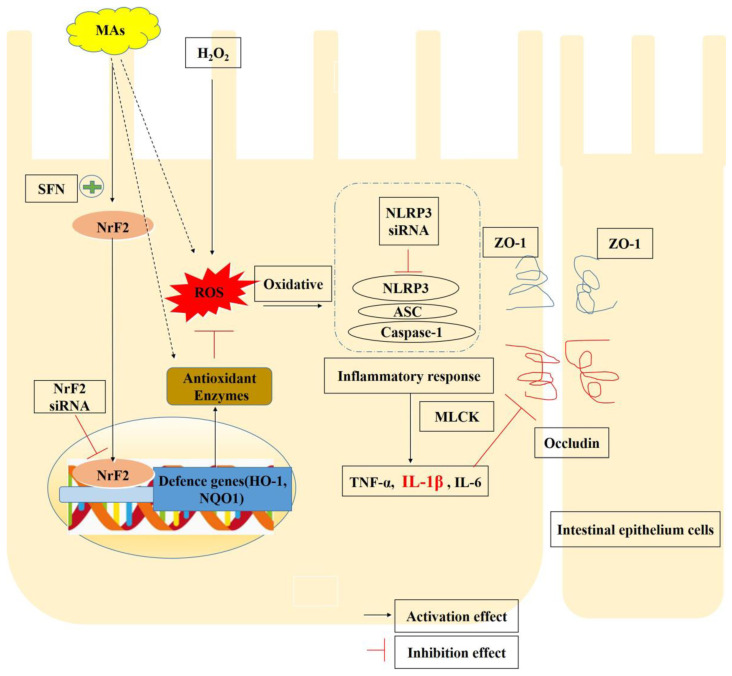
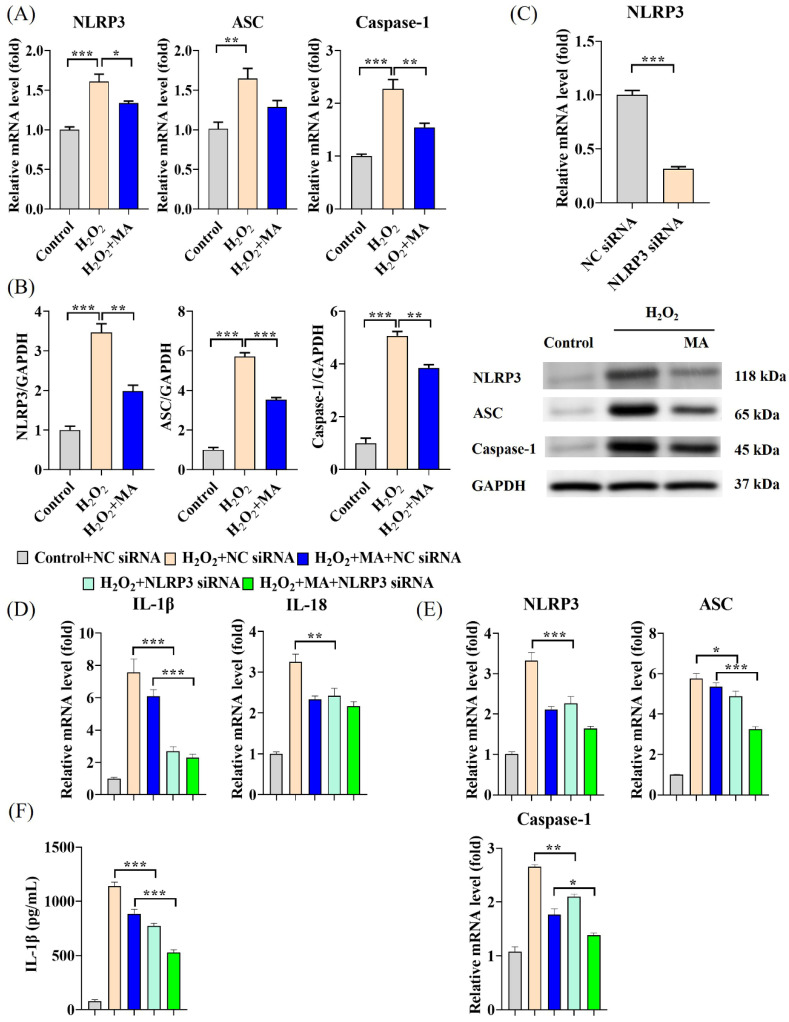
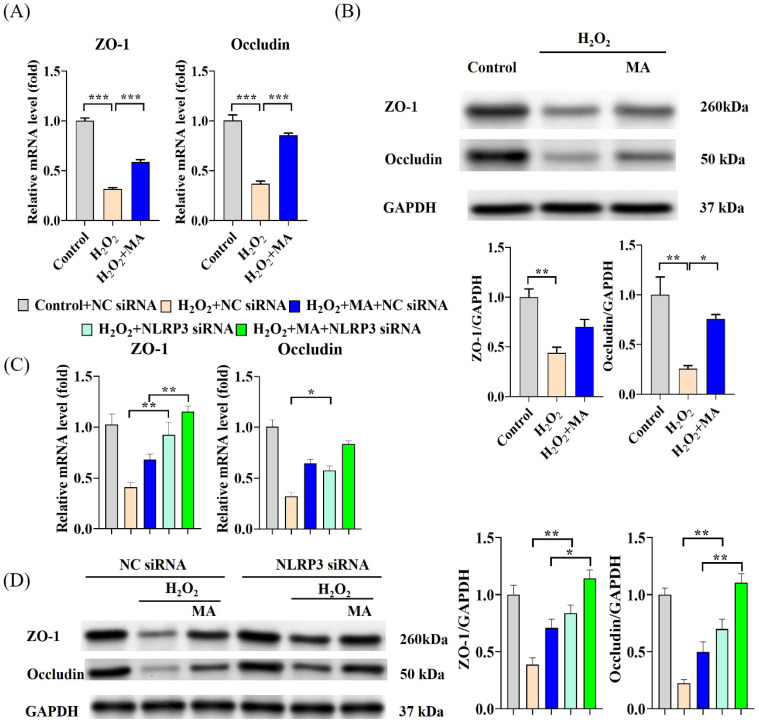
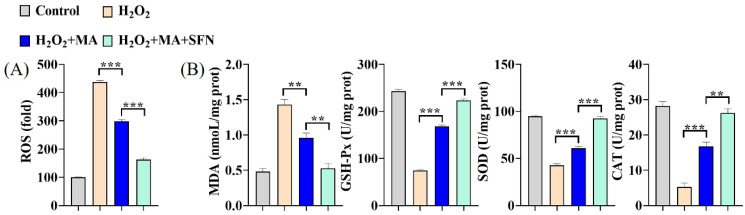
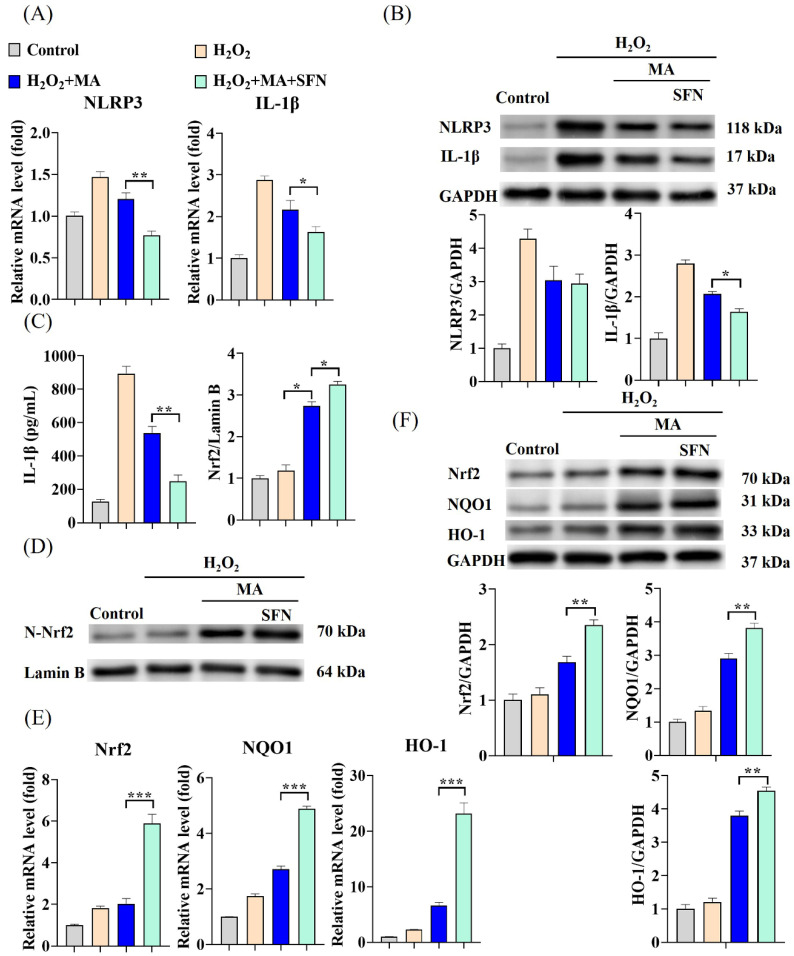
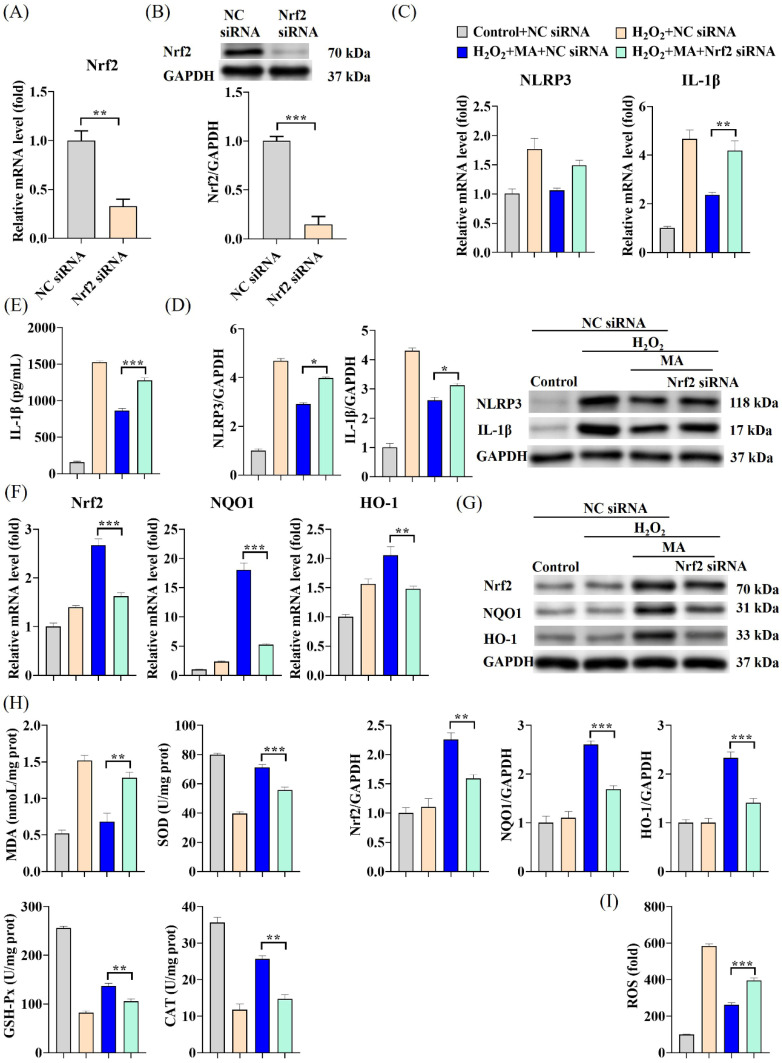
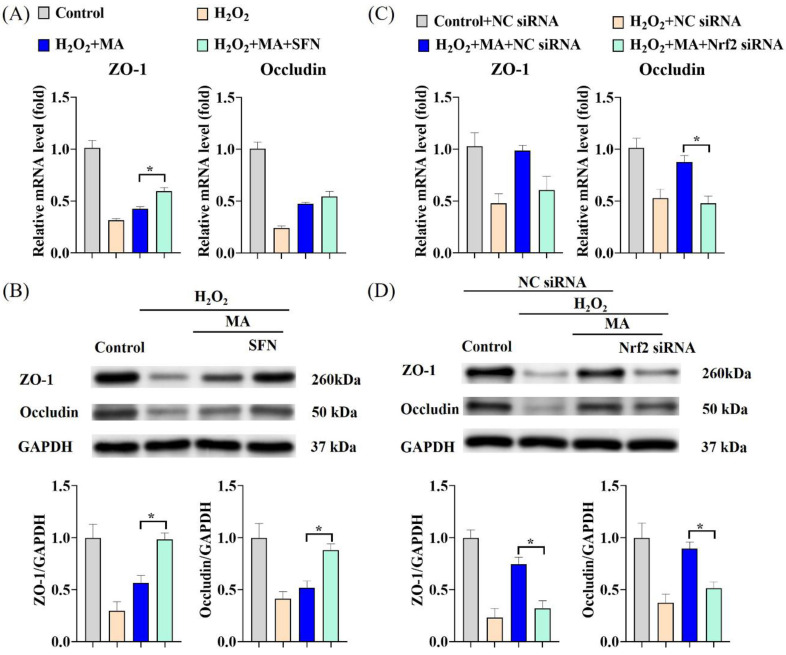
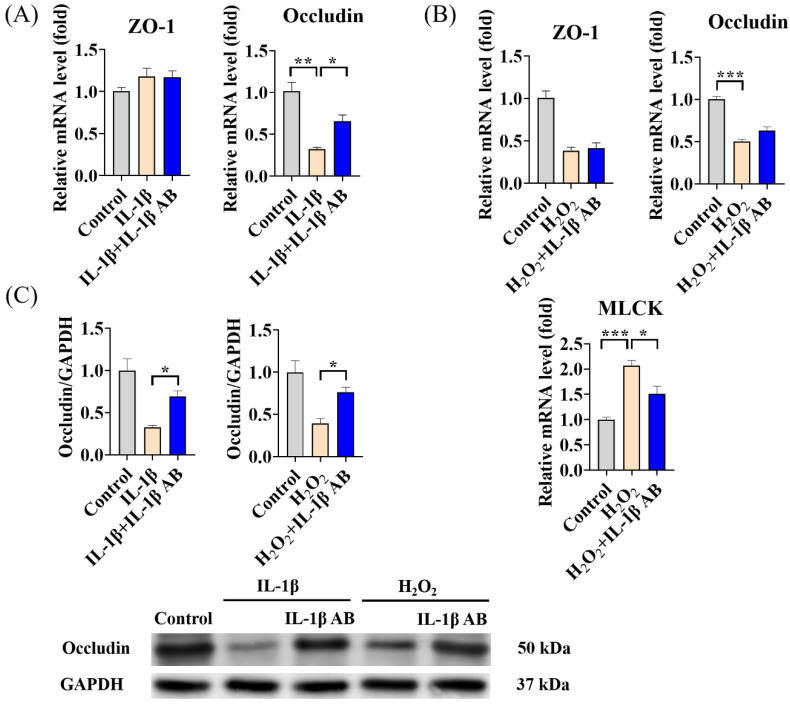
Oxidative stress can induce inflammation and tight junction disruption in enterocytes. The initiation of inflammation is thought to commence with the activation of the ROS/NLRP3/IL-1β signaling pathway, marking a crucial starting point in the process. In our previous studies, we found that microbe-derived antioxidants (MAs) showed significant potential in enhancing both antioxidant capabilities and anti-inflammatory effects. The main aim of this research was to investigate the ability of MAs to protect cells from oxidative stress caused by HO, to reduce inflammatory responses, and to maintain the integrity of tight junction proteins by modulating the ROS/NLRP3/IL-1β signaling pathway. IPEC-1 cells (1 × 10 cells/well) were initially exposed to 100 mg/L of MAs for 12 h, after which they were subjected to 1 mM HO treatment for 1 h. We utilized small interfering RNA (siRNA) to inhibit the expression of NLRP3 and Nrf2. Inflammatory factors such as IL-1β and antioxidant enzyme activity levels were detected by ELISA. Oxidative stress marker ROS was examined by fluorescence analysis. The NLRP3/IL-1β signaling pathway, Nrf2/HO-1 signaling pathway and tight junction proteins (ZO-1 and Occludin) were detected by RT-qPCR or Western blotting. In our research, it was observed that MA treatment effectively suppressed the notable increase in HO-induced inflammatory markers (TNF-α, IL-1β, and IL-18), decreased ROS accumulation, mitigated the expression of NLRP3, ASC, and caspase-1, and promoted the expression of ZO-1 and Occludin. After silencing the NLRP3 gene with siRNA, the protective influence of MAs was observed to be linked with the NLRP3 inflammasome. Additional investigations demonstrated that the treatment with MAs triggered the activation of Nrf2, facilitating its translocation into the nucleus. This process resulted in a notable upregulation of Nrf2, NQO1, and HO-1 expression, along with the initiation of the Nrf2-HO-1 signaling pathway. Consequently, there was an enhancement in the activities of antioxidant enzymes like SOD, GSH-Px, and CAT, which effectively mitigated the accumulation of ROS, thereby ameliorating the oxidative stress state. The antioxidant effectiveness of MAs was additionally heightened in the presence of SFN, an activator of Nrf2. The antioxidant and anti-inflammatory functions of MAs and their role in regulating intestinal epithelial tight junction protein disruption were significantly affected after siRNA knockdown of the Nrf2 gene. These findings suggest that MAs have the potential to reduce HO-triggered oxidative stress, inflammation, and disruption of intestinal epithelial tight junction proteins in IPEC-1 cells. This reduction is achieved by blocking the ROS/NLRP3/IL-1β signaling pathway through the activation of the Nrf2 pathway.
氧化应激可诱导肠上皮细胞发生炎症反应和紧密连接破坏。炎症反应的起始被认为始于ROS/NLRP3/IL-1β信号通路的激活,这是该过程中的一个关键起点。在我们之前的研究中,我们发现微生物衍生的抗氧化剂(MAs)在增强抗氧化能力和抗炎作用方面具有显著潜力。本研究的主要目的是探讨MAs保护细胞免受HO所致氧化应激、减轻炎症反应以及通过调节ROS/NLRP3/IL-1β信号通路维持紧密连接蛋白完整性的能力。将IPEC-1细胞(1×10个细胞/孔)最初暴露于100 mg/L的MAs中12小时,之后对其进行1 mM HO处理1小时。我们利用小干扰RNA(siRNA)抑制NLRP3和Nrf2的表达。通过ELISA检测IL-1β等炎症因子和抗氧化酶活性水平。通过荧光分析检测氧化应激标志物ROS。通过RT-qPCR或蛋白质免疫印迹法检测NLRP3/IL-1β信号通路、Nrf2/HO-1信号通路和紧密连接蛋白(ZO-1和闭合蛋白)。在我们的研究中,观察到MA处理有效抑制了HO诱导的炎症标志物(TNF-α、IL-1β和IL-18)的显著增加,减少了ROS积累,减轻了NLRP3、ASC和半胱天冬酶-1的表达,并促进了ZO-1和闭合蛋白的表达。在用siRNA沉默NLRP3基因后,观察到MAs的保护作用与NLRP3炎性小体有关。进一步的研究表明,MAs处理触发了Nrf2的激活,促进其向细胞核的转位。这一过程导致Nrf2、NQO1和HO-1表达显著上调,同时启动了Nrf2-HO-1信号通路。因此,超氧化物歧化酶、谷胱甘肽过氧化物酶和过氧化氢酶等抗氧化酶的活性增强,有效减轻了ROS积累,从而改善了氧化应激状态。在Nrf2激活剂SFN存在的情况下,MAs的抗氧化效果进一步增强。在siRNA敲低Nrf2基因后,MAs的抗氧化和抗炎功能及其在调节肠上皮紧密连接蛋白破坏中的作用受到显著影响。这些发现表明,MAs有潜力减轻HO引发的IPEC-1细胞氧化应激、炎症反应和肠上皮紧密连接蛋白的破坏。这种减轻是通过激活Nrf2通路阻断ROS/NLRP3/IL-1β信号通路来实现的。