Pattipaka Srinivas, Lim Yeseul, Son Yong Hoon, Bae Young Min, Peddigari Mahesh, Hwang Geon-Tae
Department of Materials Science and Engineering, Pukyong National University, 45, Yongso-ro, Nam-Gu, Busan 48513, Republic of Korea.
Department of Physics, Indian Institute of Technology Hyderabad, Kandi 502284, Telangana, India.
Materials (Basel). 2024 May 11;17(10):2277. doi: 10.3390/ma17102277.
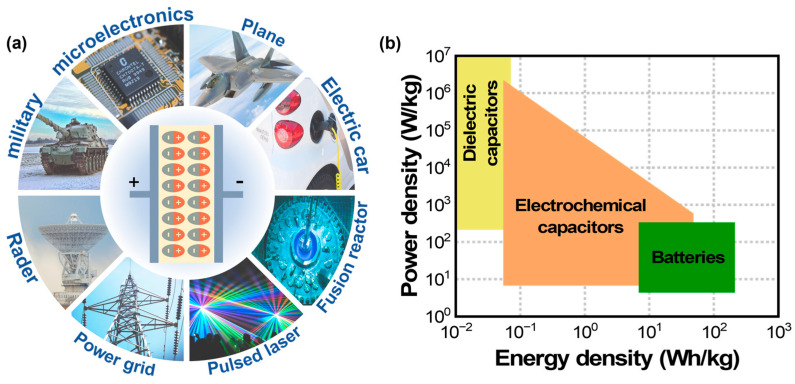
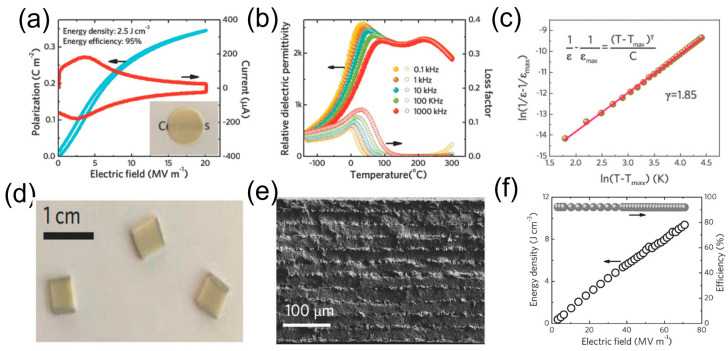
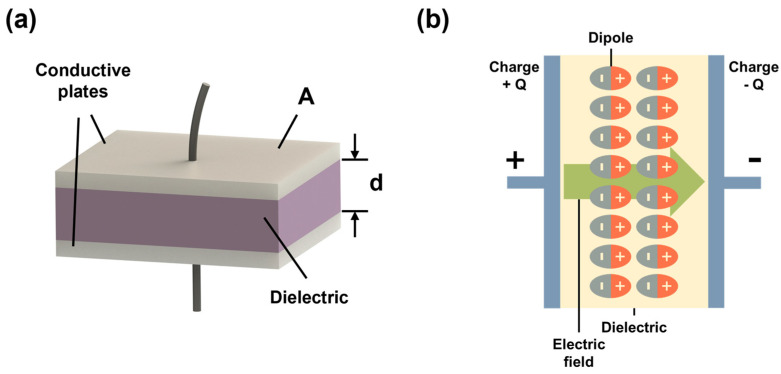
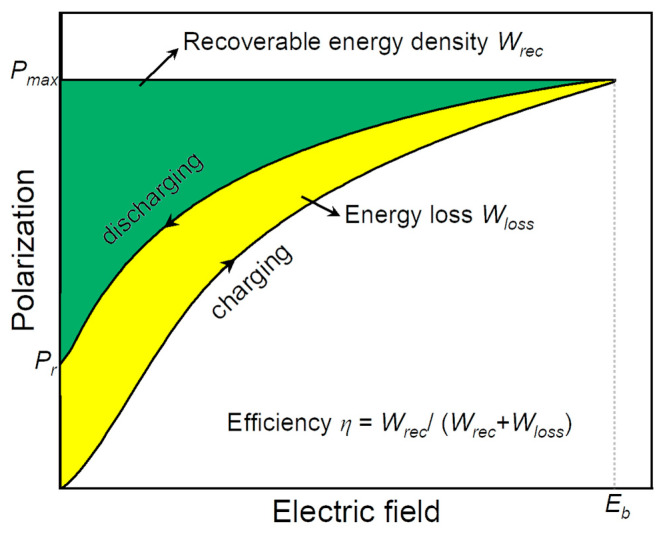
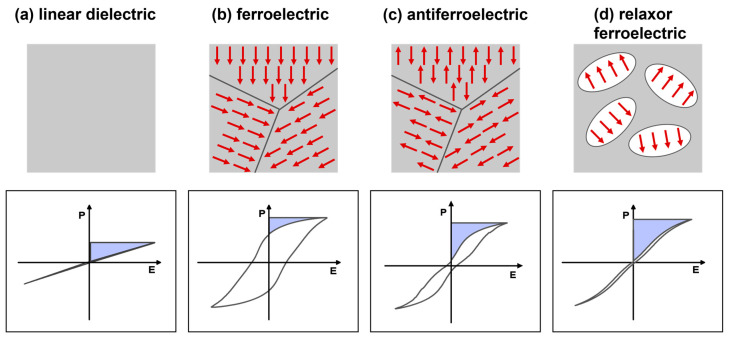
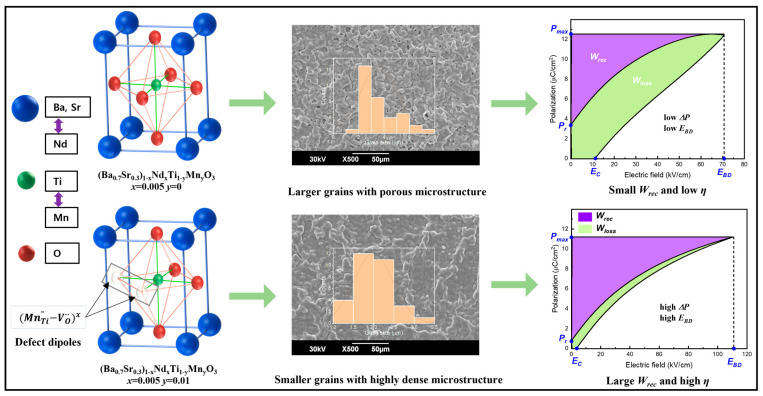
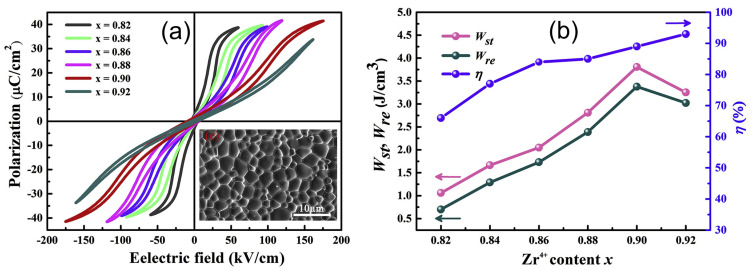
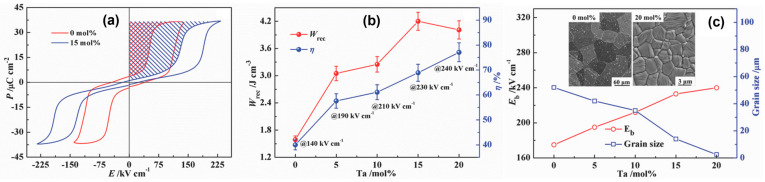
Materials offering high energy density are currently desired to meet the increasing demand for energy storage applications, such as pulsed power devices, electric vehicles, high-frequency inverters, and so on. Particularly, ceramic-based dielectric materials have received significant attention for energy storage capacitor applications due to their outstanding properties of high power density, fast charge-discharge capabilities, and excellent temperature stability relative to batteries, electrochemical capacitors, and dielectric polymers. In this paper, we present fundamental concepts for energy storage in dielectrics, key parameters, and influence factors to enhance the energy storage performance, and we also summarize the recent progress of dielectrics, such as bulk ceramics (linear dielectrics, ferroelectrics, relaxor ferroelectrics, and anti-ferroelectrics), ceramic films, and multilayer ceramic capacitors. In addition, various strategies, such as chemical modification, grain refinement/microstructure, defect engineering, phase, local structure, domain evolution, layer thickness, stability, and electrical homogeneity, are focused on the structure-property relationship on the multiscale, which has been thoroughly addressed. Moreover, this review addresses the challenges and opportunities for future dielectric materials in energy storage capacitor applications. Overall, this review provides readers with a deeper understanding of the chemical composition, physical properties, and energy storage performance in this field of energy storage ceramic materials.
当前需要提供高能量密度的材料,以满足对储能应用日益增长的需求,如脉冲功率装置、电动汽车、高频逆变器等。特别是,基于陶瓷的介电材料因其具有高功率密度、快速充放电能力以及相对于电池、电化学电容器和介电聚合物而言优异的温度稳定性等突出性能,在储能电容器应用中受到了广泛关注。在本文中,我们阐述了电介质储能的基本概念、关键参数以及提高储能性能的影响因素,并且我们还总结了电介质材料的最新进展情况,例如块状陶瓷(线性电介质、铁电体、弛豫铁电体和反铁电体)、陶瓷薄膜以及多层陶瓷电容器。此外,诸如化学改性、晶粒细化/微观结构、缺陷工程、相、局部结构、畴演变、层厚度、稳定性和电学均匀性等各种策略,聚焦于多尺度的结构-性能关系,这一点已得到充分探讨。而且,本综述探讨了未来介电材料在储能电容器应用方面所面临的挑战与机遇。总体而言,本综述为读者提供了对储能陶瓷材料这一领域的化学成分、物理性能和储能性能更深入的理解。