Cuccaro Paula M, Choi Jihye, Tiruneh Yordanos M, Martinez Journey, Xie Jing, Crum Michelle, Owens Mark, Yamal Jose-Miguel
Center for Health Promotion and Prevention Research, School of Public Health, The University of Texas Health Science Center at Houston, Houston, TX 77030, USA.
Department of Health Promotion and Behavioral Sciences, School of Public Health, The University of Texas Health Science Center at Houston, Houston, TX 77030, USA.
Vaccines (Basel). 2024 May 11;12(5):526. doi: 10.3390/vaccines12050526.
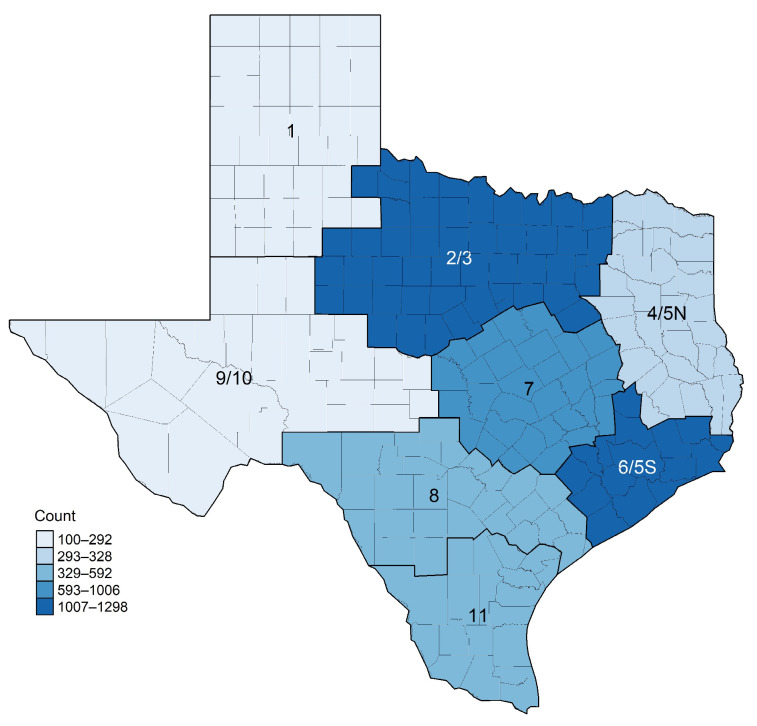
The COVID-19 vaccine is safe and effective for children, yet parental hesitancy towards vaccinating children against the virus persists. We conducted a telephone-administered weighted survey in Texas to examine parents' sociodemographic factors and medical conditions associated with COVID-19 vaccination intention for parents with unvaccinated children ages 5-17 years. We collected responses from 19,502 participants, of which 4879 were parents of children ages 5-17 years. We conducted multiple logistic regression with Lasso-selected variables to identify factors associated with children's vaccination status and parents' intention to vaccinate their children. From the unweighted sample, less than half of the parents (46.8%) had at least one unvaccinated child. These parents were more likely to be White, English-speaking, not concerned about illness, privately insured, and unvaccinated for COVID-19 themselves ( < 0.001). In the adjusted regression model, parents who were unvaccinated (vs. having COVID-19 booster, aOR = 28.6) and financially insecure (aOR = 1.46) had higher odds of having unvaccinated children. Parents who were Asian (aOR = 0.50), Black (aOR = 0.69), Spanish-speaking (aOR = 0.57), concerned about illness (aOR = 0.63), had heart disease (aOR = 0.41), and diabetes (aOR = 0.61) had lower odds of having unvaccinated children. Parents who were Asian, Black, Hispanic, Spanish-speaking, concerned about illness for others, and vaccine-boosted were more likely to have vaccination intention for their children ( < 0.001). Children's vaccination is essential to reduce COVID-19 transmission. It is important to raise awareness about the value of pediatric COVID-19 vaccination while considering parents' sociodemographic and medical circumstances.
新冠疫苗对儿童是安全有效的,但家长对为孩子接种该病毒疫苗仍持犹豫态度。我们在得克萨斯州进行了一项通过电话进行的加权调查,以研究5至17岁未接种疫苗儿童的家长的社会人口学因素和与新冠疫苗接种意愿相关的医疗状况。我们收集了19502名参与者的回复,其中4879名是5至17岁儿童的家长。我们对经套索选择的变量进行了多重逻辑回归,以确定与儿童疫苗接种状况及家长为孩子接种疫苗意愿相关的因素。在未加权样本中,不到一半的家长(46.8%)至少有一名未接种疫苗的孩子。这些家长更有可能是白人、说英语、不担心患病、有私人保险且自身未接种新冠疫苗(<0.001)。在调整后的回归模型中,未接种疫苗的家长(与接种新冠疫苗加强针的家长相比,调整后比值比 = 28.6)和经济不安全的家长(调整后比值比 = 1.46)有未接种疫苗孩子的几率更高。亚裔家长(调整后比值比 = 0.50)、黑人家长(调整后比值比 = 0.69)、说西班牙语的家长(调整后比值比 = 0.57)、担心患病的家长(调整后比值比 = 0.63)、患有心脏病的家长(调整后比值比 = 0.41)以及患有糖尿病的家长(调整后比值比 = 0.61)有未接种疫苗孩子的几率较低。亚裔、黑人、西班牙裔、说西班牙语、担心他人患病以及接种过疫苗加强针的家长更有可能有让孩子接种疫苗的意愿(<0.001)。儿童接种疫苗对于减少新冠病毒传播至关重要。在考虑家长的社会人口学和医疗情况时,提高对儿童新冠疫苗接种价值的认识很重要。