Division of Sports Science & Physical Education, Tsinghua University, Beijing, China.
IDG/McGovern Institute for Brain Research, Tsinghua University, Beijing, China.
CNS Neurosci Ther. 2024 May;30(5):e14783. doi: 10.1111/cns.14783.
The molecular mechanism of short-sleep conditions on cognition remains largely unknown. This research aimed to investigate associations between short sleep, inflammatory biomarkers and cognitive function in the US population (NHANES data 2011-2014) and explore cellular mechanisms in mice.
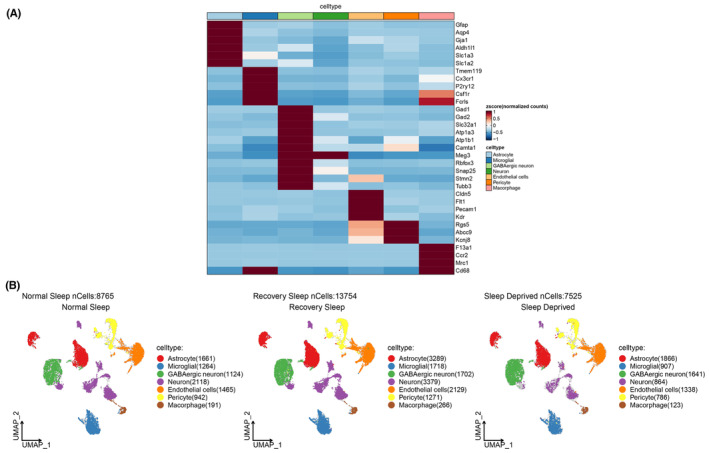
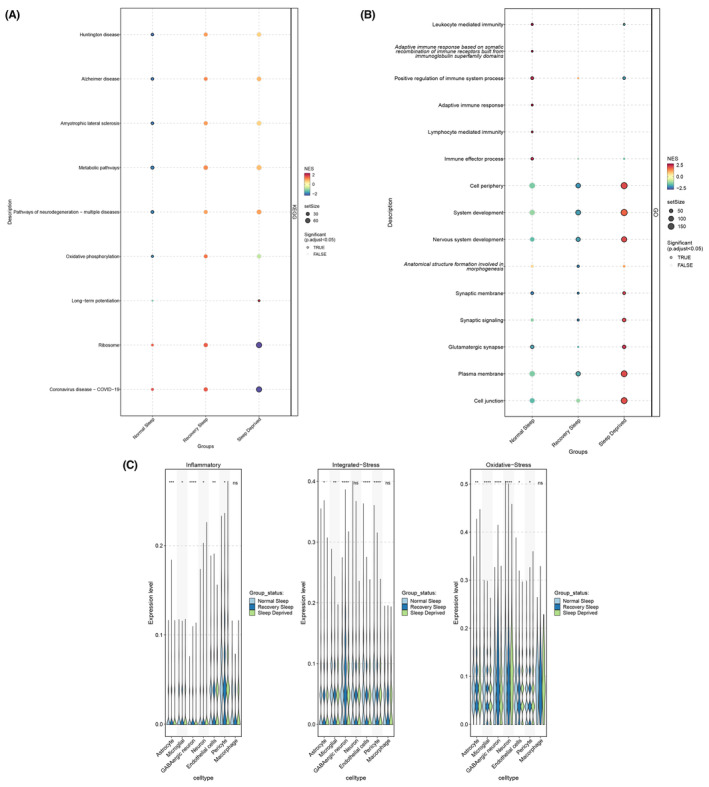
Systemic immune-inflammation index (SII) was calculated using blood-cell based biomarkers. Further, we employed integrated bioinformatics and single-cell transcriptomics (GSE137665) to examine how short sleep exposure influenced the molecular pathways associated with inflammation in the brain. To explore the signaling pathways and biological processes of sleep deprivation, we carried out enrichment analyses utilizing the GO and KEGG databases.
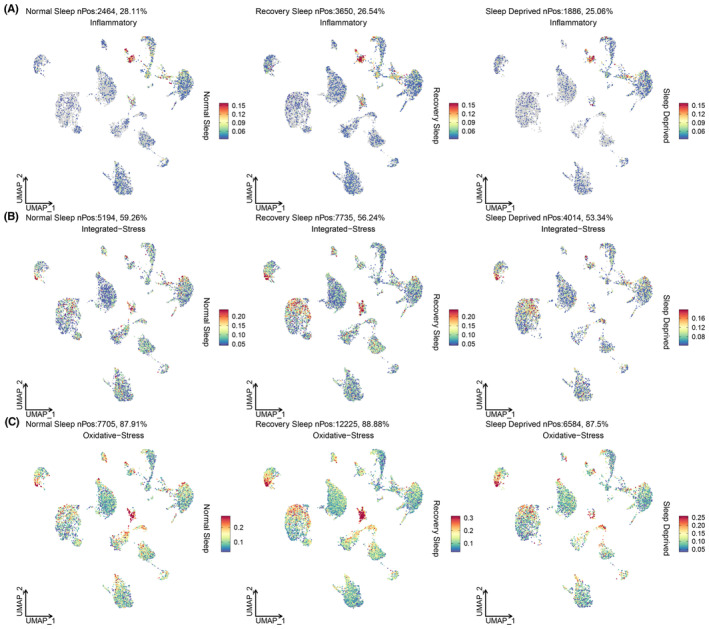
Population results showed that, compared with normal sleep group, severe short sleep was associated with lower cognitive ability in all the four tests. Moreover, a higher SII level was correlated with lower scores of cognitive tests. In mice study, elevated activation of the inflammatory pathway was observed in cell subgroups of neurons within the sleep deprivation and recovery sleep cohorts. Additionally, heightened expression of oxidative stress and integrated stress response pathways was noted in GABAergic neurons during sleep deprivation.
This study contributed to the understanding of the influence of short sleep on cognitive function and its cellular mechanisms.
短期睡眠对认知的影响的分子机制在很大程度上仍然未知。本研究旨在调查美国人群(NHANES 数据 2011-2014)中短期睡眠、炎症生物标志物与认知功能之间的关联,并在小鼠中探索细胞机制。
使用基于血细胞的生物标志物计算全身免疫炎症指数 (SII)。此外,我们还采用了综合生物信息学和单细胞转录组学(GSE137665)来研究短期睡眠暴露如何影响与大脑炎症相关的分子途径。为了探索睡眠剥夺的信号通路和生物学过程,我们利用 GO 和 KEGG 数据库进行了富集分析。
人群研究结果表明,与正常睡眠组相比,严重的短期睡眠与所有四项测试中的认知能力降低有关。此外,较高的 SII 水平与认知测试得分较低有关。在小鼠研究中,在睡眠剥夺和恢复睡眠队列的神经元细胞亚群中观察到炎症通路的激活升高。此外,在睡眠剥夺期间,GABA 能神经元中氧化应激和综合应激反应通路的表达水平升高。
本研究有助于理解短期睡眠对认知功能的影响及其细胞机制。