Department of Biomedical Sciences, University of Padua, Padua, Italy.
Department of Biomedical Sciences for Health, Università degli Studi di Milano, Milan, Italy.
J Transl Med. 2024 May 29;22(1):515. doi: 10.1186/s12967-024-05272-x.
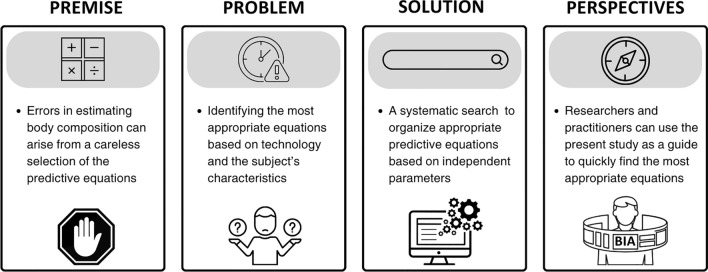
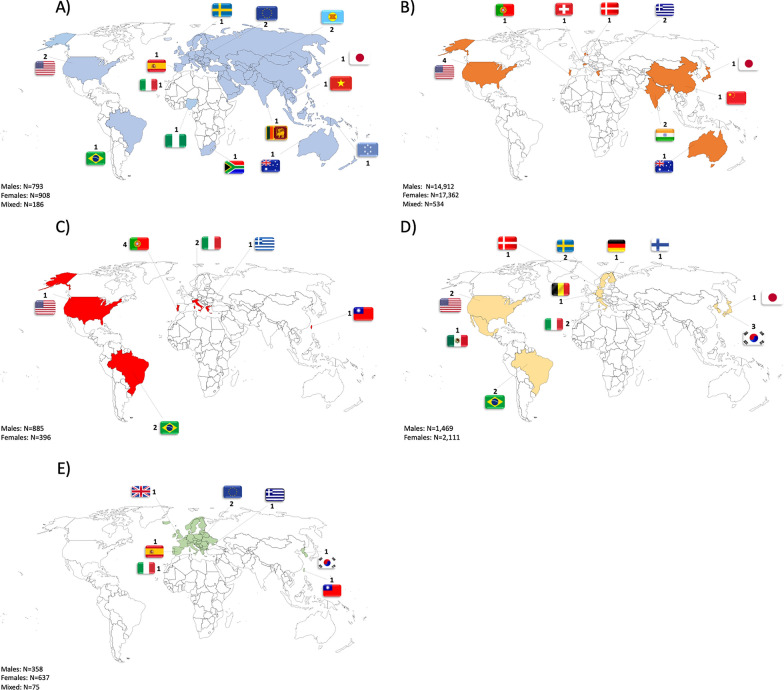
The appropriate use of predictive equations in estimating body composition through bioelectrical impedance analysis (BIA) depends on the device used and the subject's age, geographical ancestry, healthy status, physical activity level and sex. However, the presence of many isolated predictive equations in the literature makes the correct choice challenging, since the user may not distinguish its appropriateness. Therefore, the present systematic review aimed to classify each predictive equation in accordance with the independent parameters used. Sixty-four studies published between 1988 and 2023 were identified through a systematic search of international electronic databases. We included studies providing predictive equations derived from criterion methods, such as multi-compartment models for fat, fat-free and lean soft mass, dilution techniques for total-body water and extracellular water, total-body potassium for body cell mass, and magnetic resonance imaging or computerized tomography for skeletal muscle mass. The studies were excluded if non-criterion methods were employed or if the developed predictive equations involved mixed populations without specific codes or variables in the regression model. A total of 106 predictive equations were retrieved; 86 predictive equations were based on foot-to-hand and 20 on segmental technology, with no equations used the hand-to-hand and leg-to-leg. Classifying the subject's characteristics, 19 were for underaged, 26 for adults, 19 for athletes, 26 for elderly and 16 for individuals with diseases, encompassing both sexes. Practitioners now have an updated list of predictive equations for assessing body composition using BIA. Researchers are encouraged to generate novel predictive equations for scenarios not covered by the current literature.Registration code in PROSPERO: CRD42023467894.
通过生物电阻抗分析(BIA)预测方程来估计身体成分的适当使用取决于所使用的设备以及受试者的年龄、地理来源、健康状况、身体活动水平和性别。然而,文献中存在许多孤立的预测方程,这使得正确选择具有挑战性,因为用户可能无法区分其适当性。因此,本系统评价旨在根据所使用的独立参数对每个预测方程进行分类。通过对国际电子数据库进行系统检索,共确定了 1988 年至 2023 年期间发表的 64 项研究。我们纳入了提供基于标准方法推导的预测方程的研究,例如用于脂肪、去脂和瘦体重的多腔室模型、用于全身水和细胞外液的稀释技术、用于身体细胞质量的全身钾、以及用于骨骼肌质量的磁共振成像或计算机断层扫描。如果使用非标准方法或开发的预测方程涉及没有特定代码或回归模型中的变量的混合人群,则排除这些研究。共检索到 106 个预测方程;86 个预测方程基于足到手技术,20 个基于节段技术,没有使用手到手和腿到腿技术。根据受试者的特征分类,19 个是针对未成年人的,26 个是针对成年人的,19 个是针对运动员的,26 个是针对老年人的,16 个是针对患有疾病的个体的,涵盖了男女两性。从业者现在有一个使用 BIA 评估身体成分的预测方程的更新列表。鼓励研究人员为当前文献未涵盖的情况生成新的预测方程。PROSPERO 注册号:CRD42023467894。